Behind the Lens: Defining Virtual Photography through Community Interviews
by Thomas Spies, Alex UrbanAbstract
Academic disciplines have started to explore the practice of capturing images in video game environments. Little has been done, however, to observe its social aspects. This study examines how members of one of its largest online communities, the Society of Virtual Photographers, describe the practice and their motivations. By analyzing interviews and card-sorting activities with photographers using a hermeneutic phenomenological approach, we were able to define virtual photography on an empirical basis. The definition explicates how virtual photography transcends traditional photography, merging creative expression, skill and community dynamics as a practice deeply embedded in the aesthetic and social experiences of gaming. The study extends existing academic definitions of virtual photography by highlighting its unique characteristics through the members of the community it fosters.
Keywords: virtual photography, video game photography, in-game photography, screenshots, phenomenology, online community, social media, self-expression, motivation, interviews, card sorting
Introduction
As video game environments become more detailed and expansive, there is a growing interest from both gaming and academic communities in the practice of capturing images within these virtual worlds. This practice, which we in this article refer to as “virtual photography,” is a specific type of photography that takes place within video game environments. It connects directly to the photographer's experience and appreciation of the game, their understanding of virtual photography as a creative expression and the importance of the community that fosters this activity and subsequent processes.
The terminology used to describe capturing images within video games has evolved over the years, and this activity has been defined differently in previous academic publications. Due to the often-unclear separation of method and practice, the question of what exactly constitutes this type of photography remains debatable. For a more accurate answer, we examined the social aspects of virtual photography that have been neglected. While the roots of virtual photographic work lay primarily in individual efforts, communities have subsequently formed and congregated in online forums and across social media platforms. The Society of Virtual Photographers (SoVP), which was founded in 2017 and currently has more than 200 members and over 13,000 followers on Instagram, is a notable example of this trend.
Through interpretative phenomenological interviews with members and followers of the SoVP, our aim was to explore if they consciously adopted the label virtual photography, how they understand their practice in relation to non-virtual photography and why they engage in this activity. The result of this study is a definition of the term “virtual photography” that is grounded in self-description by practitioners as well as the current literature and theories surrounding this practice.
Literature Review
Looking at academic research and practitioners, the research on capturing images within video game environments presents a conflicting picture in terms of how it is defined. Coming from different disciplines, some academic works fully refrain from providing an ontological definition of the activity (e.g., Möring & Mutiis, 2019). In other sources, varying terms are used to describe it, often synonymously: screenshotting/screengrabbing (Bittanti, 2011), screencutting (Zylinska, 2020; 2023), in-game photography (Poremba, 2007; Rauch, 2012; Gerling, 2018; Möring & Mutiis, 2019; Berardi, 2021; Švelch, 2021; Gerling et al., 2023), virtual photography (Rauch, 2012; Giddings, 2014; Moore, 2014; Berardi, 2021; Rizov, 2021), or video game photography (Giddings, 2014; Rizov, 2021). As becomes apparent, there is no consensus within academic fields on the terminology used to investigate this practice.
The artist Robert Overweg started taking photographs in video games in 2007 and was one of the first to exhibit his shots online and in museums. According to his website, he calls himself “a photographer in virtual world environments” (Overweg, n.d.). Leo Sang, another forerunner in the field, describes his practice as virtual reality photography (Sang, n.d.). Josh Taylor, who works for game companies as well as graphics card manufacturers, utilizes the terms in-game photography and virtual photography interchangeably (Taylor n.d.). Duncan Harris, a 3D artist working under the pseudonym Deadendthrills for various studios and publishers, uses the label screen capture artist for video games (Harris, n.d.).
Away from academia and established institutional artistical contexts, the formation and popularity of the online community The Society of Virtual Photographers may indicate a growing consensus regarding the term “virtual photography” over the last few years. Acknowledging the importance of practitioner perspectives in researching this phenomenon, we chose to adopt this shared designation as the foundation of our study. This terminology not only reduces confusion for readers but also establishes a common language for engaging with practitioners. The following literature review offers a foundational understanding of the various perspectives, definitions and alternative labels for virtual photography. It begins with a history of the technology, highlights distinctions from other screen-capturing functions and describes the motivations behind the practice.
A Brief History of the In-game Camera
The term “camera” appears in relation to video games as early as 1986. It was used in the manual of the 3D space combat simulator Starglider (Argonaut Software, 1986) to distinguish it from the player's actual perspective, the cockpit view (Krichane, 2021). When Starglider II (Argonaut Software, 1988) was released, the term “camera” was no longer used in the game itself or in the manual. Yet, writers in magazines began to use it to describe the different perspectives the players could choose from to view their spaceship (Krichane, 2021). Therefore, while in Starglider we find an intradiegetic camera as part of the narrative, in Starglider II it is located in an extradiegetic position (for a more detailed examination of the diegetic camera, see also Nitsche, 2008). This change also marks a shift in the definition of the in-game camera, as the choice of external perspectives allows for the construction of cinematic sequences. The term “camera” in games was therefore rooted in moving images before it came to refer to the static framing of photographic cameras. For navigation in digital three-dimensional spaces, the camera and its operations lead to a hybrid avatar role for players, as they not only act as explorers of the game world but also as cinematographers (Poremba, 2007, p. 49).
On this technological and conceptual foundation, virtual photography emerged as a new type of photography with the rise of 3D graphic engines in the late 1990s and sparked some debate regarding its validity. Giddings, for example, argues that the absence of light makes virtual photography lack the "defining essence, light itself, the photo- of photography" (2014, p. 2). However, most research agrees that virtual photography should be seen as a continuation of photographic discourse and remediation of photography (Poremba, 2007; Möring & Mutiis, 2019; Rizov, 2021; Švelch, 2021; Mutiis, 2022; Frosh, 2023). Modern photo modes in video games even simulate (analog) cameras with photographic “flaws” such as lens flares and lens distortions, leading to a form of “photo(graph)-realism.” Even though the photograph is taken in a virtual space, this realism can make it difficult to distinguish it from real-life photography (see Gerling, 2018, p. 160; also De Mutiis, 2023).
The Screenshot Turned Artistic
Švelch (2021) sees artistic screen capture or in-game photography as a practice that has been recognized in the context of an artistic turn, beginning in 2006 thanks to Matteo Bittanti and Domenico Quaranta's book Gamescenes: Art in the Age of Videogames. Typical for this artistic turn is, according to Švelch, the deliberate use of photographic terminology, which implies a rejection of the routine and automated process of creating screenshots. In-game photography emphasizes the photographer's deliberate authorial activity of image composition, as well as post-production tweaking. The removal of circumstantial details like the Graphical User Interface (GUI) is evident in this process: without these details, the final picture taken looks less like a captured moment of gaming activity, but more like an actual photograph (see also Poremba, 2007, p. 51). While signs of a focus on creative authorship can be seen in both in-game photography and promotional screenshots, in-game photography emphasizes them while promotional screenshots try to present the enhanced visuals as accurate representation (Švelch, 2021, p. 565). Therefore, following Švelch, virtual photography is a different and distinct remediation than the screenshot (p. 560; see also Frosh, 2023), particularly in its artistic and authorial usage as a product of creativity.
When a player decides to take a photograph, they are deliberately interrupting the flow of images provided by the game. What drives players to make this interruption? Cindy Poremba, in her influential 2007 article in which the term "in-game photography" first appears, establishes a spectrum ranging from games that require players to capture specific images at certain points to those integrating photography as core gameplay mechanics. For Poremba, in-game photography extends beyond expected gameplay into independent player production, where players make creative decisions. According to her, these shots are closest to traditional photography. Rauch (2012) argues that four categories of photography can also be applied to in-game photography: (1) vernacular photography, which describes how players take vernacular snapshots of their gameplay, such as to record a high score or an achievement; (2) artisan photography, whereby advertisers create artisan-like compositions using the in-game camera to highlight the game’s graphics or features for magazines or package design; (3) amateur photography, when players with varying skills may take interesting photographs using the game's camera as a hobby, making up most in-game-photography; (4) art photography, whereby a smaller group of people uses the game as their canvas, made with the intention of participating in the contemporary and historical art conversation. Given that the concept of art is increasingly in question scientifically, socially and politically, these categories, especially the last two, are subject to dispute. Nevertheless, Rauch, with these definitions, proposes different sources of motivation for players to take photographs in a game.
Möring & Mutiis (2019) also propose four different categories of in-game photography, which partly rely on Rauch's definitions and extend the framework established by Poremba. They cover photography as a game mechanic under the term “simulated photography central to the gameplay condition” (p. 75). When Möring & Mutiis refer to gameplay here, the other three categories are a blend of descriptions of the method and purpose of the capture. For the researchers, an "additional photo mode" allows to focus on the aesthetic qualities of a game, while "photo mod(ification)s" mean "modifying core game parameters, intervening directly at a level of code manipulation, or even taking the artistic work entirely out of the game" (p. 84). Resembling Rauch's art photography, and similarly indistinct in its boundaries and therefore open to criticism, "artistic screenshotting" produces, according to Möring & Mutiis, “an artistic creation (largely) independent from the source game. Indeed, the source game becomes the medium through which a particular idea is photographically expressed, acting as a stage that may be altered to create art" (p. 83).
Following the theories of Rauch as well as Möring & Mutiis, the player's motivation to pause the game to take a photograph vary from the practice of taking a screenshot for documentation (which would not be considered virtual photography) to taking photographs for different usages and with different artistic approaches. Although these theories advance the field by differentiating between the applications of virtual photography while touching on motivation, the voices of virtual photographers themselves are missing from the scholarly conversation. The focus has been on the product and not the producers. Only by including the practitioners can their motivations be fully understood, and an accurate definition be formed.
Study Design and Methodology
To understand the defining characteristics and motivations behind this medium from the practitioners' perspective, we conducted an interpretative phenomenological analysis of interviews with five virtual photographers. These interviews also included picture sorting methods to determine the visual qualities that embody the participants’ definitions and motivations. The following sections detail our participants, study design and methods, and data production.
After receiving institutional review board approval and permission from community moderators, we recruited participants from the Society of Virtual Photographers. We directly messaged personally known artists within this community. Candidates received a screening tool to gather demographic data and collect 10 virtual photographs to discuss during our interviews. We then adopted a snowball sampling procedure, asking interviewees to name other influential videogame photographers within the community. Participants were not offered compensation. This selection process resulted in five participants. Although personal information was collected for conducting interviews, we replaced participant names with pseudonyms and removed other identifying information.
We used a hermeneutic phenomenological approach for this study, which involves examining a phenomenon from a personal perspective. We specifically utilized Alex Urban’s (2022) combination of semi-structured interviews and picture sorting techniques to elicit memories and insights on video game experiences. We analyzed the resulting data using interpretative phenomenological analysis (Smith et al., 2009).
Picture sorting is a research method in which participants are asked to group or rank objects (in this case, personal virtual photographs) based on certain criteria. This technique allows researchers to understand how participants organize and represent concepts in their minds, and can be particularly useful before interviews (Fincher & Tenenberg, 2005). This is especially true for phenomena that are hard to verbalize, such as aesthetic experiences as well as human-computer interactions (Lobinger & Brantner, 2020). Thus, we asked participants to define virtual photography and then create categories for their supplied images after considering this definition.
Interview technique
After completing the picture-sorting tasks, we conducted semi-structured, phenomenologically informed interviews. Here, we draw on phenomenology as it has been operationalized within qualitative research -- that is, as an approach that seeks to uncover the central meaning or essence of a phenomenon through careful attention to participants’ lived experiences (Creswell & Poth, 2018). While phenomenology constitutes a broader philosophical movement with diverse theoretical commitments, our use of the term refers specifically to this methodological orientation in participant-based inquiry. To study virtual photography through this lens, we employed interpretative phenomenological analysis (IPA), which extends descriptive phenomenology by recognizing the inherently interpretative nature of understanding. IPA incorporates a “double hermeneutic,” acknowledging that participants interpret their own experiences and that researchers, in turn, interpret those participant interpretations (Smith et al., 2009). This approach aligns well with virtual photography -- a reflective, intentional and meaning-rich practice. Our use of IPA therefore allowed us not only to describe participants’ experiences but also to examine how they interpret the aesthetic, emotional and cultural significance of their work.
The interviews were divided into two parts. The first part explored the definitional attributes of virtual photography, including how participants conceptualized the practice and its relationship to photography and game mechanics. The second part focused on participants’ motivations, artistic decisions and evolving engagement with virtual photography. This structure enabled us to develop a holistic understanding of participants’ experiences before beginning analysis.
Following data collection, we conducted IPA of the transcripts (ibid.). The analysis of each interview followed the six-step process outlined by Smith et al. (ibid.): (1) Reading and rereading the interview responses and open-ended responses without conducting annotations. (2) Conducting initial coding by adding descriptive, linguistic and conceptual comments to each transcript using Dedoose, a qualitative analysis software. (3) Using an inductive process to reorganize codes and accompanying excerpts for each participant and using these codes to uncover initial themes. (4) Identifying connections across themes by developing superordinate and subordinate categories and noting oppositional or convergent relationships when applicable. (5) Repeating the iterative process by moving to the next open-ended response or interview transcript. (6) Drawing connections across all cases and creating a master table of themes. This master table served as the foundation for identifying recurrent themes.
To enhance transparency of our analytic process, we note that IPA does not rely on a single predetermined codebook; instead, it generates an evolving set of analytic materials. Our process included digital whiteboard workspaces used to cluster and refine codes, transcript-level analytic sheets containing descriptive, linguistic and conceptual comments with excerpts and a list of overarching interpretative statements produced across cases. Together, these artifacts represent the inductive coding structure used to develop the final themes.
Findings
Our analysis of 209 minutes of interviews produced 10 linguistic codes that reflected the language and discourse patterns present, 42 conceptual codes on the underlying concepts and ideas associated with virtual photography and 144 descriptive codes that represented the participants’ lived experiences. We subsequently sorted these codes into 43 overarching statements. These statements ranged in topic from the technical intricacies of photography to the emotional resonance of capturing digital moments. Through analysis of these statements, we identified seven recurring themes:
- Virtual photography distinguishes itself from screenshots through effort and skill.
- Virtual photography merges the principles of photography with other traditional art forms.
- Virtual photographers are motivated by the desire to capture otherwise impossible experiences.
- Virtual photography provides depth to gameplay experiences.
- Virtual photography captures the essence of a video game.
- Virtual photography is an inherently referential form of self-expression.
- Virtual photographers find motivation and influence from online communities.
Table 1. Summary of themes, descriptions and representative participant quotes.
|
Theme |
Description |
Representative Quote |
|
1. Virtual photography distinguishes itself from screenshots through effort and skill. |
Participants emphasized that virtual photography becomes distinct from casual screenshots when intentionality, craft and aesthetic decision-making emerge. |
“I wasn’t just taking screenshots. I was looking for a particular angle… I wanted to capture something that I could see later and think, ‘Okay, this is good.’”
|
|
2. Virtual photography merges the principles of photography with other traditional art forms.
|
Participants described drawing from real-world photography, cinematography and illustration to guide composition, emotion and style. |
“We still use exactly the same skills as all the photographers do… depth of field, silhouettes, exposure -- anything that they use.” |
|
3. Virtual photographers are motivated by the desire to capture otherwise impossible experiences. |
The ability to stop time and access dramatic or otherwise inaccessible in-game moments motivates photographers to document perspectives that would be impossible to achieve in real-world photography. |
“If I am taking pictures in a war game, I’m not risking my life. I can freeze time and put myself in places that wouldn’t be possible in real life.” |
|
4. Virtual photography provides depth to gameplay experiences. |
Participants described the process as changing how they engage with games -- slowing down, noticing details and reinterpreting the experience emotionally and artistically. |
“I see games absolutely differently since I'm into virtual photography, because now I pay attention to details that I never paid attention to before.” |
|
5. Virtual photography captures the essence of a video game. |
Photographers see their work as distilling the core feel, emotion, or atmosphere of a game into a single frame or series of images. |
“It's just the emotions I feel when I play the game that I try to encapsulate in one or several shots.” |
|
6. Virtual photography is an inherently referential form of self-expression. |
Photographers acknowledge that their images inherently reference commercial game products, but see this referentiality as part of their creative act rather than a limitation. |
“It’s about being true to yourself and also trying to respect the game and the studios… It’s how I felt during these games and sequences. So to me, it’s something respectful, too, because it’s like a tribute.” |
|
7. Virtual photographers find motivation and influence from online communities. |
Participants are shaped by community norms, shared practices and recognition within online networks, which influence both technique and aesthetic development. |
“The community is huge because it's going to be the community -- and not individuals -- that are going to bring this to the forefront.” |
The following portion of this article describes these themes with supporting quotes and images.
Virtual photography distinguishes itself from screenshots through effort and skill
Virtual photography transcends the mere screenshotting of in-game content. It is, instead, a craft of honed abilities, deliberate aesthetic choices and personal history. A pivotal moment often defines the beginning of a photographer’s journey. Sebastian described the moment he transitioned from screenshotting to fully-fledged virtual photography:
In the beginning, it was just “Oh, a nice view. Let’s take a screen shot.” […] It took me a few years before I seriously took up virtual photography. So, I was just playing Uncharted, and I realized that I wasn’t just taking screenshots. I was looking for a particular angle, something maybe a little more personal. It wasn't just lazy screenshotting. I wanted to capture something that I could see later and think, “Okay, this is good.”
The transition from screenshotting to virtual photography signifies the player's shift from a passive recorder to an active creator, and effectively immortalizing fleeting gameplay sequences demands effort. Colin described the nuanced decision-making that characterizes virtual photography:
If something catches my eye on the screen, I'll quickly pull into Photo Mode and just see what about it caught my eye, check out different angles of lighting and then really play around. If we've got different weather settings or time of day, those kinds of things, I really have a play around with that.
As the player continues to invest effort and skill into their creations, they elevate the practice to a refined and intentional form of artistic expression. A newer photographer, Isabella, recounted how her ability to convey emotion through images increased over time. This skill development allowed her to create not just screenshots but pictures:
So, these were really my first pictures […] I found it very difficult in the beginning to create an emotion without a person. So, I started to look a bit at real-life photographers, how they create their pictures to make them interesting. […] This is really where a picture transports emotions within you. And this is what also fascinates me. It is just a game, but you are able, with a simple screenshot, to transmit emotion to the person who is looking at it afterwards. And then, this is what makes a good picture.
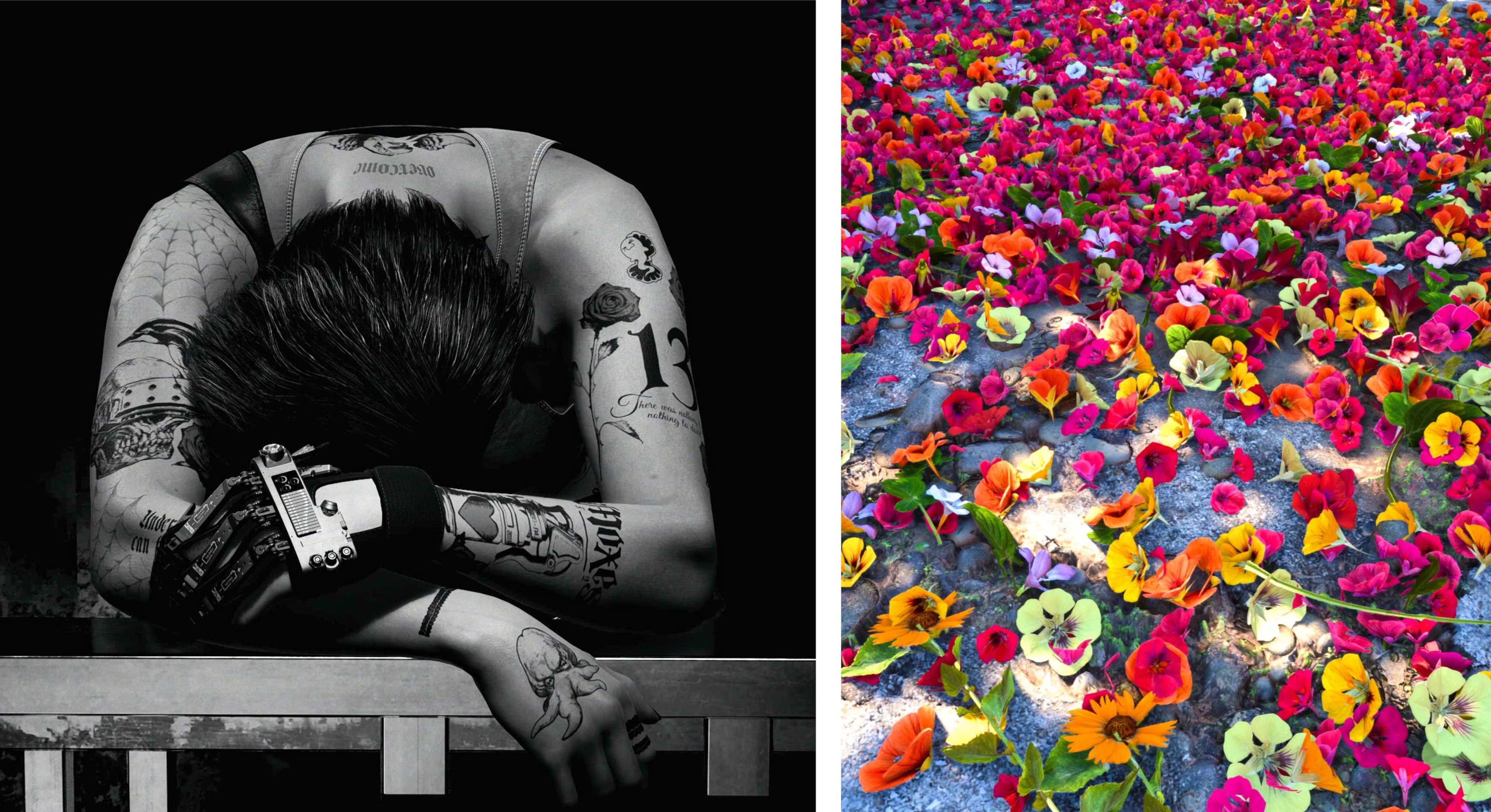
Figure 1: The practice of screenshotting transforms into virtual photography when the player begins to place effort and skill into their creations. Advancing skills change what the artist chooses to photograph. Left: Cyberpunk 2077 (CD Projekt Red, 2020) / Right: A Plague Tale: Requiem (Asobo Studio, 2022). Click images to enlarge.
It is worth noting that, like any art or hobby, a photographer’s motivation and skill development can come to an end. Sebastian described the thrill of virtual photography but noted that:
Now, it’s a bit less fun because when you reach certain standards of quality and you want to maintain them, you already know in advance that “Okay, I’m starting a new game, I won’t be taking a very good picture before, like, 40 hours of research.”
And, like other arts or hobbies, the challenge that was once there disappears. For example, Henrik described that his desire for creation has waned over nine years:
I really think I did everything I wanted to do with virtual photography. I’m not sure I can bring new stuff to the table. I don’t like doing things out of habit. […] I challenged myself with different types of photography, and now it just feels repetitive to me.
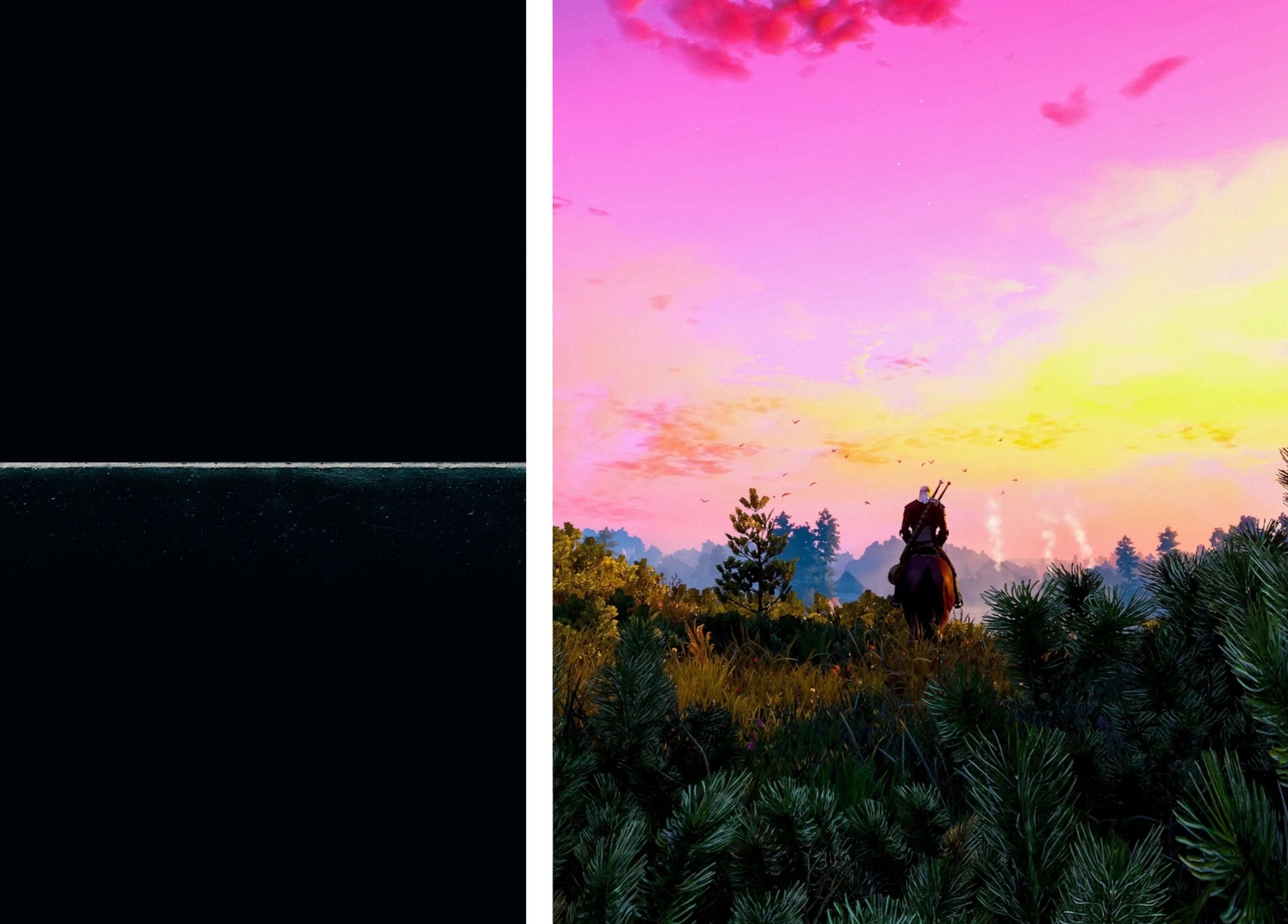
Figure 2: Each photographer has a personal arc with virtual photography, including evolving styles and favored challenges Left: Control (Remedy Entertainment, 2019) / Right: The Witcher 3: Wild Hunt (CD Projekt Red, 2015). Click images to enlarge.
Virtual photography merges the principles of photography with other traditional art forms
While traditional and virtual photography entail distinct technical demands, the influence of traditional photography on how artists compose virtual photographs is unmistakable. This highlights the interconnected nature of these two forms of photography, emphasizing the impact of traditional techniques on shaping compositional choices within the virtual realm. As Grace contended:
Some people might look at it like it's not actually photography. But then, in that case, I'm like, “Well, it is because we still use exactly the same skills as all the photographers do.” I obviously still use depth of field; we still use silhouettes; we still use anything that they use, like exposure.
Such techniques form a common thread, underscoring the universality of compositional approaches across these two realms.
Like traditional photography, intuition plays a crucial role in virtual photographers' decision-making, guiding both the timing of photo capture and directing the viewer's focus. This intuitive sense emerges as a central factor in shaping the artistry and impact of photographic compositions. As Grace noted, “Sometimes my photography just happens by accident.” Isabella echoed this sentiment, stating: “It’s really just a feeling that you have that all this could be interesting. I will try and play around. And then sometimes you have a really nice surprise because you weren't looking for something special.”
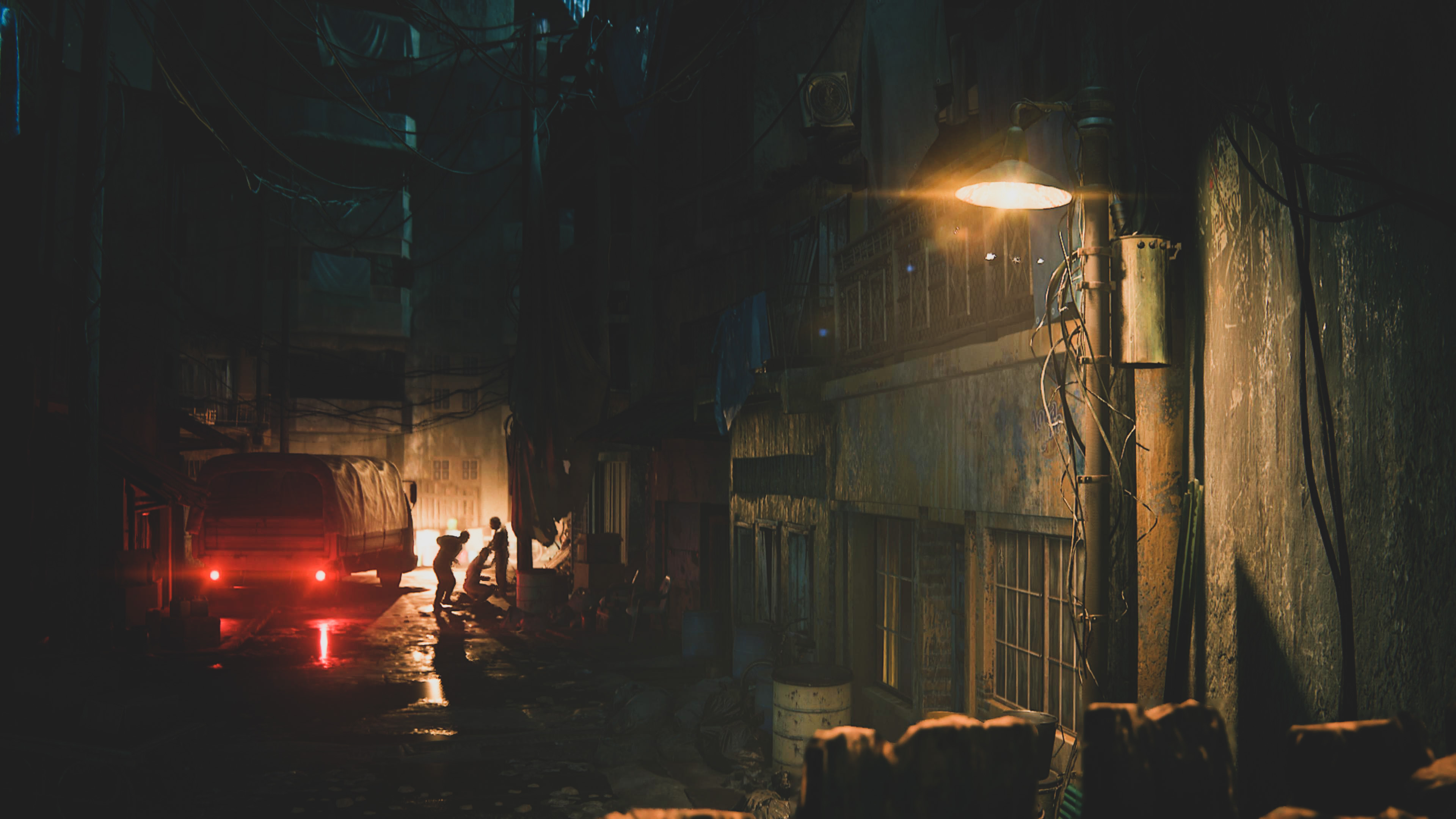
Figure 3: Intuition determines when virtual photographers capture photos and how they focus the viewer’s attention. Uncharted: The Lost Legacy (Naughty Dog, 2017). Click image to enlarge.
However, interviewees did stress that the connections between traditional and virtual photography only extend so far. Describing the universality of classical photography rules, Isabella mentioned that: “These rules may make your virtual photography a little bit more interesting. But besides that, I don't think we have so much in common.” Colin shared similar sentiments, being sure to add that the relationship has limits: “I think they do have similar techniques. But they are two very different worlds.”
Virtual photography operates beyond the constraints of the physical world. With unprecedented control for composition, photography in video games has a likeness to illustration or painting. This freedom lets photographers create compositions that match their artistic vision, bridging traditional and virtual art. Colin continued:
You can't crane up 100 meters with a normal camera. You're never gonna get that. You can use different filters on the spot, messing with the lighting on the spot. Different contrasts, brightness levels, everything like that. You've got every tool you could possibly imagine at your disposal within like 2 or 3 seconds.
Thus, the distinction between virtual photography and its physical counterpart diminishes due to the unprecedented control given to the video game player and ease to which virtual photographers can approach subjects. As Sebastian summarily asked: “If virtual photography was just an imitation of real-life photography, why would I take up virtual photography instead of real-life photography?” Describing a photograph from Death Stranding (Kojima Productions, 2019), Sebastian explored this question and expounded on how this control is more akin to illustration:
The idea of placing the three enemies just between the main character and the ground is something that you can plan if you are an illustrator, if you are drawing, but not if you are taking photographs. Virtual photography allows you the kind of control that you usually have in more traditional arts -- like painting or drawing. It is always a blend of different languages. It is basically photography but incorporates features that traditionally belong to other forms of art.
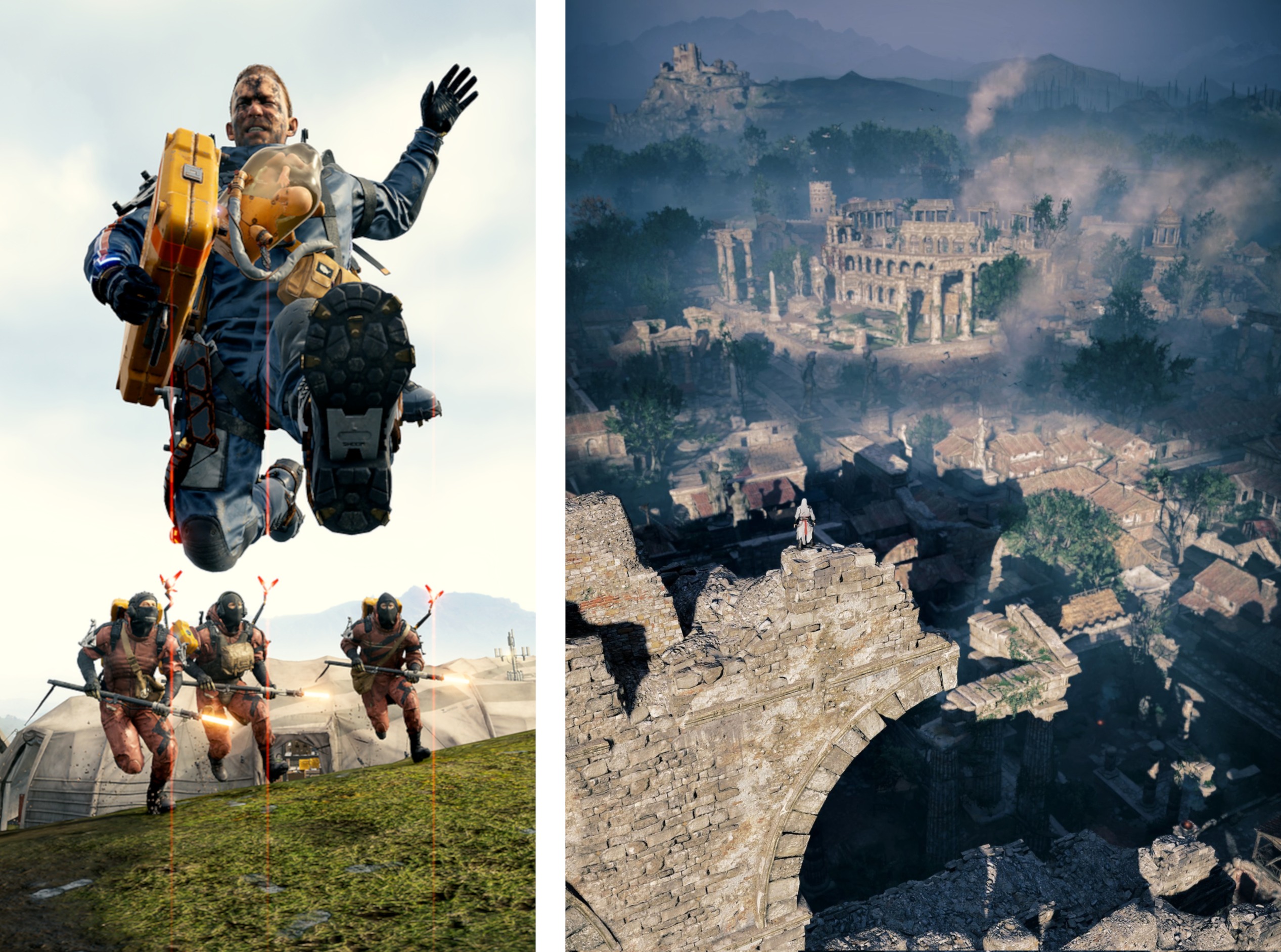
Figure 4: Like illustrators or painters, virtual photographers have unparalleled control to create desired compositions. Left: Death Stranding (Kojima Productions, 2019) / Right: Assassin’s Creed Origins (Ubisoft Montreal, 2017). Click images to enlarge.
Virtual photographers are motivated by the desire to capture otherwise impossible experiences
Extensive control coupled with limitless experiences define virtual photography. Our interviews emphasized how video games serve as gateways to content and challenges that would otherwise be impossible.
Capturing images in vast virtual worlds sparks creativity and provides a simulated travel experience for photographers. For example, describing his appreciation for the Assassin’s Creed franchise, Colin outlined the variety of historical locales he could shoot in just one game:
The world is so diverse. You've got the desert where you can get loads of minimalist shots. You've got the sun setting over the desert […]. It's amazing. You've got the pyramids, which I'm always drawn to. […] You've got a massive city like Alexandria, and then you've got these little outposts, communities built around like that. There's just so much variety. It's not just that; it really offers the best of the world. […] It's just an opportunity to experience a world that you never, ever going to experience.
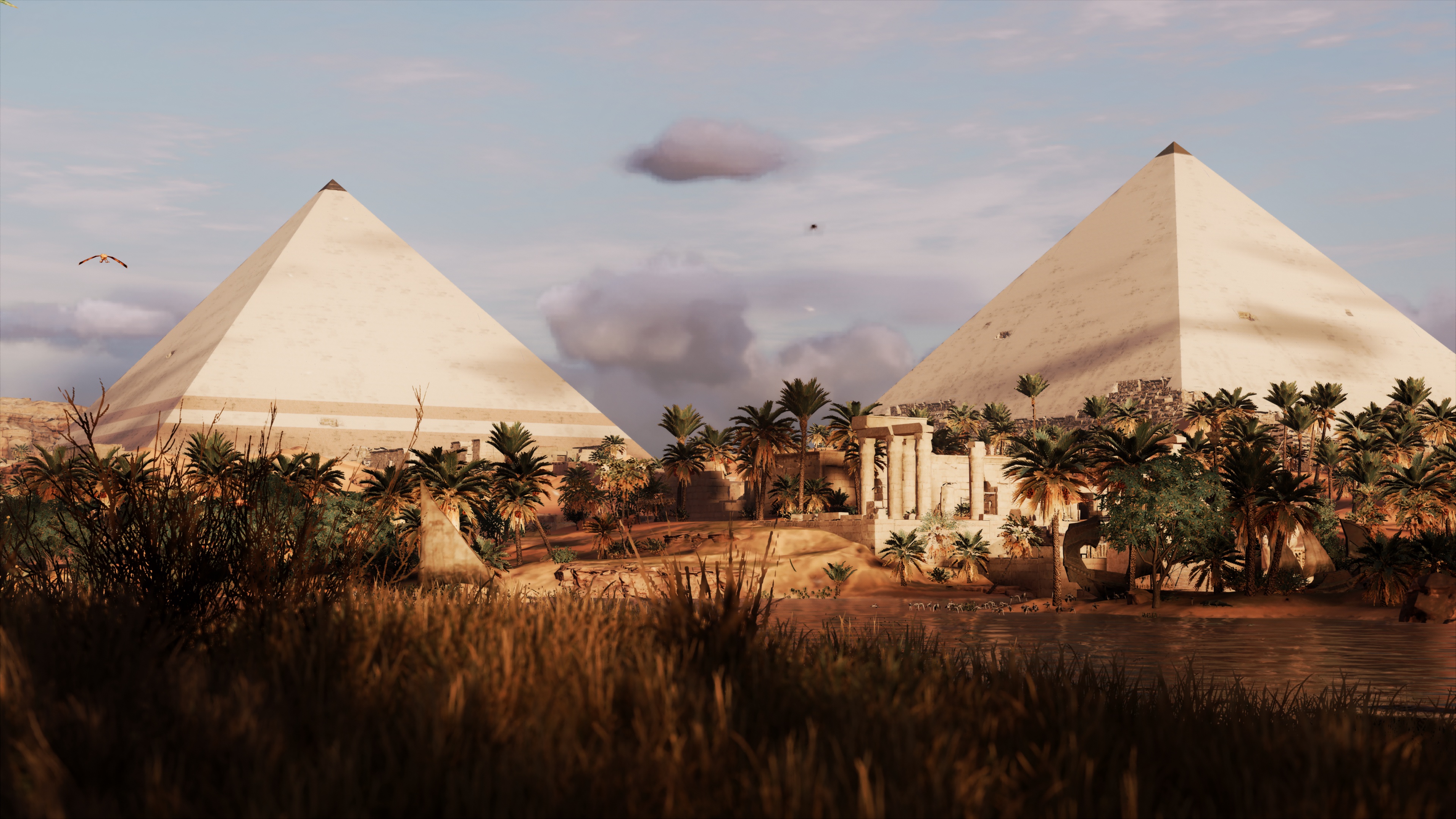
Figure 5: Capturing images in large virtual worlds allows photographers to experience a sense of travel. Assassin’s Creed Origins (Ubisoft Montreal, 2017). Click image to enlarge.
This simulated travel can also venture into the realms of extreme tourism. In video games, virtual photographers experience the thrill of simulated danger. Describing his motivation for starting virtual photography, Sebastian explained that:
Virtual photography allows kinds of photos which are impossible in real life -- for a whole lot of reasons. First of all, if I am taking pictures in a war game, I’m not risking my life. Second, I can freeze time. So, I can place myself in places that wouldn’t be possible in real life.
Grace also appreciated the exciting, yet safe photography opportunities video games provide:
The possibilities are sort of endless. You can do whatever you want. You can put yourself into danger in video games and get a photo. I mean, you can still do that in real life, but it's not something I would recommend. Sometimes, in some of those games, I've nearly died to get shots from different angles.
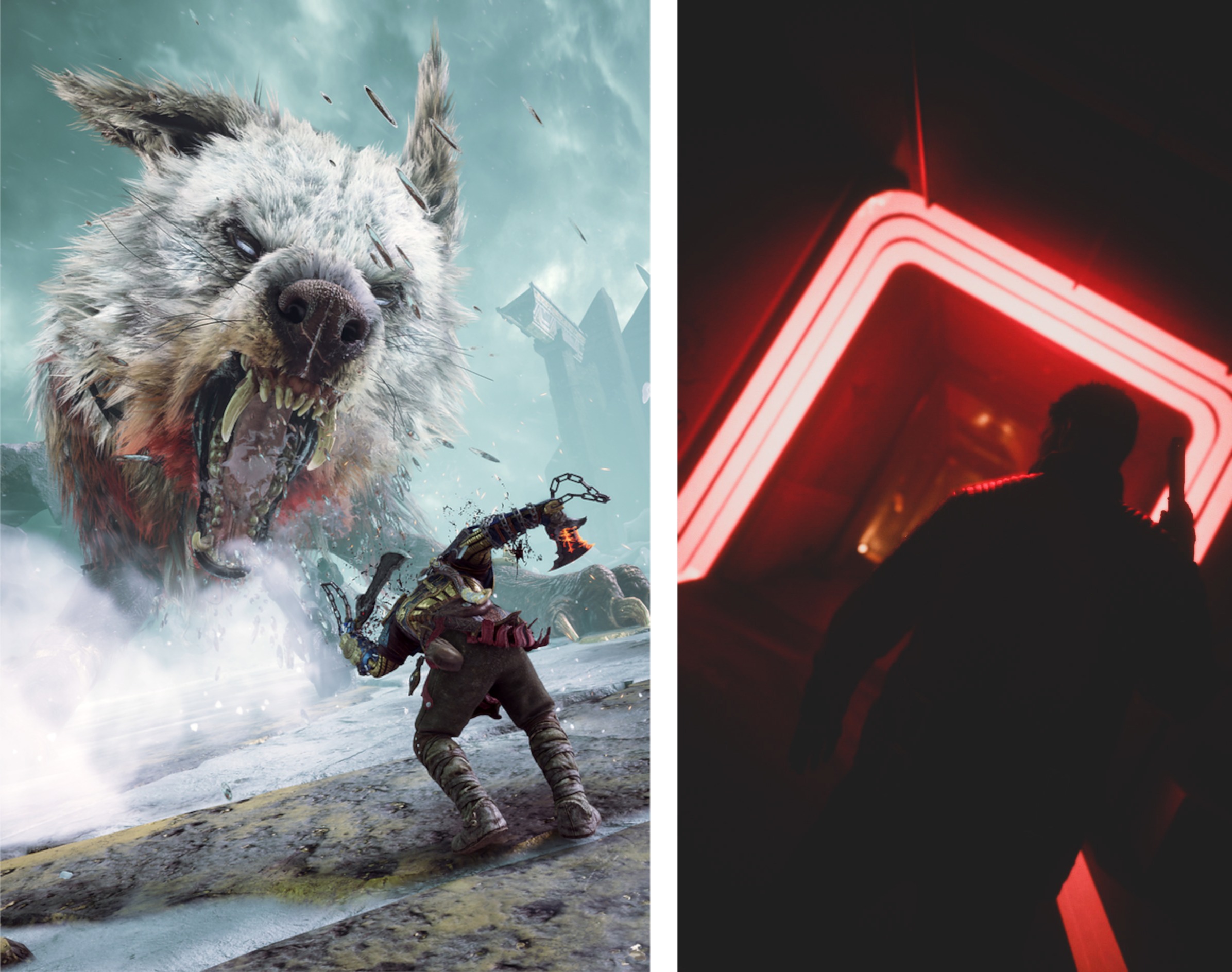
Figure 6: Video games offer photographers the excitement of capturing perilous situations. Left: God of War Ragnarok (Santa Monica Studio, 2022) / Right: Cyberpunk 2077 (CD Projekt Red, 2020). Click images to enlarge.
Virtual photography provides depth to gameplay experiences
Virtual photography allows artists to appreciate a video game's intricate aesthetic details, whether captured spontaneously or through planned shots. Isabella’s statement exemplified the newfound depth and added richness photographic pursuits adds to gameplay: “I see games absolutely differently since I'm into virtual photography, because now I pay attention to details that I never paid attention to before.” Grace also focused on attention to detail when defining a good shot:
When someone focuses a tiny, tiny detail in a game, like an eye, let’s say, then I think that’s really good. Because, obviously, they've paid a lot of attention to the detail in the game, and they've focused on that bit.
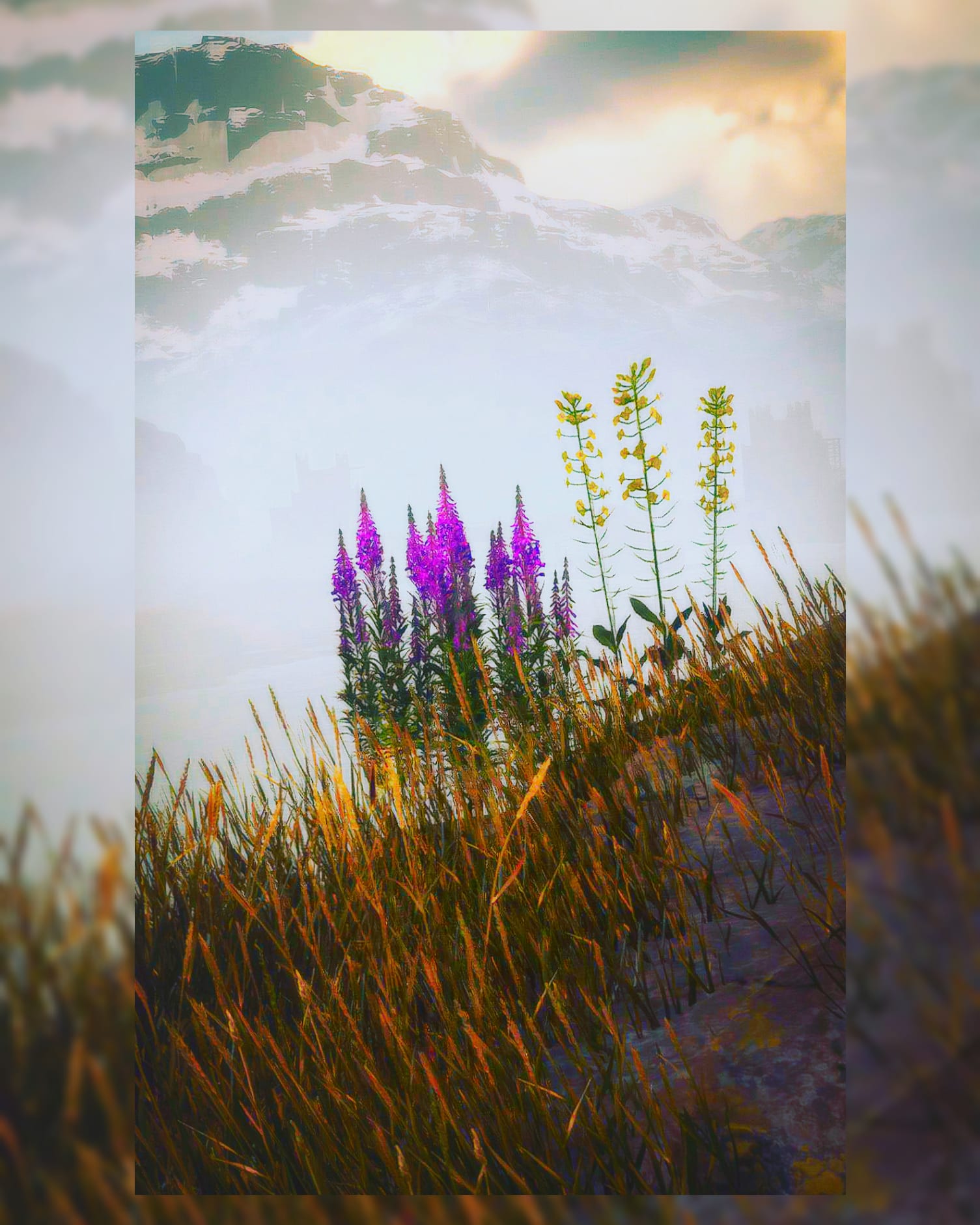
Figure 7: Virtual photography allows artists to appreciate and capture the intricate aesthetic details in video games, whether spontaneously or through planned shots. Hogwarts Legacy (Avalanche Software, 2023). Click image to enlarge.
With evolving skills, virtual photographers uncover easily unseen depths within video games, such as the emotional expressions found in portrait photography. Highlighting the hidden depths of games, Sebastian explained how his opinion of portraiture changed over time, especially alongside further research and reconsideration:
Portraits are a genre in virtual photography that, at the beginning, I had underestimated. In real life, every other second -- or maybe shorter -- any human being can change something in their expression. Every instant in real life is unique. In video games, it isn't usually (unless something really special is happening). The main characters just keep the same expression for the most part of the game. So, I was like, “it isn't that interesting to take portraits.” Then, I progressively changed my mind because I realized that if you do some research -- and when I say “some” I mean freaking a lot of research -- you can find moments when the characters are having unique expressions. If you combine them with the unique lighting and a unique angle, you have the chance to take a unique shot.
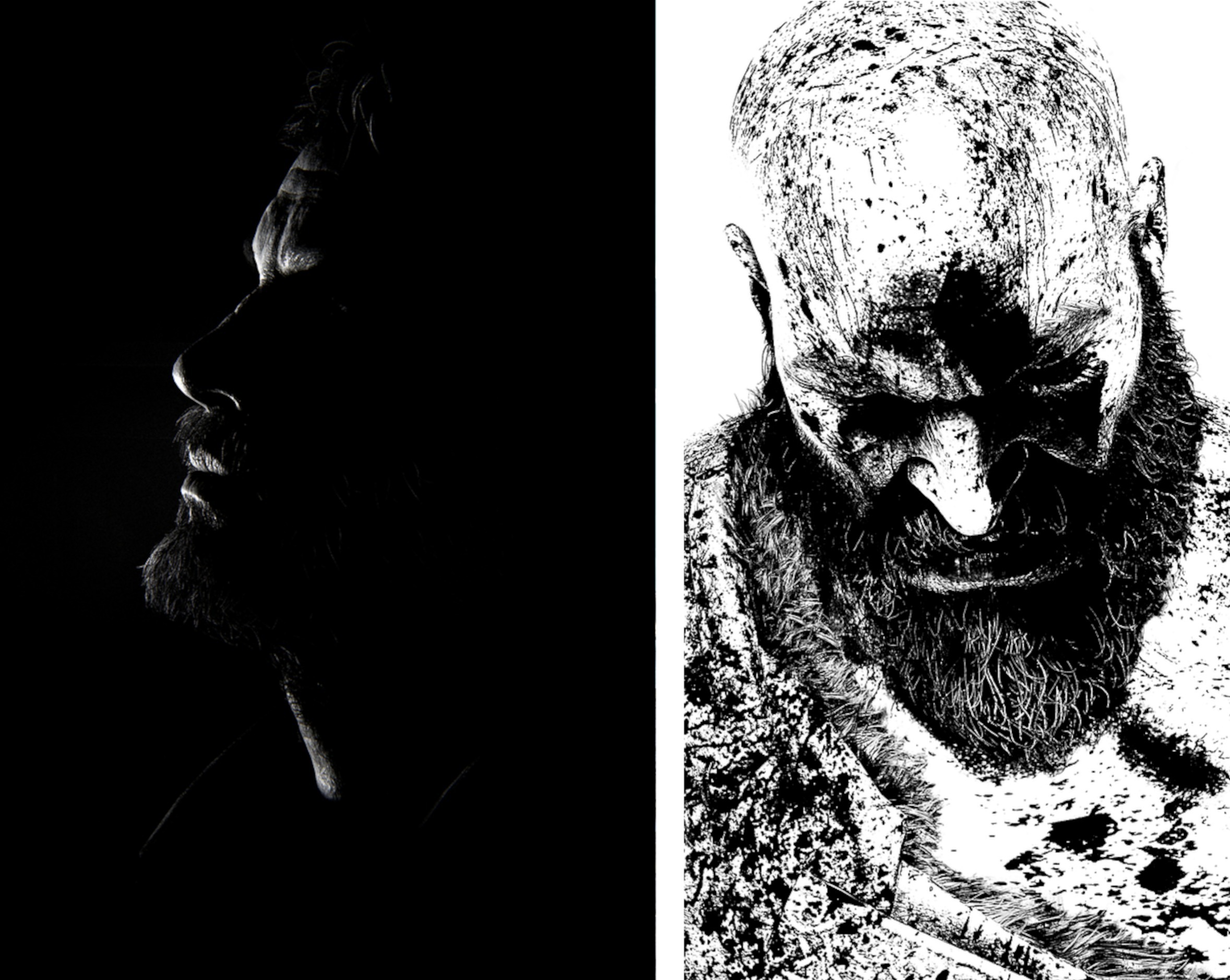
Figure 8: As virtual photographers hone their craft, they find previously unseen emotional depth in video games. Left: The Last of Us, Part II (Naughty Dog, 2020) / God of War Ragnarok (Santa Monica Studio, 2022).
Whether through spontaneously captured moments or meticulously planned compositions, participants highlighted virtual photography's capacity to illuminate the visual richness of games, fostering a heightened appreciation for the craft and artistry inherent in game design.
Virtual photography captures the essence of a video game
A single, well-crafted virtual photograph has the potential to distill the essence of a video game. Photographers accomplish this by framing specific elements, such as particular landscapes or cherished characters. As Grace said, “Everyone will take photos of the main character in a game,” but attention to detail can convey a character’s nature. Describing the 45 minutes required to capture the right portrait, Colin was able to get “the light and the shadows [to] contrast really nice and bring across our character.”
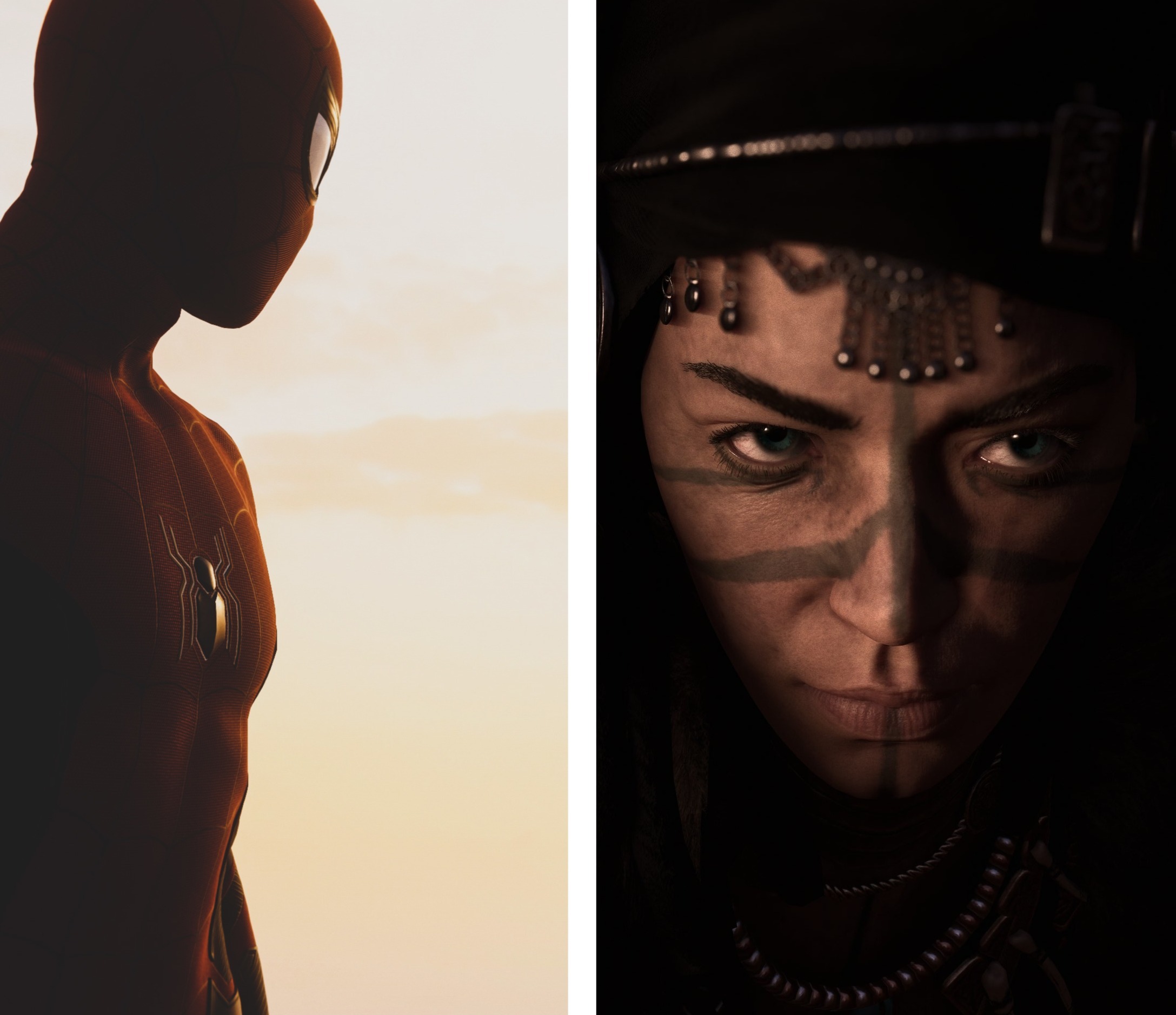
Figure 9: Virtual photography embodies gamers’ experiences by showcasing valued content, such as characters. Left: Marvel’s Spider-Man (Insomniac Games, 2018) / Assassin’s Creed Valhalla (Ubisoft Montreal, 2020). Click images to enlarge.
Virtual photography’s ability to concentrate gaming experiences and accompanying emotions into a single artifact differentiates it from screenshotting. Defining his card sorting label as “Impressions,” Henrik explained that “it's not really the main topic of the game. It's just the emotions I feel when I play the game that I try to encapsulate in one or several shots.” Henrik used a photo of a hand from the game Bound (Plastic Studios, 2016) as an example. Sometimes, “it's just a tiny detail when you zoom out through the photo mode that shows the elegance, the subtlety, the delicacy of the game. And for me, hands are the perfect symbol for that.”

Figure 10: Using editing tools, virtual photographers express the moods and impressions they experienced during gameplay. Bound (Plastic Studios, 2016). Click image to enlarge.
This emphasis on essence highlights how virtual photography is a canvas for creative techniques like subtraction or abstraction. Sebastian recounted how he used subtraction to summarize gameplay from Demon’s Souls (the remake developed by Bluepoint Games, 2020), a notably challenging game designed by the studio FromSoftware:
One picture can capture the whole sense, or at least pivotal concept of a game. […] When you are working with meaning, with essence, you have to subtract. You don’t need to see a dragon to know that those flames come from a monster. I wanted to come close and personal with this knight facing this huge, flaming creature. He’s not discouraged. His shield is up and he just keeps moving forward. I think that moving forward despite how apparently hard and impossible the game seems is one of the main moods you can experience in FromSoftware games.
Abstraction is also a key technique to distill the essence of a game. Sebastian highlighted how a single element of a game, something as simple as the floor tiling in an environment, can be a useful mechanism for distillation. Describing tangled qualities of Remedy’s game Control (2019), he explained that:
[…] the labyrinth is pretty much everywhere in this game. The most famous sequence in this game is within a labyrinth. The story itself is a labyrinth. The whole level design of the of the game is a labyrinth. Everything about this game is a labyrinth. So, when I entered this corridor […] and I saw these ties on the ground, I realized that could be a very good metaphor for the whole game.
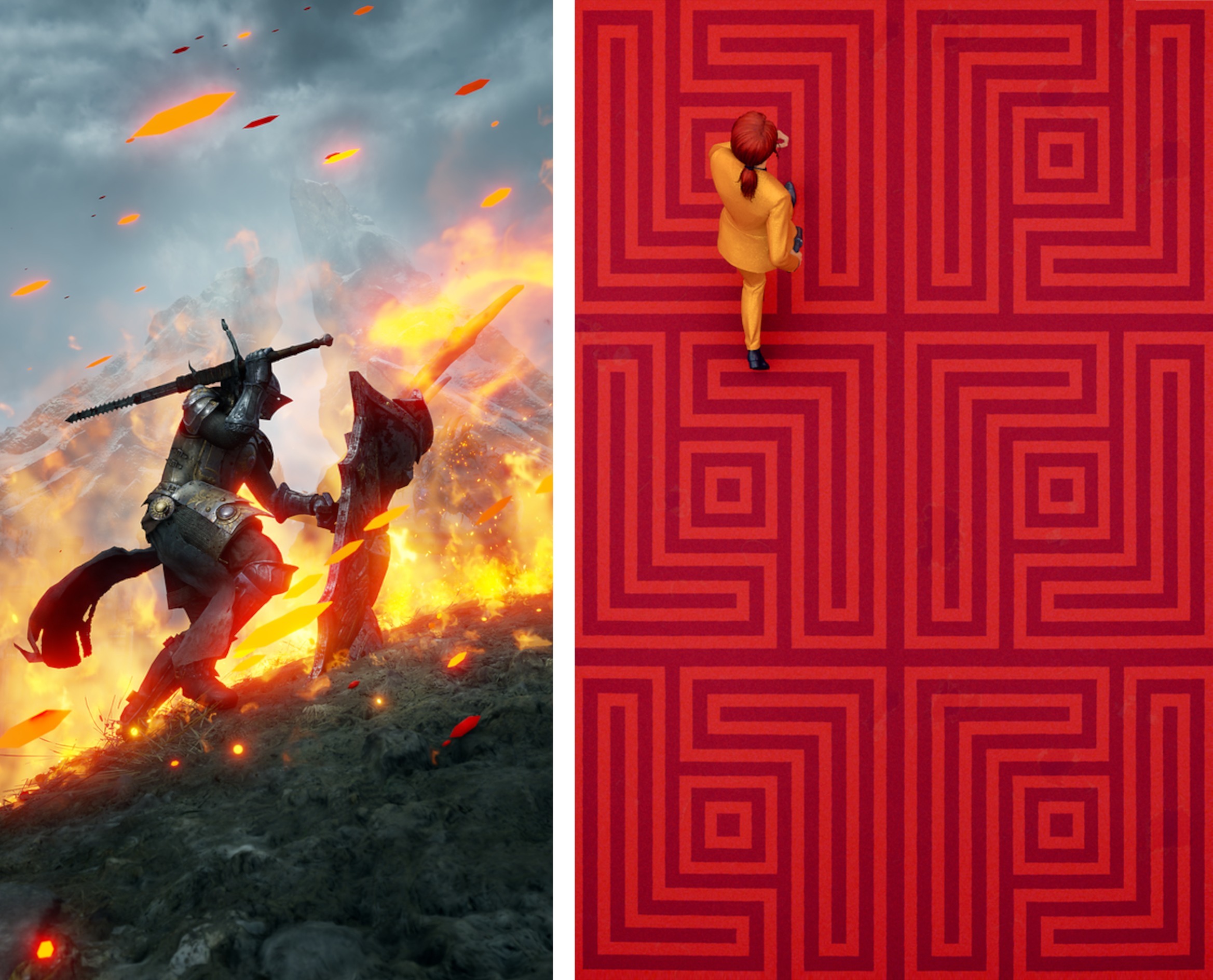
Figure 11: In contrast to screenshots that freeze and document a specific experience, virtual photography may include techniques like subtraction or abstraction to summarize a game's essence. Left: Demon’s Souls (Bluepoint Games, 2020) / Right: Control (Remedy Entertainment, 2019). Click images to enlarge.
By applying technique, artists craft shots that function as visual summaries of a game's narrative or aesthetic. This provides personalized perspectives that resonate not only with their artistic vision but also with the experiences of fellow photographers and players.
Virtual photography is an inherently referential form of self-expression
Integral to virtual photography is its intimate connection to the source game. Whether through direct replication or subtle allusion, participants identified that their photographic compositions inherently referenced and paid homage to the video game that served as their inspiration. These practitioners were driven by self-expression while maintaining respect for the game’s creators -- and sometimes considered the ramifications or controversy of their tributes.
Honoring a game can be the spark for starting the practice. When describing how her motivations for virtual photography changed over time, Isabella mentioned that “in the beginning, it was especially a means to take pictures of Cyberpunk -- and my journey in this game because it’s my absolute favorite game ever -- and to honor it.” This emphasis on wanting to portray the photographer’s own gaming experience was a throughline in the interviews. Considering what makes a “good shot,” Henrik suggested that:
It’s about being true to yourself and also trying to respect the game and the studios. On the one hand, most of [my] shots are really edited -- especially Journey and Inside -- so it could be seen as something disrespectful for the studio. Because who am I to change the vibe of these sequences? On the other hand, it’s how I felt [during] these games and sequences. So, to me, it’s something respectful, too, because it’s like a tribute. It’s like, “Okay, guys. I know what you wanted to do with your game, but this is how I received it.”
Others also acknowledged the pivotal role of editing tools in refining and accentuating these experiences. These tools allow photographers to add an artistic layer to the raw material of gameplay created by other artists. As Colin stated: “I don't overly edit some things. Just to touch them up, just to bring them up to what they should be, or what you have in your mind."
Despite the effort and skill virtual photographers put into their craft, some recognized that it is inherently a form of advertisement, whether for small studios or large game publishers. Some publishers even provide photo mode contests to advertise their games and select artists as official photographers, which, as Colin described, can be a “huge motivation.” These relationships between publishers, studios, artists and gamers, according to Henrik, are what makes virtual photography unique. He explained his feelings about these relationships:
When you post a shot, a virtual photograph from a video game, you are advertising that game. It’s something that will help the studio but also the publisher. […] For me, you always have to keep that in mind. You have a responsibility for what you are sharing. […] When I decide to take a picture from smaller games or indie games, it’s nearly activism. I quickly noticed that 95% of photography was all of blockbuster [games]. These are all the games that we see the subway, in the streets, in YouTube ads, everywhere. These games obviously don’t need advertising. […] Being aware of the industry as a whole -- not the games you play, but the people who made them, the studios, the hardships some studios can go through, and all of that -- comes to my mind when I post something. So, to me, that’s the main difference.
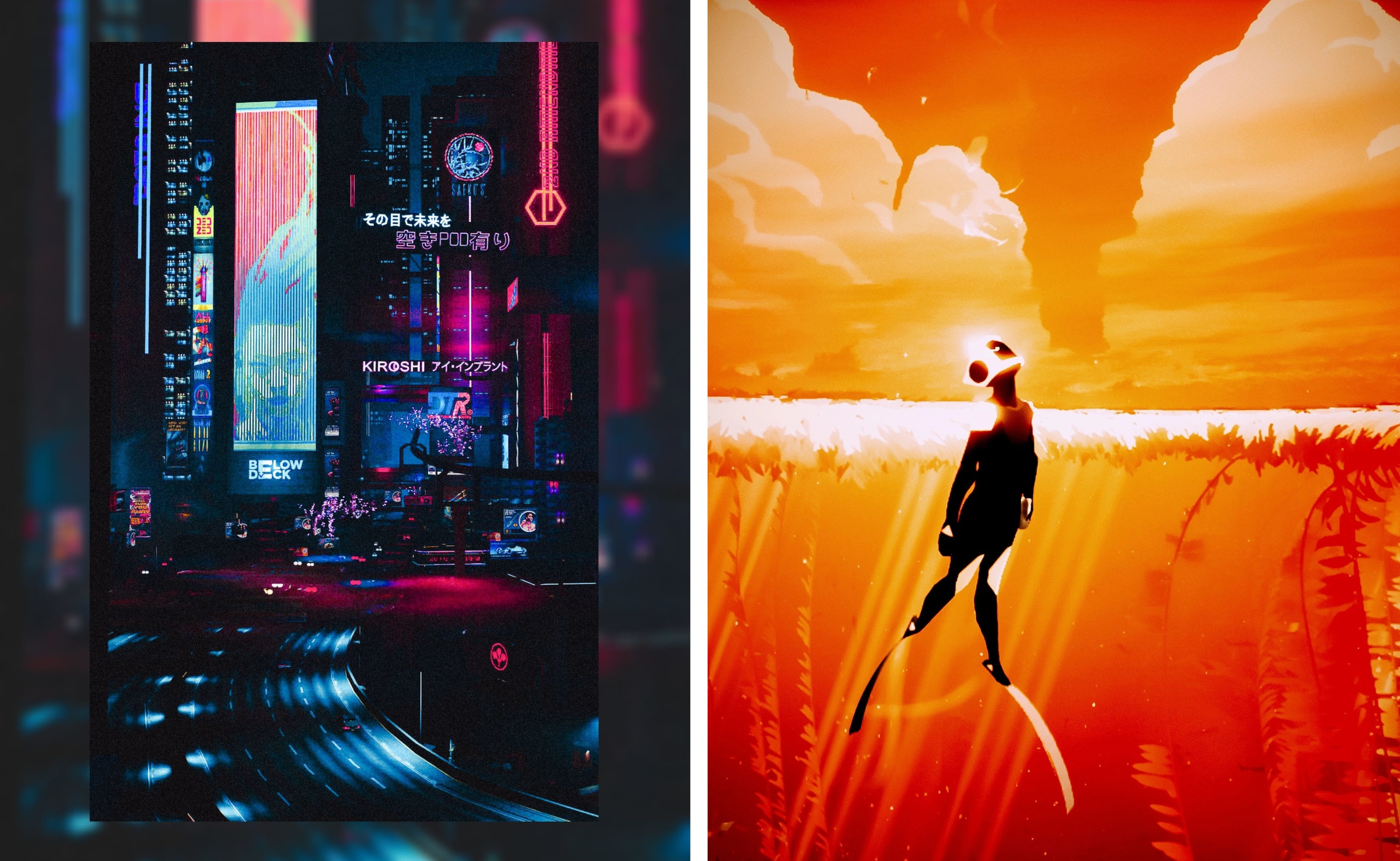
Figure 12: Virtual photography inherently references the source game through direct or subtle presentation. Through such references, virtual photography is a form of advertisement, whereby small studios or large game publishers benefit from the photographer’s creation. Left: Cyberpunk 2077 (CD Projekt Red, 2020) / Right: Abzû (Giant Squid, 2016). Click images to enlarge.
Virtual photographers find motivation and influence from online communities
Social motivations, particularly a sense of community, propel virtual photographers to refine their craft. Considering the future of virtual photography, Colin stated, “The community is huge because it's going to be the community -- and not individuals -- that are going to bring this to the forefront.” Isabella echoed this sentiment: “Now, we have this community growing. This is really the biggest motivation now.” This sense of community also extends beyond photographers. They are creating images that connect with video game players around the world. As Sebastian mentioned: “If you are taking a picture […] of a very dramatic, emotional moment in a game that has been experienced by millions of people, then that picture -- if it is a great picture -- can resonate with millions of people.”
These communities of practice also contribute to the exploration and refinement of each photographer's distinctive sense of style. As Isabella said, “We are constantly inspiring each other, and you see some shots from others and think, 'Oh, wow! Can I incorporate this, maybe a little bit, in my pictures?’” The established customs and tastes within a group can also wield substantial influence. Stylistic choices, such as image orientation, changed for Grace: “I have actually only recently gotten into vertical photos because I've seen other people have done them.“ Others consciously change their styles to set themselves apart. Talking about how he developed his own style over six years, Sebastian shared that what he was seeing online influenced his photos:
I kept on improving. I started posting them on the forum I was in. I received some compliments. And, so, I was constantly trying to raise the bar. […] The most popular screenshots were wide panoramic vistas, landscapes, or very fine small details. […] Nothing happened in those photos, and video games are about action. If I am playing God of War, I can’t just take a picture of a pleasant landscape. I can do it, but is not the soul of the game. So, I started focusing on impossible angles and shots that could really capture the climax of the action of the game.
Online communities not only serve as sources of inspiration for photographers but also provide encouragement and tangible rewards. Recognition and validation within these communities act as reinforcing factors, motivating photographers to actively contribute and engage with their peers in meaningful ways. Colin gave an example:
That's why you post anything to social media. You're aware that people like your shots and comment. You're getting noticed for certain things. So, I think that's definitely a kind of motivation as well. I've recently been selected by Ubisoft UK for the first virtual photographer in their community. […] So that was big, that was a huge motivation getting seen by them. And then just seeing how far I can take it, really.
Involvement in online communities, however, can come at a cost. Reflecting on why he stopped doing virtual photography, Henrik conveyed the pressure he felt from having an online audience:
There is also the social media aspect to it: dealing with all the comments, the notifications, etc. It doesn't look like that [much work] from the outside, but it's something very oppressive for me. So, I just had to stop because it was too many things to handle, too many people to answer to. It was beginning to feel oppressive to me. […] It's not something I really enjoy anymore -- to stop and take a shot. You come out of the game every time you make a post. Then, you check social media. Then, again, you’re out of the game. No. That’s not how I want to play games now.
Discussion
Based on our interviews and analysis, we provide the following definition of virtual photography:
Virtual photography is the act of capturing a unique moment within a game environment that is inherently unreproducible through individual authorship. Through mastering skills and tools, it aims to capture both the game’s essence and the player's experience, fostering exchanges with other virtual photographers and gamers and creating a sense of community.
This definition supports certain theoretical propositions within the academic discourse while challenging and broadening others. The following section of this paper considers scholarship alongside the seven recurring themes that emerged during data analysis.
Individualized authorship (Švelch, 2021) carried significance for the interviewees who use virtual photography to express themselves. With advancing skills, such as mastery of the tools increasingly provided by games, players can record fleeting moments and minute details that they experience. This individualized authorship adds depth to gameplay and the game itself. Thus, the photographer becomes a “gamer turned artist” through the process of transformative play (see Gerling, 2018). It is this transformation of the player that distinguishes virtual photography from screenshotting.
Although academics often treat video games as merely stages for behavior, the interviewees emphasized the immense significance of the medium itself. They shared their enthusiasm for particular titles, showcasing their admiration for game design and art through their photographs. This enthusiasm coalesces into shots that convey the essence of their gaming experience. The shots taken become “digital spectacles” (see Frosh, 2023, p. 180), created to emphasize a shot’s own aesthetic character as an image as well as the artistic aspects of the world it represents. Virtual photography should be understood as expressions of appreciation and tribute to the talent of game creators.
While virtual photography shares technical aspects with traditional photography, it notably diverges in one crucial aspect: the focus on online communities. Sharing images, forming global connections and engaging in personal exchanges appeared as motivational and inspirational factors for the interviewees. For them, the creation of meaning is a communal endeavor. The term “virtual photographers” has gained traction through social media, with many adopting it as their own and strongly identifying with it. The interviewees typically had positive experiences online, but some did allude to negative aspects that come along with social media, such as a sense of obligation (e.g., having to check notifications, sharing photographs for “likes,” etc.). The integration of photography modes in games has encouraged players to produce and share content for the purpose of contributing to a networked apparatus and gaining attention and validation from others. As De Mutiis (2023) argues, the photographer then submissively follows the rules of the game and produces images for the sake of the network rather than their own creative expression.
The question is still open regarding the existence of “communicative capitalism” (Zylinska, 2020; also 2023) on a structural level within virtual photography. As highlighted in our themes, virtual photography inherently references a product for sale and serves as a form of advertisement, while the practice of virtual photography generally remains unpaid. Though publishers occasionally share virtual photographs, recognition seems to be sufficient compensation for the creators and is not perceived as a merging of play meeting labor (or “playboring,” as described by Zylinska, 2020). At the same time, however, this indicates that virtual photographers are not dependent on income from their images; in fact, almost all respondents pursue the activity as a hobby. Financial capacity as a prerequisite for gaming hardware and software may account for virtual photography's concentration as a cultural phenomenon mainly in the global North, particularly in Europe and North America. It is evident that virtual photography is shaped by the practitioners and their backgrounds. Because our participants were drawn exclusively from the Society of Virtual Photographers, a globally visible but culturally specific community, the perspectives represented here reflect the norms of that space rather than the full breadth of global virtual photography. While SoVP is one of the largest and most established virtual photography platforms and substantially representative of broader virtual photography communities, insights derived from this study are generalizable to similar communities only, not to all virtual photographers worldwide.
It remains necessary to ask for whom and for what purposes virtual photographs are created. As the interviews demonstrated, the circulation of images -- and advances in computer graphics -- has contributed to the proliferation of virtual photography communities, but these same dynamics reproduce exclusions. The virtual camera of the “virtual tourist” (see Poremba, 2007; also Book, 2003) continues to be a tool shaped by unequal access, reflecting how individuals of privilege may partake in digital sightseeing while also reproducing forms of visual dominance and control.
Subsequent studies may benefit from further exploration of digital colonization through virtual photography (Orlando & Brey, 2015; Rizov, 2021). This may be accomplished by incorporating further perspectives in surveys, interviews and other forms of data collection.
Conclusion
Virtual photography is more than just creating images. It is an act at the intersection of material reality, aesthetic codifications and social relations. Until now, the social aspect -- that is, the person(s) taking photographs as part of photo communities -- had received limited attention. We designed this study to bring forward this community, focusing on the practitioners of virtual photography, their motivations and experiences. We thus conducted picture sorting activities and interviews with virtual photographers. One of our interviewees, Henrik, stated that “virtual photography changes the way you play games.” We strove to faithfully present the “you” in this statement and gain deeper insights into the realities of our participants. Through subsequent interpretative phenomenological analysis, seven themes emerged that uncovered the essence of virtual photography. With these themes in hand, we provided a definition of virtual photography that embodies the voices of people who practice this art.
References
Argonaut Software. (1986). Starglider [Commodore 64]. Digital game published by Rainbird.
Argonaut Software. (1988). Starglider II [Amiga]. Digital game published by Rainbird.
Asobo Studio. (2022). A Plague Tale: Requiem [Microsoft Windows PC]. Digital game directed by Kevin Choteau, published by Focus Entertainment.
Avalanche Software. (2023). Hogwarts Legacy [Sony PlayStation 5]. Digital game directed by Alan Tew, published by Warner Bros. Games.
Berardi, M. (2021). In-Game Photography. Anthropological Notes and Visual Perspectives from the Imagination of the Open Worlds. Visual Ethnography, 10(2). https://doi.org/10.12835/ve2019.1-016
Bittanti, M. & Quaranta, D. (2006). Gamescenes: Art in the Age of Videogames. Johan & Levi editore.
Bittanti, M. (2011). The Art of Screenshoot-Ing: Joshua Taylor, Videogame Photographer. Mister Bit -- Wired IT (blog). https://blog.wired.it/misterbit/2011/12/24/the-art-of-screenshoot-ing-joshua-taylor-videogame-photographer.html
Bluepoint Games. (2020). Demon’s Souls [Sony PlayStation 5]. Digital game directed by Gavin Moore, published by Sony Interactive Entertainment. Remake of game originally developed by FromSoftware, 2009.
Book, B. (2003). Traveling Through Cyberspace: Tourism and Photography in Virtual Worlds. Paper presented at Tourism & Photography: Still Visions -- Changing Lives, Sheffield, UK. Social Sciences Research Network. https://ssrn.com/abstract=538182
CD Projekt Red. (2020). Cyberpunk 2077 [Microsoft Windows PC]. Digital game directed by Adam Badowski, published by CD Projekt.
CD Projekt Red. (2015). The Witcher III: Wild Hunt [Microsoft Windows PC]. Digital game directed by Konrad Tomaszkiewicz, Mateusz Kanik, Sebastian Stępień, published by CD Projekt.Creswell, J. W., & Poth, C. N. (2018). Qualitative inquiry & research design: Choosing among five approaches (Fourth edition). SAGE.
De Mutiis, M. (2023). How to Win at Photography -- How Games Teach Us to See. In W. Gerling, S. Möring & M. De Mutiis, Screen Images. In-Game Photography, Screenshot, Screencast (pp. 253-262). Kadmos. https://doi.org/10.55309/c3ie61k5
Fincher, S., & Tenenberg, J. (2005). Making sense of card sorting data. Expert Systems, 22(3), 89-93. https://doi.org/10.1111/j.1468-0394.2005.00299.x
Frosh, P. (2023). Screenshots and the Memory of Photography. In W. Gerling, S. Möring & M. De Mutiis, Screen Images. In-Game Photography, Screenshot, Screencast (pp. 173-192). Kadmos, https://doi.org/10.55309/c3ie61k5
Gerling, W. (2018). Photography in the Digital. Photographies, 11(2-3), 149-67. https://doi.org/10.1080/17540763.2018.1445013
Gerling, W., Möring, S. & De Mutiis, M. (2023). Screen Images. In-Game Photography, Screenshot, Screencast. Kadmos, https://doi.org/10.55309/c3ie61k5
Giant Squid. (2016). Abzû [Sony PlayStation 4]. Digital game directed by Matt Nava, published by 505 Games.
Giddings, S. (2014). Drawing without Light. In M., Lister, The Photographic Image in Digital Culture (pp. 41-55). Routledge.
Harris, D. (n.d.). Deadendthrills. https://deadendthrills.com/
Insomniac Games. (2018). Marvel's Spider-Man [Sony PlayStation 4]. Digital game directed by Bryan Intihar, Ryan Smith, published by Sony Interactive Entertainment.
Kojima Productions. (2019). Death Stranding [Sony PlayStation 4]. Digital game directed by Hideo Kojima, published by Sony Interactive Entertainment.
Krichane, S. (2021). When Seeing is Playing: The History of the Videogame Camera. Game Studies, 21(2). https://gamestudies.org/2102/articles/krichane
Lobinger, K., & Brantner, C. (2020). Picture-Sorting Techniques: Card-Sorting and Q-Sort as Alternative and Complementary Approaches in Visual Social Research. In L. Pauwels & D. Mannay, The SAGE Handbook of Visual Research Methods (pp. 309-321). SAGE Publications, Inc. https://doi.org/10.4135/9781526417015.n19
Moore, C. (2014). Screenshots as Virtual Photography: Cybernetics, Remediation, and Affect. In K. Bode & P. L. Arthur, Advancing Digital Humanities: Research, Methods, Theories (pp. 141-160). http://www.palgraveconnect.com/doifinder/10.1057/9781137337016
Möring, S., & De Mutiis, M. (2019). Camera Ludica: Reflections on Photography in Video Games. In M. Fuchs & J. Thoss, Intermedia Games -- Games Inter Media: Video Games and Intermediality (pp. 69-94). Bloomsbury Academic.
Naughty Dog. (2017). Uncharted: The Lost Legacy [Sony PlayStation 4]. Digital game directed by Shaun Escayg, Kurt Margenau, published by Sony Interactive Entertainment.
Naughty Dog. (2020). The Last of Us Part II [Sony PlayStation 4]. Digital game directed by Neil Druckmann, published by Sony Interactive Entertainment.Nitsche, M. (2008). Video Game Spaces: Image, Play, and Structure in 3D Worlds. MIT Press. https://doi.org/10.7551/mitpress/9780262141017.001.0001
Orlando, A., & Brey, B. (2015). Press A to Shoot: Pokémon Snap-shots and Gameship Ownership. First Person Scholar. https://www.firstpersonscholar.com/press-a-to-shoot/
Overweg, R. (n.d.). About the artist, Robert Overweg. Shot by Robert. https://www.shotbyrobert.com/about
Plastic Studios. (2016). Bound [Sony PlayStation 4]. Digital game directed by Michał Staniszewski, published by Sony Interactive Entertainment.
Polyphony Digital. (2004). Gran Turismo 4 [Sony PlayStation 2]. Digital game directed by Kazunori Yamauchi, published by Sony Computer Entertainment.
Poremba, C. (2007). Point and Shoot: Remediating Photography in Gamespace. Games and Culture, 2(1), 49-58. https://doi.org/10.1177/1555412006295397
Rauch, E. (2012). Virtual Light: Exploring In-Game Photography And Photo History. videogametourism.at (blog). https://videogametourism.at/content/virtual-light-exploring-game-photography-and-photo-history
Remedy Entertainment. (2019). Control [Microsoft Windows PC]. Digital game directed by Mikael Kasurinen, published by 505 Games.
Rizov, V. (2021). PlayStation Photography: Towards an Understanding of Video Game Photography. In M. Bonner, Game | World | Architectonics: Transdisciplinary Approaches on Structures and Mechanics, Levels and Spaces, Aesthetics and Perception (pp. 49-62). Heidelberg University. https://books.ub.uni-heidelberg.de/index.php/heiup/catalog/book/752
Rockstar North. (2004). Grand Theft Auto: San Andreas [Sony PlayStation 2]. Digital game directed by David Jones, Leslie Benzies, published by Rockstar Games.
Overweg, R. (n.d.). About the artist, Robert Overweg. Shot by Robert. https://www.shotbyrobert.com/about
Sang, L. (n.d.). vrp. Cargocollective. https://cargocollective.com/leosang/vrp
Santa Monica Studio. (2022). God of War: Ragnarök [Sony PlayStation 5]. Digital game directed by Eric Williams, published by Sony Interactive Entertainment.
Smith, J. A., Flowers, P., & Larkin, M. (2009). Interpretative phenomenological analysis: Theory, method and research. SAGE.
Švelch, J. (2021). Redefining screenshots: Toward critical literacy of screen capture practices. Convergence: The International Journal of Research into New Media Technologies, 27(2), 554-569. https://doi.org/10.1177/1354856520950184
Taylor, J. (n.d.). About. Josh Taylor Creative. https://joshtaylorcreative.com/
Ubisoft Montreal. (2017). Assassin's Creed Origins [Microsoft Windows PC]. Digital game directed by Ashraf Ismail, published by Ubisoft.
Ubisoft Montreal. (2020). Assassin's Creed Valhalla [Microsoft Windows PC]. Digital game directed by Ashraf Ismail, Eric Baptizat, published by Ubisoft.
Urban, A. C. (2022). Mementos from digital worlds: video game photography as documentation. Journal Of Documentation, 79(2), 398-414. https://doi.org/10.1108/jd-01-2022-0028
Zylinska, J. (2020). Perception at the End of the World (or How Not to Play Video Games). https://flugschriften.com/2020/04/10/perception-at-the-end-of-the-world-by-joanna-zylinska/
Zylinska, J. (2023). Screen Cuts: Training Perception Beyond “the Eye”. In W. Gerling, S. Möring & M. De Mutiis, Screen Images. In-Game Photography, Screenshot, Screencast (pp. 201-213). Kadmos, https://doi.org/10.55309/c3ie61k5