Dead Space through Interdisciplinary Approach: Intertextuality, Seriality and Multiplicities
by Roman KusaikoAbstract
The active development of the video game industry over the past 40 years has led to significant growth in video game titles; as well as the development of game systems, advancements in technology, the framing and reframing of video game genres, and the concentration of intellectual property (IP) in large conglomerates. With the aging of the core and active audiences of the 80s, 90s and 00s, it was inevitable that developers and conglomerates would start appealing to older titles, regardless of their vibrance, and attempt to rerelease or continue them in various forms of repetitions: reboots, remakes and remasters.
The practice of appealing to the past and to well-established intellectual property through repetitive content is not exclusive to the video game medium. It is very often utilized in creative media industries, including cinema. Critics and audiences treat such properties with a grain of salt, valorizing the originals and following the superior-inferior duality. On the contrary, scholars have noted the tendency and have attempted to explain how the video game medium’s repetitions are distinct compared to one another.
The ongoing debates reinforce interest in the preceding and existing frameworks developed by adaptation, media and film scholars. The discourse shifted from valorizing fidelity and originality over repetitions to emphasizing the importance of seeing “a bigger picture” through a variety of tools, such as intertextuality, seriality and multiplicities. These methods allow avoiding deliberations and “inferior-superior” dichotomies when comparing initially released media with serial iterations.
Given the critical concerns about the growing prevalence of video game repetitions and considering video game scholars’ efforts, this article analyses whether these theoretical and analytical tools -- widely accepted in film and media studies -- are applicable to video games. The article will test these perspectives using the Dead Space franchise as a central case study to better understand which concepts are applicable, how they explain video game repetitions in a more comprehensive fashion and whether the franchise produced any hybrid repetitive forms.
Keywords: repetitions; remaking; remastering; intertextuality; seriality; Dead Space
Introduction
The contemporary video game industry increasingly relies on the expansion of successful titles into long-running franchises through sequels, prequels, remakes, remasters and reboots. In some instances, fans also develop and share their vision and interpretation of video games, as when they release full-scale remakes of older games projects like Black Mesa (Crowbar Collective et al., 2015) or particular mods and expansion packs like Entropy: Zero (Breadman, 2017). Video game scholars approached the phenomenon from various perspectives and have built a handful of analytical frameworks. Accordingly, I will start by exploring video game studies scholarship and consider how it approaches repetitive content and reveals its drawbacks.
Video game scholars have already examined repetitive forms such as remakes and remasters (Grabarczyk & Aarseth, 2019; Bosman, 2023; Nelson, 2023; Brown, 2024). Other studies address the industrial and cultural conditions that lead to their reappearance (Suominen, 2008; Taylor & Whalen, 2008; Hoch, 2020), as well as their broader consequences for digital culture (Newman, 2012). The concept of video game seriality has also been proposed as a framework for understanding such reiterations (Denson & Jahn-Sudmann, 2014). Despite these contributions, existing approaches have several limitations. They often generalize different forms of reiteration, pay limited attention to hybrid configurations, and rarely examine the broader cross-referential networks that such repetitions create. To compensate for these drawbacks, using suitable alternatives that complement and specify the existing ones in video game scholarship, this article will proceed to fundamentals grounded in contemporary film and media scholarship, concentrating on wide and narrow approaches to intertextuality, forms of multiplicities, their hybridity and seriality.
These concepts will be tested through a case study of the Dead Space franchise, using the original 2008 game as a reference point. This case is suitable due to its intermedia nature, comprehensive cross-referential links, use of genre similarity, and numerous quotations from other popular titles. Aligning the franchise with the suggested concepts reveals that, as an umbrella term, “multiplicities” allows for avoiding debates over the taxonomies of remakes, remasters and other rereleases. On the other hand, it emphasizes the existence of hybrid forms, that combine rebooting and remaking. Next, seriality, especially its operational form, may compensate for the drawbacks of inter-ludic seriality, related to unauthorized video game reiterations.
Finally, intertextuality -- understood in both its broad and narrow forms -- demonstrates that reiterations are embedded within wider webs of cultural meaning. Rather than being inherently derivative, they participate in complex systems of reference and transformation that challenge common criticisms of “betraying” genre conventions and repetition as creative inferiority.
Video Games and their Reiterations
The rerelease of video games may take various forms; some are unique to the medium, while others are reminiscent of films and TV series. First, there are fan-made mods and improvements. Some of them improve graphics and textures, others improve performance and optimize them for modern systems. There are mods encouraged by the developers who include editors as part of video game distribution (e.g., the Heroes of Might and Magic franchise or the first iterations of StarCraft), while others are non-authorized and may cause legal consequences, like how Star Wars: Knights of the Old Republic was re-made with Unreal Engine (O’Connor, 2018). There are also examples of when a volunteer and non-profit fan mod initially becomes an official project and surpasses its original boundaries, like when Valve sanctioned a fan remake of their game Half-Life in Crowbar Collective’s Black Mesa (2015). When different mods become officially authorized, the line between remastering and modding becomes thin. Secondly, there are more general reiterations based on genres. These games are not directly linked as a franchise or through developers, designers, or team members but they share aesthetic, visual, thematic, stylistic and gameplay similarities -- such as in the games Dusk (Szymanski, 2018) and Blood (Nightdive studios, 2019). Finally, as with other media, franchising becomes common when developers (especially publishers) seek to capitalize on the success of a title and produce various new entries that expand gameplay, the playable world and the game’s story. Franchises often intersect with other media, like Mortal Kombat or Lord of the Rings titles, expand reach to new audiences and reinforce interest among the core fan base. At the same time, adaptations into other mediums do not warrant identical development, with the Resident Evil franchise serving as a vivid example (Perron, 2018, p. 410).
These forms of reiterations were noticed by scholars, leading to research into how to understand them and why video games reappear in one form or another. Among the most prominent thoughts on the latter are the concepts of remasters and remakes (Bosman, 2023, pp. 35-36; Dharma & Setiadi, 2023, p. 1; Brown, 2024, pp. 338-339). Both concepts can be briefly summarized as the reappearance of video games in an updated form. Remasters, sometimes called “Enhanced Editions,” are new versions with improvements that include slight adjustments to graphics and the user interface, as well as minor gameplay tweaks and functionality enhancements. Unlike mods, they are authorized by the developer and rely on legally secured intellectual property rights. During a playthrough, the player has a similar experience while enjoying enhanced optimization, graphics and a friendlier interface free of bugs, freezes, or crashes that might have plagued the original version. Often, players are given the option to switch between the original graphics and interface and the updated ones, as in the Tomb Raider Remastered series.
On the other hand, remakes involve more substantial changes, often covering visuals, level design, plot, music and even gameplay. System Shock (Nightdive Studios, 2023) offered an entirely new experience with familiar level design but a different visual style. Gameplay was also changed: the original game did not have default mouselook, turning left and right required keyboard, while using, dragging and dropping items required switching the mouse between look/move modes. The new project reworked the control system entirely, offering standard WASD movement mechanics, persistent FPS mouselook and interaction with items and inventory using hot keys. These changes, generic for modern FPS titles, improved flexibility and made for a smoother playthrough. Voiceovers were rearranged and rerecorded with new voice actors. The Resident Evil remakes serve as other vivid examples of substantial transformations across all aspects of the playable experience.
Sometimes, collaboration with unofficial mod teams and authorized developers occurs. Yet, such cases are rare. For instance, Black Mesa (Crowbar Collective et al., 2015) started as a fan-made Source engine mod that upgrades the graphics of Half-Life (Valve Software, 1998). Later, it gained official support from Valve and turned into a remaster, or arguably even a remake after a final update that included the late-game levels of the alien world Xen.
In general, remakes and remasters require a separate purchase from the original game. Still, audiences often seek them out, particularly for older titles, which creates a specific niche market for video game development.
To clarify how contemporary scholarship conceptualizes video game reiterations, it is useful to begin with Frank Bosman's discussion of “video game romanticism.” Bosman argues that remakes, reboots, retro gaming and related practices are manifestations of a broader cultural tendency to idealize older games as authentic artefacts of a pre-conglomerate era (Bosman, 2023). Within this framework, he distinguishes between remakes and reboots but does not explicitly differentiate remasters from remakes, stating only that remakes remain “closer to their source material, while reboots are freer of their inspiration” (Bosman, 2023, pp. 35-36). Bosman’s formulation differs from that of other scholars, who typically distinguish remasters and remakes more explicitly. Nevertheless, his discussion illustrates how debates surrounding rereleased games intersect with broader questions of nostalgia, intellectual property and franchise development, while also revealing conceptual similarities with discussions in film studies. From this perspective, nostalgia becomes both an affective attachment for players and a marketing strategy that encourages the repackaging of familiar intellectual property.
Maria B. Garda approaches rereleased games through the lens of nostalgia, examining how nostalgic motivations shape players’ experiences, including those of audiences who never encountered the original releases, She suggested that restorative (historical accuracy or preserving recognizable IP) and reflective nostalgia are becoming more common, and manifest through style (“retro revivalism”), subgenre (“roguelikeness”), or the gaming experience in general (“games were different and […] better”) (Garda, 2013).
Whereas Garda and Bosman primarily examine rereleased games through nostalgia and their cultural value, Logan Brown proposes the analytical framework of “temporalization,” shifting attention from questions of authenticity and sentiment toward the labor involved in adapting older games to new technological, commercial and cultural contexts. Drawing an analogy with media localization, Brown argues that rereleases “translate” games for new audiences through a range of environmental, narrative, interfacial, paratextual and cultural modifications (Brown, 2024, pp. 339, 344-345). From this perspective, fidelity becomes only one element of analysis rather than the primary criterion for evaluating rereleases. This emphasis recalls developments in adaptation studies, where fidelity-based evaluations have been supplemented by intertextual and contextual approaches that examine adaptations as cultural productions rather than merely as reproductions of an original source.
The examples of scholarship concerning remakes and remasters above suggest that players and critics are free to evaluate the volume and depth of changes and adjustments, which allows them to juggle between using the terms “remaster,” “remake” and “reboot.” Nonetheless, Espen Aarseth and Paweł Grabarczyk made what is probably the most sophisticated attempt to improve scholarly understanding of rereleased games with their model of “game ports.” The framework operates on three levels: the physical (platform and interface), the structural (computer core, shell and mechanics), and the presentational (manifested through the aesthetics, such as visuals, sounds, music, narrative progression if any). This typology reveals differences between game versions, especially on the software level, and incorporates often-neglected versions, such as adaptations (e.g., board games), reskins, or total conversions. Consequently, their general take on ports may serve as an umbrella term, encompassing ports, mods, game conversions (or remakes), remasters and others (Grabarczyk & Aarseth, 2019).
James Newman further broadens these discussions through his concept of video game “obsolescence,” which he links to the industry’s “perpetual innovation economy” (Newman, 2012, p. 121). Rather than concentrating on the distinctions between particular types of rereleases, this perspective shifts attention to the broader industrial and cultural processes that continually reproduce older games.
As a result, video game scholarship has drawn inspiration primarily from within the discipline, particularly through concepts accounting for the medium's ludic, or participatory, qualities, while also incorporating insights from other fields. Scholars have developed analytical tools for examining the major forms of rereleased games, especially remakes and remasters, as well as the motivations and processes behind their production. Nevertheless, these approaches leave room for further interdisciplinary development using additional interdisciplinary lenses.
In order to concentrate on fundamental questions about the old and the new, the role of the industry and audiences in demanding old content in new forms, it is necessary to consider how rereleases, remakes and remasters often valorize the past or rely on the player’s sense of nostalgia. Moreover, the framework of temporalization relies on adaptation studies and suggests further exploration for why various forms of repetitions should be thought of as having cumulative value rather than a particular “accuracy” or fidelity. Therefore, research questions that the remainder of this article seeks to answer are as follows: Is the reappearance of titles and their homogenous forms imprinted in the existing creative model? If so, how?
The preceding discussion demonstrates that existing scholarship provides several valuable ways of understanding video game rereleases. However, important conceptual ambiguities remain, particularly regarding how different forms of rereleased games should be distinguished. “Game ports” as an umbrella term has strong association of “translating” a video game from one operating system to another (e.g., PlayStation to PC). Using a broader category of “video game rereleases” avoids imposing rigid taxonomic distinctions between remakes, remasters, ports and related forms. Moreover, existing classifications tend to treat rereleases as discrete categories without distinguishing between visual resemblance, computational reconstruction, and gameplay continuity, especially when tested using case studies, such as the Tomb Raider Remastered series. The rereleased titles in this “remastered” series cannot be considered the same as the original works they adapt in terms of mechanics because they eliminate various bugs in the original games’ physics -- which generally make their gameplay a smoother experience. Perhaps an even better example is Blade Runner: Enhanced Edition (Nightdive Studios, 2022). It falls under the category of a “remaster,” but it is unclear to what extent the game’s computational core is similar or different than the original game, as the source code was lost and “reverse-engineered” during the remaster’s development process. In other words, the team had to recreate a new game that looks and functions exactly like the old one but with enhanced graphics. As this example demonstrates, classification may be flawed when comparing games like Tomb Raider Remastered and Blade Runner: Enhanced Edition. As is more vividly illustrated in the Blade Runner example, using the same term to describe these works of media ignores connections between franchise titles because such connections are irrelevant to the framework. Maybe there is another umbrella term that can unite rereleases and explore their hybrid forms. How can we take another step back to distance ourselves from the inevitable source-target comparisons that are common in video game journalism?
To address these issues, I draw on concepts from film and media studies. The concept of seriality explains how the recurrence of titles is embedded within contemporary media industries through processes of continuation and reiteration, complementing the discussion about them as imprinted in the contemporary media industrial model through nostalgia and the demand for rereleased games. The broader concept of multiplicities provides an umbrella framework for analyzing diverse and hybrid forms of repetitive media regardless of narrative coherence and without requiring rigid distinctions between remakes, remasters and reboots or their hybrid forms. Finally, intertextuality shifts the analysis away from evaluating originality, fidelity, or accuracy as primary criteria and instead examines repetitive media as parts of broader web of textual relationships.
Film Studies and Repetitions: Hybridity of Multiplicities, Intertextuality and Seriality
Part of why it is productive to compare video game repetitions with film and TV serialization is that there are parallels that can be drawn between the production of film and TV and the production of video games and how scholars approach them. At the dawn of their emergence, both film and TV drew skepticism when compared with “traditional” or preceding mediums -- likewise when photography was compared to fine art, when films were compared to photography, when TV was compared to films, and more recently when video games were compared to both TV and film. Next, there is reluctance in accepting new media and concentration of substantial effort on researching early stages of media development, such as classical cinema or early video games, to clarify media distinctions in textual, technological and exhibition form, sometimes on the expense of researching newer trends. Another point of interest is that both mediums are affected by conglomeration, with higher experimentation attempts when it is low and more dependency on reiterations at its peak. Art-oriented projects often serve as an opposition to the mainstream releases and franchising. Conglomerates in both the film and video game industries tend to expand transnationally. Some parallels may even be drawn between streaming and video game platforms, as they allow users to consume content online without relying on physical copies. Besides, these media are visual and engaging, yet they differ in their textual, procedural and critical dimensions.
Another point of interest is how film academics approach repetitions, especially remakes and reboots. Similar to Bosman and Garda, they also appeal to nostalgia as one of the principal drivers behind remaking or rebooting (Verevis, 2006, pp. 112, 117; Diffrient & Burgchardt, 2017, p. 154). Kathleen Loock uses a broader term of “retromania” or “retro-remaking” (Loock, 2016, p. 278). These frameworks describe instances where production companies exploit or manipulate audience desires to revisit older titles and, in case of blockbusters, capitalize on the generational turnover among consumers. Finally, there are similarities in academic development. Film studies scholars often appeal to adaptation, translation, media scholarship and even philosophy. The literature review above also suggests how video game scholars draw on adaptation and media studies to develop supporting tools, especially when approaching rereleases. Consequently, these similarities allow us to test various crucial concepts that approach the issue of reiterations in media.
It would be useful to start with adaptation studies and consider discourses on how rereleased media relate to the “fidelity” of source material. Among critics and audiences, the comparison often falls into superiority-inferiority dichotomies, which arise from the valorization of originality over reproduction or any form of repetition (Eco, 1985, pp. 161-162; Verevis, 2006, p. 107). A contemporary approach to fidelity is no longer considered a canonical criterion for an adaptation, which encourages academics and critics to shift attention from vertical approaches to horizontal connections. The specificity of mediums also dictates adjustments (Hutcheon & O’Flynn, 2013, pp. 11, 31, 171). From this perspective, it is not necessarily important whether the target material retains the spirit, the form, or both, but rather how it reimagines, recontextualizes, and changes the source material, and why it does so (Stam, 2000, p. 59). This approach is beneficial because it treats sources and reiterations as equally important blocks in the construction of so-called “surplus value” and, consequently, treats connected titles as a specific system (Johnson, 2017, p. 11).
In films, the contemporary approach to fidelity proved its worth, especially regarding remakes. It is usually implied that fidelity refers primarily to the narrative and plot. Still, even when they are mostly intact, it is impossible to be ultimately faithful to the form of a source because temporal, labor, technological and even financial conditions are never the same. Even extreme instances of shot-for-shot film remaking with different actors and visual styles, like Psycho (Sant, 1998), fail to equate to the source material, raising even more criticism of how remakes are derivative.
Video games are ludonarrative constructs, meaning that analyzing games exclusively through their stories is limited. Many recent remakes slightly alter the story, character design, and visuals, as seen in Silent Hill 2 (Bloober Team, 2024) and System Shock (Nightdive Studios, 2023). Releasing Dead Rising Deluxe Remaster (Capcom, 2024) resembles Van Sant’s approach, with its visual style and gameplay enhanced, while the characters’ designs stayed almost the same -- though its voice actors were changed. It might be said, then, that the spirit, though not the form, of the source material was retained. However, is it fair to narrow the spirit exclusively to the plot, narrative and character design? The nature of the medium suggests that its ludic components are equally, if not more, important. With this in mind, since the original Dead Rising did not include save checkpoints, which substantially simplified its difficulty, does preserving the original save system count as fidelity to the spirit of the original game? Another example is unauthorized emulation on other platforms that often override the original developers’ design of gameplay, controls (controller vs. keyboard), and the implied playing experience. Thus, rather than fidelity, when analyzing ludic components, it is more productive to appeal to the framework of video game versions and their classifications (Grabarczyk & Aarseth, 2019).
If fidelity is problematic, it is simpler to shuttle between various forms of video game reiterations, borrowing the umbrella term “film multiplicities” (Klein & Palmer, 2016), which are often interchangeably called “repetitions” (Verevis, 2006). Multiplicities include remakes, reboots, sequels, spin-offs and their related and hybrid forms. Often, they are united under media franchise category that retain the title through numerals (Aliens, Predator, Fast and Furious franchises) and less frequently, change titles while experimenting with, what Rick Altman calls, “film semantics,” like characters, props, setting, location and “film syntax,” such as connections between plot structures, characters, tropes and trends (Altman, 1984). Examples of such “looser” franchises include The James Bond Series and The “Dollar” Trilogy.
Film remakes can cover the entirety of the source and its semantics and syntax, or may partially approach the source, adopting various components. The latter method is often used in unauthorized remakes and adaptations, such as City of Damnation (Kim, 2009) and Sleeping Dogs (United Front, 2012), which serve as loose remakes of Infernal Affairs (Mak & Lau, 2002). Under the film multiplicities umbrella term, remakes form a larger cluster, intersecting with the others because any reboot, sequel, or even spin-off shares specific qualities with its predecessor. Finally, remakes and reboots are less dependent on narrative coherence, while sequels and spin-offs are more dependent on such elements.
Video games already operate with the concepts of sequels, prequels and reboots. Reboots reflect the most robust commercial application because the following product “erases” previous creative and narrative efforts as if they “never happened” or happened but no longer matter (Johnson, 2013, p. 3), like in instances of starting over a “failed” franchise or its re-introduction to the new audience. In the video game medium, such revisions do not only concern the story but typically also offer new mechanics to fit the contemporary demands of the genre and audience, or as part of experimentation to revitalize the trademark. The best example is the Tomb Raider franchise, starting in 2013, with its new storyline, visuals, character design and gameplay that particularly overlaps with the original titles. There, the new games shift focus entirely toward solo adventures in mostly isolated areas, trade out block-switch puzzle mechanics for a semi-open-world concept and generally inspire greater exploration freedom than the original games did. The same franchise includes sequels that continue Lara Croft’s adventures where the previous games left off. Still, it is debatable whether this franchise can serve as a prequel to the original Tomb Raider games. Instead, it is better to refer to Deus Ex and Yakuza titles as some of the best examples of prequels when they explain the events preceding the source game.
What’s more, film multiplicities serve not only as an umbrella for common reiterations but also for their hybrid forms, such as “preboots” (Scahill, 2016) or “reboot-sequels” (Verevis, 2020). Such forms combine familiarity and novelty, leading to ambiguous interpretations that leave developers and publishers free to choose the direction of future releases. For example, Prince of Persia: The Forgotten Sands (Ubisoft, 2010) can be considered a sequel to Prince of Persia: The Sands of Time (2003) and a prequel to Prince of Persia: Warrior Within (Ubisoft Montreal, 2004) because it was released much later than the second installment. Prince of Persia (Ubisoft Montreal, 2008) overhauls the gameplay, visual style and story entirely, and is best considered a reboot, as evidenced by the discourse around the game and its paratexts. Still, it may be thought of as a spin-off because it exists in the same magical universe in the Middle East and Persia but tells a different story. The 2008 title also reimagines the lore of the playable world. Instead of concerning magical sands of time, its infestation in the Prince’s kingdom and a desire to change fate, the Prince in the 2008 title is a mere a traveler, intentionally becoming a major participant in the tragedy of an unknown kingdom. Furthermore, the game revolves around Ormazd (“Good” spirit) and Ahriman (“Bad” spirit). These are central deities in Zoroastrianism. Yet, in its branch, Zurvanism, they are both born from Zurvan, the primordial god of infinite time. The sands of time function as a magical, neutral and all-encompassing force. It can serve good by rewinding time and erasing mistakes, or by corrupting people. In the 2008 installment, Ahriman corrupts creatures and land, while Ormazd purifies them. Thus, these conceptual similarities between story and gameplay are suitable for framing the 2008 installment as a prequel to the entire The Sands of Time series and for serving as a hybrid example of repetition.
Hence, this example shows the hybridity of the existing forms of multiplicities in video games, which are usually overlooked when approaching franchise games. This framework allows approaching this issue and avoiding drawbacks, like Bosman’s remake-reboot dichotomy, because precise delineation does not matter.
There are general concepts that analyze interconnections and cross-referentiality, going beyond franchises and their branches. One of them is intertextuality. Almost any discussion about remakes and adaptations includes passages about intertextuality (Eco, 1985, p. 170; Verevis, 2006; Herbert, 2008; Hutcheon & O’Flynn, 2013). The discussions arise from leaning either towards Gérard Genette’s research on palimpsest and a narrow understanding of intertextuality as the co-presence of one text within another, using tools like quotation and allusion, or toward Roland Barthes’s and Julia Kristeva’s broader understanding of all texts existing in the infinite web of links. A very specific instance of celebrity intertextuality or “baggage, a thespian intertext formed by the totality of antecedent roles” (Stam, 2000, p. 60) is also important because it serves as a link through developers, designers, voice actors, or character models when narrative and storyline connections are missing. Video games, as part of creative media industries and pop culture, incorporate such connections and utilize them to some extent. Grand Theft Auto III (DMA Design, 2001) is a simple example of how intertextuality is incorporated in narrow and broad senses. The first section of the game quotes The Sopranos TV series (Chase, Grey, Green, Burgess, Landress, Winter & Weiner, 1999-2007) through the Leone Crime Family. The protagonist works for Toni Cipriani, who helps run his mother’s restaurant, and the two end up in endless quarrels. Their stained relations are a direct echo of Tony Soprano’s with his mother, Livia. Celebrity intertextuality is manifested through Frank Vincent, who played Phil Leotardo in the TV series and voiced Salvatore Leone, and Joe Pantoliano, who played Ralph Cifaretto and voiced Luigi Goterelli in the video game.
Intertextuality in the broader sense connects the video game to the crime film genre and its iconic titles, directed by Francis Ford Coppola and Martin Scorsese. If cinema allows the audience to have a peek into the life of mobsters, the video game allows one to live through it. There are other references and, in various instances, even “quotations,” such as in the in-game “Liberty City Survivor” radio commercials, which make direct stylistic allusions to Rambo: First Blood II (Cosmatos, 1985) and Commando (Lester, 1985). As such, intertextuality implies myriad, even unexpected connections beyond franchise and genre, but also requires a particular level of knowledge from the audience.
Seriality, or serialization, is another broad theoretical category that encompasses narrative-anchored and narrative-unrestricted forms (Mittell, 2018). It is not limited to TV series and their stock characters and stories, but rather represents the narrative practice of creating plot segments and weaving them into a coherent structure. This way, multiplicities serve as a specific application of seriality, revealing particular film forms and how they are connected. In both films and video games, seriality often serves to unite franchises or projects of homogenous intellectual property, allowing them to be called “series.” Such seriality is often labeled as “organic.” In a broader sense, seriality serves as an analytical tool to understand how stories correspond to one another, not necessarily anchored in linear narrative coherence, and to include variations and interpretations of the same title. Such seriality is often called “operational” (Verevis, 2020, p. 60) and is useful for analyzing “versions” of the same intellectual property that reappear after a lengthy time frame, including fan-made film “cuts” and even unauthorized productions. Such seriality is suitable when approaching remasters and remakes, whether official, unofficial, or total-conversion mods, serving as either.
Video game seriality is more complicated because it combines analysis of story and narrative with their procedural qualities and defines infra-ludic (like recurring levels or missions), inter-ludic (such as relations between video game repetitions), and para-ludic (like transmedia works and social structures around games) aspects of such media (Denson & Jahn-Sudmann, 2014). Inter-ludic seriality focuses on repetitions within the video game medium, based on their sequential (often recursive progression) and narrative coherence. It appeals to various forms of repetitions, identical to film multiplicities, but prioritizes coherence without paying much attention to hybridity. Other media, especially fan-made projects, are covered by para-ludic seriality. On the contrary, the latter tends towards conceptual inflation, treating any related project as part of the system. Operational seriality may serve as a restrictive blend of inter and para-ludic seriality because it excludes para-texts (interviews), social superstructures (gatherings and discussions), and concentrates on a story. Operational seriality focuses on a story’s continuity across works, and on feedback loops between the development team and their core audience.
Both video game and film seriality, especially their popular forms, can be understood as imprinted models shaped by capitalist and consumer economies (Kelleter, 2017, p. 31). On top of that, Anat Zanger proposed that it is not only the model, but postmodernist aesthetics that “is interested […] in variation ad infinitum” (Zanger, 2006, p. 18). Bringing these two ideas together, seriality in media might reflect deep cultural anxieties about the finality of endings -- which in some manner reflect deep psychological fears of death. Today's media conglomerates, publishers, developers and other producers of serial content reinforce and capitalize on this seemingly natural resistance to finality.
Dead Space: Various Layers of Intertextuality
Dead Space is an intermedia and cross-platform franchise, composed of a video game trilogy and supplementary, spun-off comic books and novels. The first title, Dead Space, was launched in 2008 by Electronic Arts (EA Redwood Shores, 2008), with the sequel, Dead Space 2, following in 2011 (Visceral Games, 2011). Dead Space 3 (Visceral Games) then concluded the trilogy’s main story in 2013. The only project released after 2013 was the remake of the first Dead Space (Motive Studio, 2023), featuring improved graphics, gameplay adjustments aligned with the sequels, and minor bug fixes.
The Dead Space trilogy is one of the most vivid examples of repetitive practices if analyzed from the perspective of film and media studies. The trilogy incorporates numerous intertextual links, including celebrity intertextuality, hybrid forms of video game re-iterations, and both organic and operational seriality. For the purposes of feasibility, the following case studies will primarily focus on the trilogy and the video game medium, illustrating how the franchise incorporated, reimagined and transformed material from multiple sources.
The first layer of references relies upon the chosen genre. Bernard Perron conducted nuanced research on the Dead Space franchise and other survival horror video games, which are a genre or subgenre of action-adventure games. Based on his analysis, the first iteration of Dead Space can be put at the top of his “scary game pyramid” framework because, similarly to early Resident Evil games, it employs many “scare tactics,” like manipulating blind spots, using claustrophobic location design, forcing the player to feel vulnerable and expect threat from anywhere. The positioning of the second and third installments in the franchise is more debatable but reflects the fluidity of the genre concept as a temporary “crystallization,” dependent on discourse (Perron, 2018, pp. 29, 51, 65, 122-123). Hence, for the Dead Space franchise, references to other video games and film projects were essential.
In various sources, developers, producers and designers discussed their sources of inspiration. Among them the Resident Evil franchise (Ars Technica, 2020; Zak, 2022), Half-Life franchise (Alexander, 2008, as cited in Perron, 2018, p. 222), The Thing (Carpenter, 1982) and H.R. Giger’s design of xenomorphs (Robinson, 2013, p. 77), Event Horizon (Anderson, 1997) (Parjiat, 2022) and even the System Shock franchise (Imms, 2017).
The most recognizable and substantial resemblance is Resident Evil 4 (Capcom Production Studio 4, 2005) and the first two installments of the Alien franchise, as if two famous intellectual properties were merged together. At the beginning of Dead Space, the protagonist and his team arrive at the USG Ishimura, a flagship abandoned and infested with monster-like creatures, the Necromorphs. The team tries to revive the ship’s systems, and the protagonist, Isaac Clarke, advances through the station, revealing the origin of the infestation -- an alien obelisk-like structure known as the “Marker.” The “Marker,” buried under the surface of the planet Aegic VII, causes hallucinations and in a long run affects human mental state and alters DNA, transforming people into monsters. The gameplay primarily relies on action-driven battles, solving simple puzzles and gradually upgrading gear to face more sophisticated enemies. In the second installment, the gameplay stays mostly intact. This time, Isaac tries to stop and destroy the “Marker” on the space station. In the third installment, Isaac travels to Tau Volantis to end the “Marker” and Necromorph threat for good. Unlike previous games, it is divided into two major sections: levels set in orbit and on planet. The orbit section allows players to travel on the orbital ship and navigate through space, creating an unexpected link with the later video games Prey (Arkane Studios & Steamroller Studios, 2017) and Observation (No Code, 2019).
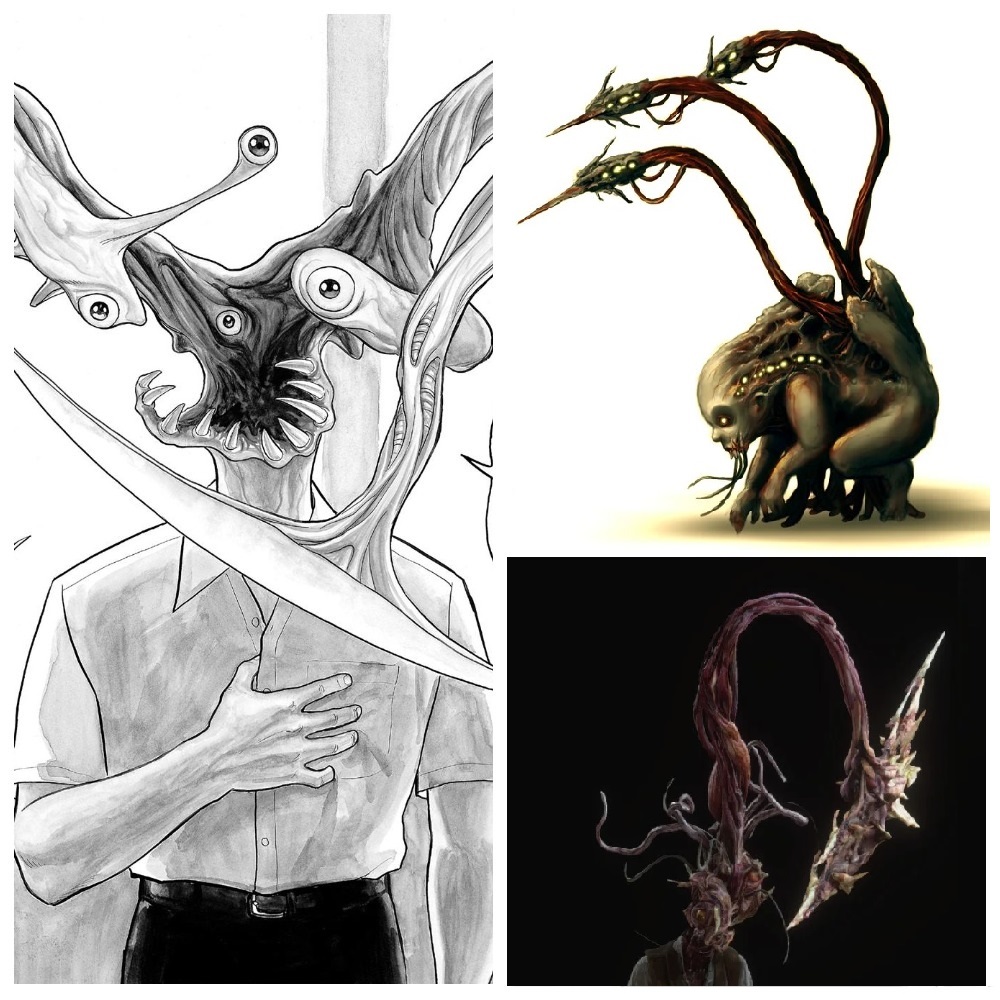
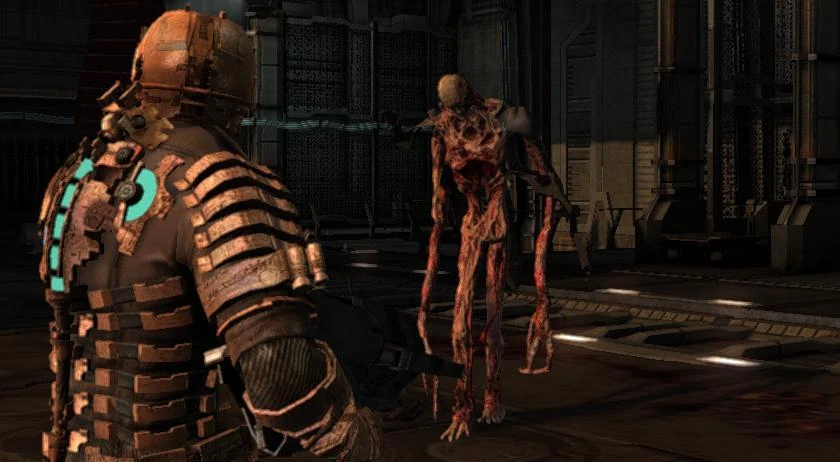
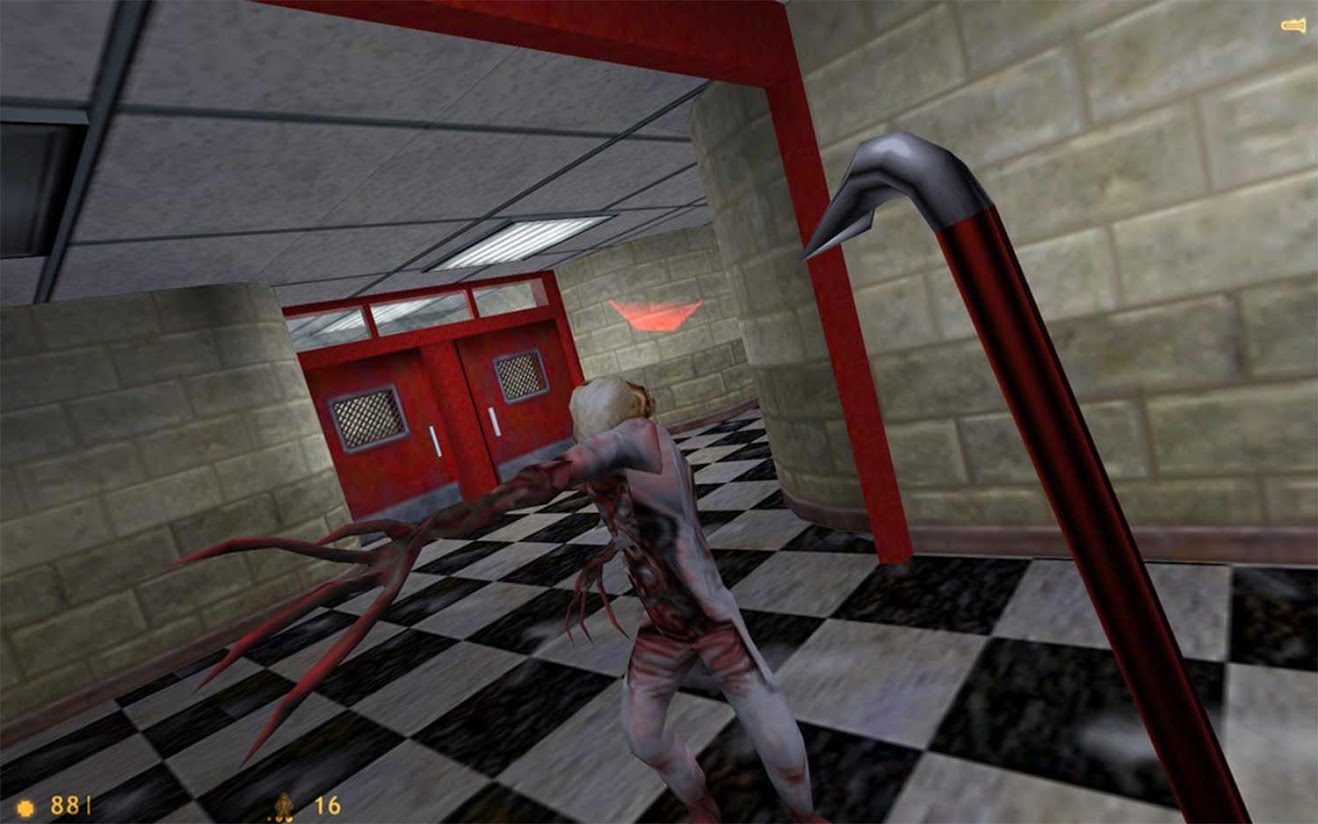
Figure 1. Visual similarities between Dead Space franchise and Parasyte manga (Iwaaki, 1989), Resident Evil 4 (IGN, 2023) and Half-Life franchise. Click images to enlarge.
These connections operate primarily through broad intertextuality within the horror and science fiction genres. Nonetheless, the Dead Space franchise utilizes narrow intertextuality as quotations and allusions. The visual examples are the most direct (see Fig. 1).
Bernard Perron identified the trajectory of designing monsters and antagonists through abnormal, extensive body parts as a tool to hit the playable character from a distance, elevating the sense of threat and danger. He traced such a design as early as the Alone in the Dark franchise. Capcom later introduced a similar mechanic through Resident Evil Lurkers in the second, which was further developed in the fourth game (Perron, 2018, pp. 389-390). Visually, “Necromorphs” resemble the Las Plagas enemies from Resident Evil 4 -- especially in Dead Space 3, when, upon attacking some of the humanoid enemies, their torsos quickly transform into tentacles with razor-sharp edges. Another notable example is the Divider’s flesh and long, slender limbs, which closely resemble those used for the head crab zombies in Half-Life (Valve Software, 1998). Labeling one of the shown monsters as “Lurkers” serves as an additional marker of “narrow intertextuality.”
However, Dead Space does not only rely on the survival horror genre for inspiration, but also for the depth and succession of similarities that connect it to other media. Its links with Resident Evil 4 reveal an interesting trajectory. Capcom offices are located in Osaka, a city deeply immersed in the Japanese manga culture, linking the game to the popular Japanese manga Parasyte (Iwaaki, 1989). Furthermore, the design of parasitic extensions and tentacles previously appeared in The Thing (Carpenter, 1982). These solutions of weaponized tentacles, and especially razors, create a temporal succession that grows beyond video game medium and binds various projects within horror genre regardless of the media industries where they were originated.
The second layer of intertextuality arises from the visual layer, but extends into gameplay (See Fig. 2). In the Resident Evil franchise, mini-bosses often require the player to damage them through colorful parts of their bodies, often represented as yellow or orange orbs, which make targets in fights intuitive to identify. The Dear Space franchise uses the same trope, especially in the third installment. Another example of Resident Evil’s influence on Dead Space is the “Regenerator” enemy type -- almost immortal enemies that require players to spend additional ammo to reveal weak spots. In the same gameplay fashion, the first and third Dead Space iterations force Isaac to slow down and avoid these “regenerative Necromorphs” until the level design allows running away or destroying them. Finally, Dead Space 3 shifts the location of the main event to Tau Volantis, a frozen home world of an original “Marker.” Several game sections force the protagonists to deal with alien creatures, survive the severe sub-zero environment, and find shelter to rest and warm up before obtaining a special suit, which repeats plot beats seen in The Thing (Computer Artworks, 2002). These gameplay solutions are not as direct as the visual examples, yet they serve as allusions to “narrow intertextuality.”
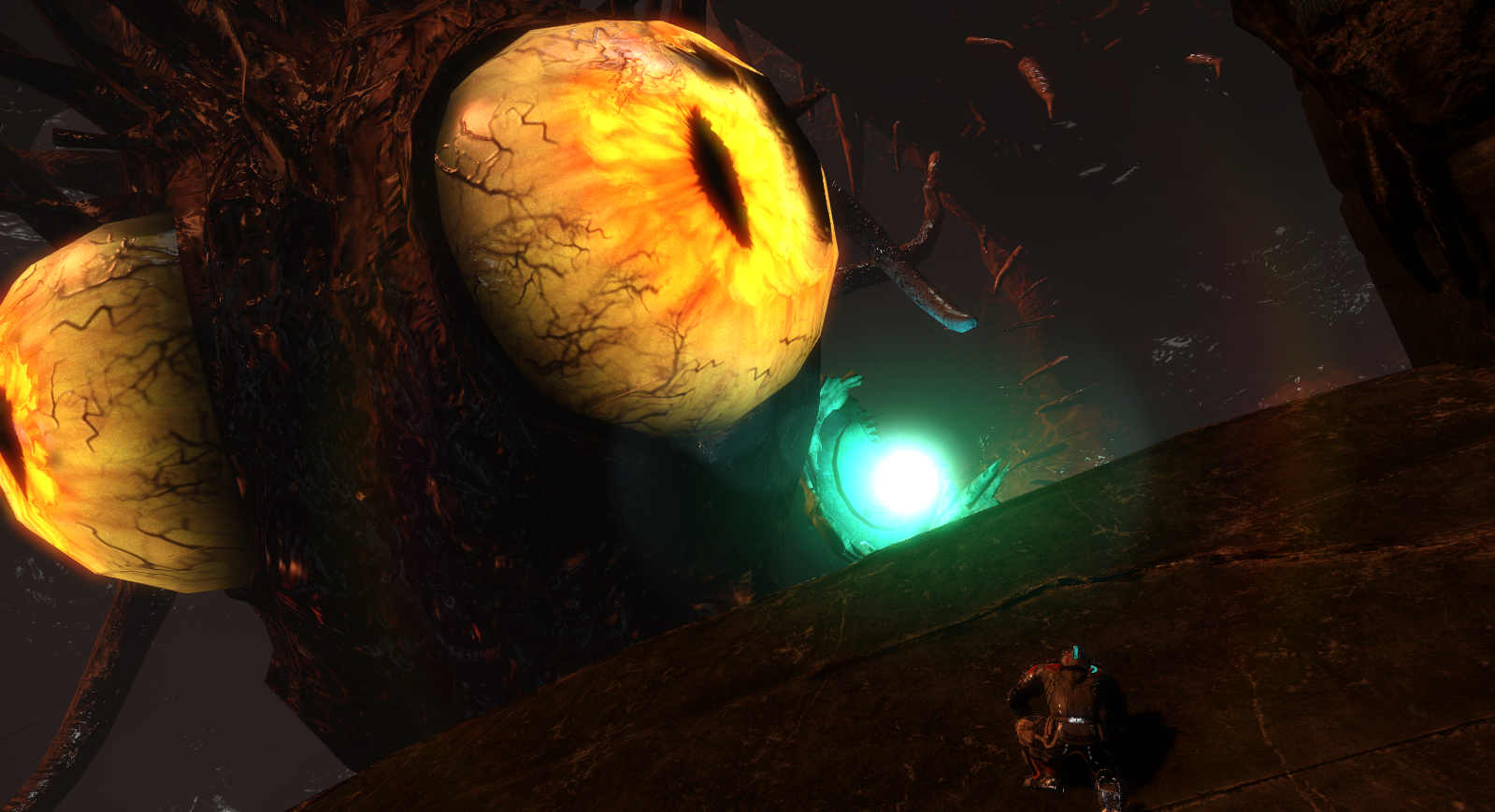
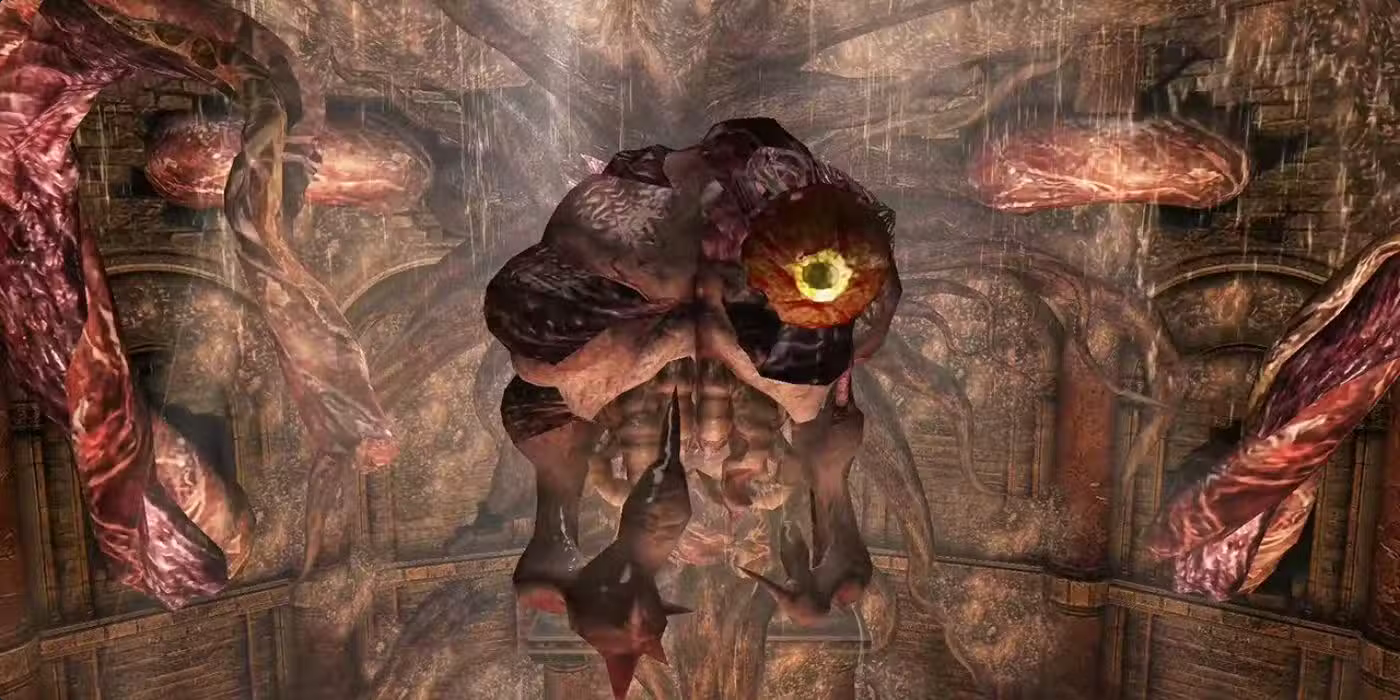
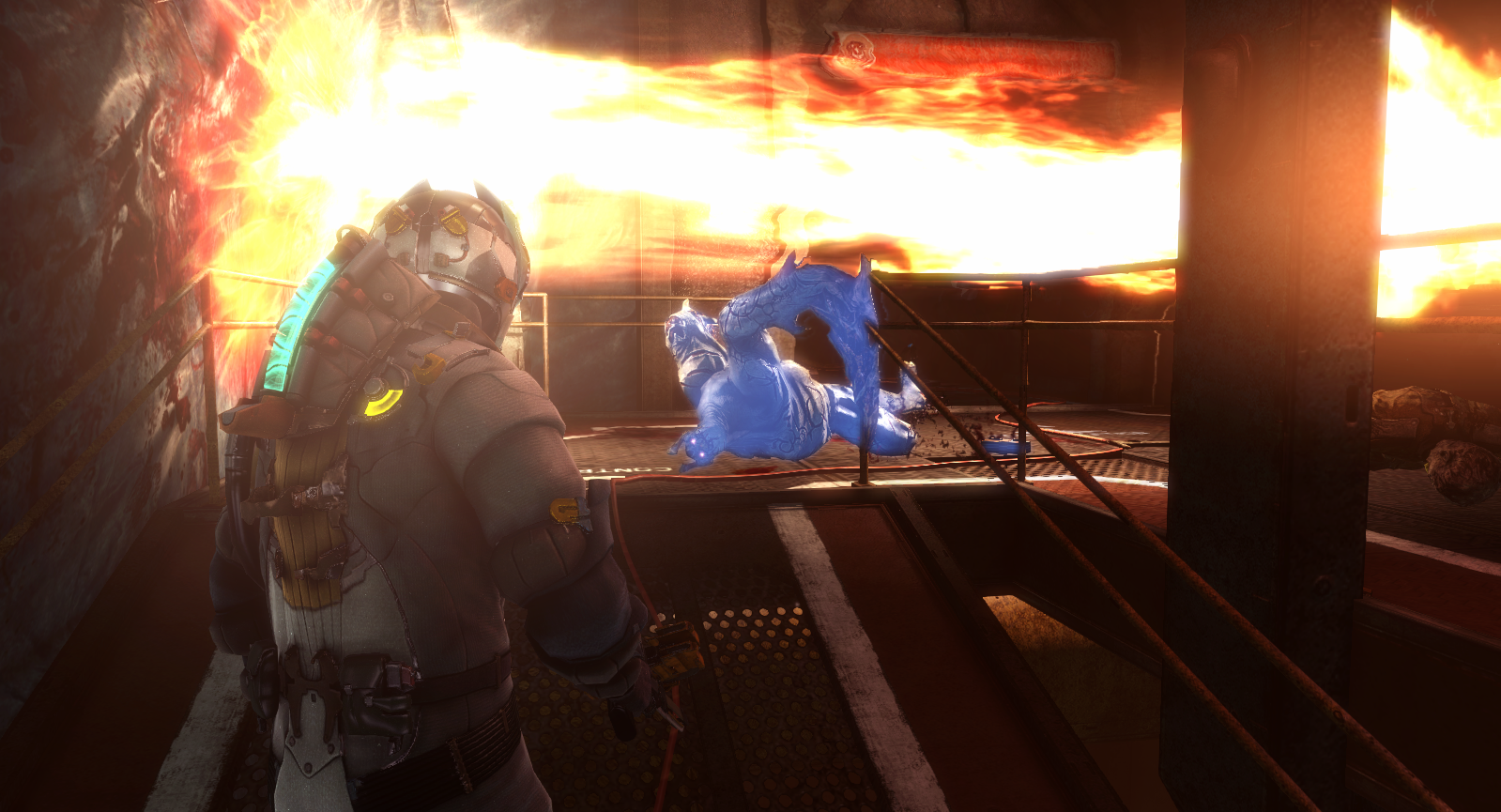
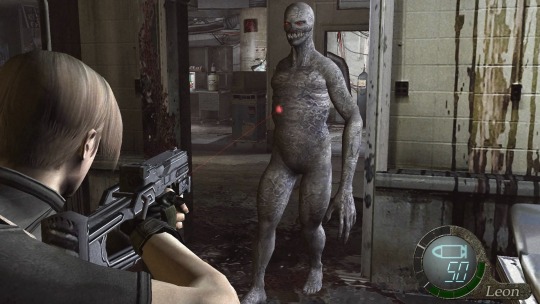
Figure 2. Visual and gameplay similarities between Dead Space franchise and Resident Evil 4 (Capcom Production Studio 4, 2005). Click images to enlarge.
The third layer is thematic. The Dead Space franchise perfectly fits the creative universe of cosmic horror. For instance, Event Horizon (Anderson, 1997) depicts a rescue vessel boarding a starship used to test an interdimensional travel device that ends up in a state of emergency. The film explained the cataclysm as the result of the gravity drive’s functions, which opened a portal to chaos or hell. This plot device serves as a link to the mythology outlined in Warhammer 40K (Warhammer 40K, 1987). Concepts like “The Warp” or the “Sea of Souls” describe a dimension used to warp through time and space, consisting of psychic energy, corrupting travelers and spilling its mutilated inhabitants out to more familiar cosmic dimensions. The combination of chaos, torment and hellish transformations is a reference to Hellraiser (Barker, 1987).
Interestingly, “Sea of Souls” may serve as an antithesis of “Sea of Flesh,” which reminds of xenomorphs from the Aliens franchise and “The Many” from System Shock 2 (Irrational Games et al., 1999). “Necromorphs” are controlled from a single source and tend to spread infinitely, consuming biomass. From another standpoint, the Unitology church preaches becoming one with the "Markers" and achieving complete “Convergence” of biomass. Its purpose and religious nature to achieve “Sea of Flesh” is reminiscent of the Warhammer 40K universe’s Lorgar Aurelian, one of the Primarchs of the Imperium of Man whose zealous character leads to the ultimate downfall under the influence of Chaos Gods.
Another clear influence on the Dead Space franchise is Lovecraft’s At the Mountains of Madness (1936) and the broader Lovecraftian mythology. The novella takes place in Antarctica and revolves around alien races, “Elder Things” and “Shoggoths.” The descriptions of both are reminiscent of Dead Space’s Necromorphs, such as their mutual emphasis on appendages and additional lore details that the first “Marker” had already existed on Earth. It did not only trigger the creation of the Unitology philosophy but also led to more horrifying discoveries and events about laws and “Gods” of the Universe. In Lovecraftian mythology, the supreme deity is Azathoth, the “Outer God,” a chaos depicted by artists and illustrators as a gigantic, ever-changing entity. In Dead Space 3 (Visceral Games, 2013), the purpose of the “Markers” is explained as merging all biological species into one cosmic “soup” through “Convergence,” and creating gigantic “Necromoons,” which link its siblings into a biotelepathic network throughout the galaxy. Unlike the alien antagonists in the Mass Effect (BioWare, 2007) franchise, the Necromorphs do not aim to “reset” the galaxy and ensure its progressive development, but rather to bring about total annihilation, denying any happy endings. Ultimately, the tone and the theme of cosmic horror suggest minor allusions with the Alien, System Shock and Vangers franchises, simultaneously applying the key leitmotif of Lovecraftian mythology, on the greater scale. The latter allows speculations around the “Markers,” “Necromophs” and “Necromoons” as manifestations of Azatoth or harbingers of its arrival.
To conclude this section, I propose that these numerous, multifaceted examples illustrate something more than the application of “broad” and “narrow” intertextuality. Even in instances of indirect quotations and allusions, intertextuality links the Dead Space games into a web of cross-references that may serve as a network reinforcing the repeatability of each node. Together, they allow the audience to build a multifaceted experience of familiarity and novelty, meaning that such a “network” represents not only selective but “surplus value” (Stam, 2000) and potential of almost endless exploration of other “texts.”
Dead Space: from Operational Seriality to Hybrid Forms of Multiplicities
The Dead Space franchise is an example of serialized practice, and of organic and operational seriality in particular. It is simple to explain the former: the franchise delivers a coherent story primarily through the video game medium across various platforms, supported by novels and animated films. The core of the franchise is three consecutive video game installments. The first one serves as the source, and the other two are its sequels, while intermedia projects can be framed as various forms of repetitions. For instance, the animated film Dead Space: Downfall (Patton, 2008) serves as a prequel to Dead Space (EA Redwood Shores, 2008). Dead Space: Aftermath (Disa, 2011) can serve as both a sequel to the first installment or a prequel to the second. Hence, organic seriality is a process of continuation through evolving narrative driven by a feedback loop. It suggests that the franchise engages in a sort of dialogue with predecessors and audiences to evolve and ultimately reinforce demand for such stories, while also encouraging exploration of the franchise as a whole. Organic seriality serves as a more restrictive combination of inter-ludic (between games) and para-ludic (outside of games) seriality, extending to other video game continuations and beyond through transmedia storytelling (Denson & Jahn-Sudmann, 2014).
On the other hand, operational seriality has a more limited application and is primarily manifested in the Dead Space remake (Motive Studio, 2023), making it a specific case of inter-ludic seriality. The remake includes numerous visual, narrative and gameplay adjustments. The most crucial of them are changes to the visual design of Isaac Clarke. Where the original game used multiple actors to make up Clarke’s performance (with the appearance and body capture performed by Max Shippee and voice acting conducted by Gunner Wright), the remake casts Gunner Wright as a model for all of Isaac’s character components. Moreover, the video game and its New Game Plus mode included a secret ending that altered the original one. In the 2008 title, Isaac escapes Aegis VII after the final battle, takes off his helmet and encounters a hallucination of his fiancée Nicole staring at him, which was designed as a shocking jump-scare. In the 2023 title, upon finding all hidden “Marker” fragments, New Game Plus eliminated the jump-scare encounter and bridged the ending to the sequel: Nicole calmly speaks to Isaac as he replies that he needs to build something and the camera shows the interior of his shuttle covered in symbols. Upon playing the games consecutively, the plot of Dead Space 2 did not reveal the details of why Isaac reconstructed the “Marker” on Titan station and why his memories are suppressed, suggesting that the original ending is more of a token of respect to the horror genre than a proper setup for a sequel. If the secret ending is taken into account, the plot coherence between the first and second games becomes smoother. Altogether, the applied changes invite conversation on whether the secret ending should be considered canon or not and fills in story gaps between games. However, for operational seriality such discussions are irrelevant. In this case, the differences between media entries are more important, including conflicting adjustments that invite the audience to speculate on the interpretations regardless of plot coherence, and returning to one another for additional analysis. Ultimately, both games may coexist within the paradigm of “what ifs,” reminiscent of Constantine Verevis’s discussion of numerous “film cuts” and their function in the Blade Runner franchise (Verevis, 2020). Since fan mods can be problematic to frame under inter-ludic seriality (due to their unauthorized nature regardless of the overall quality and integration into "canon" events), operational seriality can theoretically compensate for such a drawback.
The discussion around seriality already revealed that critics and audiences appeal to remakes, sequels, prequels and spin-offs, which is self-explanatory in justifying video game multiplicities as a suitable umbrella term as a broader approach that embraces the interruption of narrative coherency. This is especially fair for hybrid repetitive forms, when a video game can serve both as a remake and a reboot. For instance, the 2023 installment of Dead Space can be identified as such. On the surface, its main function is to update the first game’s graphics, gameplay, design and plot. Without delving into much detail, based on official announcements and discourse (Electronic Arts, 2021; Gameranx, 2023), Dead Space (Motive Studio, 2023) is considered a remake. If appealing to video game scholars, like Bossman, Brown, Aarseth and Grabarczyk, it is also considered a remake.
On the other hand, in film studies, rebooting is often characterized as inseparable from marketing strategies that profit from older intellectual property and target specific audiences, including the exploitation nostalgia. If sales fail to reach estimated numbers, the franchises are often put “on ice,” meaning that rebooting is a narrow category of remaking focused on specific goals. On a larger scale, they may draw attention to both the franchise and its themes, including other projects. As Andrew Scahill well noted, “rebooting has become a popular way to promote films and other media forms that revisit familiar narratives with an altered origin story, narrative approach, or artistic aesthetic” (Scahill, 2016, p. 317). There has been at least a decade between the release of the 2023 game and its predecessors, which could potentially revitalize the video game franchise and reintroduce it to audiences who missed the trilogy. It also draws attention to related, though peripheral, projects, like The Callisto Protocol (Striking Distance Studios, 2022), a spiritual successor to Dead Space designed by a different studio. Furthermore, there are details that align 2023’s Dead Space with the second and third installments of the franchise, such as the inclusion of a secret ending, reimagining the Church of Unitology as a crucial plot device, and additional “Marker” lore. Consequently, in addition to being a remake, 2023’s Dead Space may also serve as a soft reboot.
The Callisto Protocol (Striking Distance Studios, 2022) can be seen as a loose spin-off set in 2320, one and a half centuries before the events of the Dead Space franchise. It revolves around a much narrower story, without direct references to “Necromorphs,” but rather around a “Biophage virus” in the Black Iron Prison. The games share core mechanics, genre and theme. More importantly, The Callisto Protocol’s lead designer is Glen Schofield, co-created the original Dead Space (EA Redwood Shores, 2008). This latter link serves not only a manifestation of celebrity intertextuality but also signals spiritual succession and, to a certain extent, rebooting particular aspects of the Dead Space franchise, encouraging the audiences to treat the project as a spin-off while leaving room to link each game through their similar settings and events.
Finally, it is worth mentioning that the Dead Space franchise has a complicated relationship toward the Dead Space movie, originally titled Biohazard (Gallo, 1991) and released much earlier than the video games of the same name. The film’s events take place in a research facility and revolve around a highly infectious pathogen which causes subsequent mutations in beings it infects. Its theme and many of its plot arcs are reminiscent of Alien (Scott, 1979). Simultaneously, it is often considered a shot-to-shot remake of Forbidden World (Holtzman, 1982), confirmed by the Fred Gallo’s audio DVD commentary (Corey, 2010) and the trajectory of its development, including the involvement of a renowned producer Roger Corman (Good Bad Flicks, 2023) in Gallo’s movie. Nonetheless, thematic resemblances and a shared title suggest an interesting link to the Dead Space game franchise. Does this make the first iteration of the video game franchise a remake of the film? If appealing to Michael Druxman’s taxonomy of remakes based on literary sources, it is a “non-remake” because, despite an identical title, genre and theme, the plot is entirely new (Druxman, 1975, as cited in Verevis, 2006, p. 7). Even if adopting Druxman’s framework, it is difficult to ignore the film as a potential source of inspiration, which returns us to the concept of intertextuality, whether in a narrow or broad sense. Similarly, since the Dead Space 1991 film is often referred to by its early title Biohazard, it establishes a loose link with the survival horror genre and Resident Evil franchise, which is also titled Biohazard in Japan. The initial film title creates an interesting intertextual and intermedia link loop with the Dead Space video game franchise. The 2023 title raises debates of being not only a remake or soft reboot of a franchise but a more complex discussion of intermedia non-remakes and identical titling whether coincidental or not.
To conclude considering these case studies, I want to briefly address popular criticism of the Dead Space franchise as producing inferior content with each new installment, forcing scholars to label the first iterations as survival horror and the third one as action-driven science fiction, as if this change is somewhat bad and negative. Bernard Perron countered these claims by stressing the nature of the survival-horror genre’s development, fluidity and adaptability over time (Perron, 2018, pp. 227-228). Contemporary film and adaptation scholarship does not frame repetitions as inferior or superior, good or bad, and does not even operate with softer categories of “better” and “worse.” Instead, they treat them as distinct and encourage audiences to explore their textual, industrial and critical nature separately and as a system, stressing that a project exists as a manifestation of individual and cumulative value. The Dead Space franchise employs “creative eclecticism” and draws on a variety of intermedia titles, but does not end up as a survival-horror and science-fiction “Frankenstein,” because the developers produced original plots, characters and experimented throughout the series. The sections on intertextuality and seriality outlined above illustrate that each game in the franchise incorporates various multifaceted links to other projects and situates itself within a broader picture of survival horror, science fiction and cosmic horror. From this perspective, criticism that the game over relies on similarities with other genre titles and action-oriented gameplay, that tone changes too dramatically across each game in the franchise, or that Dead Space lost its identity when Electronic Arts executives forced the developers to appeal to a broader audience (Yin-Poole, 2013) all become irrelevant.
In the end, it is crucial to keep in mind that the Dead Space franchise is about replication: the alien artefact, “Black Marker,” is later replicated in “Red Markers,” both of which transmit a signal that “remakes” humanity into “Necromorphs.” Their ultimate manifestation, “Necromoon,” accumulates “remade” living beings and comes to life. Metaphorically, it is an intertextual cluster or even, what Damien Broderick calls a “Megatext,” an “unusually concentrated encyclopedia […] of imagery worlds, tropes, tools, lexicons, even grammatical innovations” (Broderick, 1995, p. 59). When projected onto the Dead Space franchise, such a “megatext” is an evolving body of shared survival-horror and science-fiction creative tools that “absorb,” combine and reshape numerous textual units. Thus, the theme of repetition, and consequently intertextuality and seriality, is imprinted into the trilogy. It can serve as a metaphor for how it uses elements from other video games and popular titles. The trilogy itself becomes kind of a “Marker,” an accumulation of the multitude of video game components analyzed, rewritten, replicated and merged to hypnotize and subvert potential audiences.
Conclusion
This article examines how contemporary video game scholarship approaches rereleases and repetitive forms such as remakes and remasters. It also introduces theoretical perspectives from film and media studies, particularly the concepts of intertextuality, seriality and multiplicities. I argue that adopting these interdisciplinary frameworks allows scholars to move beyond narrow taxonomies of remakes and remasters and instead analyze reiterations as part of broader systems of cultural repetition within contemporary media industries.
The Dead Space franchise is used as a case study here because it represents a complex intermedia system with a video game trilogy at its core and numerous transmedia extensions. This analysis demonstrates that the franchise incorporates extensive intertextual connections with earlier video games, films and horror traditions. These connections operate through broad and narrow forms of intertextuality, while the narrative development of the series reflects organic seriality. The 2023 remake further illustrates operational seriality and highlights the hybridity of video game reiterations, functioning simultaneously as a remake and a soft reboot of the franchise.
More broadly, the article demonstrates the value of interdisciplinary dialogue between game studies and film studies. Concepts, such as multiplicities and operational seriality, offer useful tools for understanding the increasing prevalence of franchise reiterations across contemporary media industries. Rather than treating remakes, remasters and reboots as isolated categories, these frameworks allow scholars to analyze video games as part of larger webs of repetition, adaptation and transformation. In this sense, the study contributes to ongoing debates about repetitions in digital media.
Still, I would like to point out the limitations arising from my choice of case studies, which may also serve as fodder for potential further research directions. First, intertextuality, seriality and multiplicities were not tested on fan modifications and unauthorized productions. Second, this survey of the Dead Space franchise primarily focused on its video game projects, without an in-depth analysis of titles from other media within the franchise. Next, the article does not comprehensively review thematic references and quotations within the Dead Space series from related media, that are not limited to the ones discussed above.
Video game scholarship can also be useful for film academia when approaching shot-for-shot remakes as “remasters” of classic titles rather than digitally “restored” or enhanced ones, especially with the help of AI software. Therefore, this article can serve as an invitation to continue interdisciplinary dialogue on the issue of repetitions.
References
Altman, R. (1984). A Semantic/Syntactic Approach to Film Genre. Cinema Journal, 23(3), pp. 6-18. https://doi.org/10.2307/1225093
Alvart, C. [Director]. (2009). Pandorum [Film]. Constantin Films; Studio Bebelsberg.
Anderson, P.W.S. [Director]. (1997). Event Horizon [Film]. Golar Productions; Impact Pictures; Paramount Pictures.
Arkane Studios & Steamroller Studios. (2017). Prey [Video game]. Digital game directed by Raphael Colantonio, published by Bethesda Softworks & ZeniMax Asia.
Ars Technica. (2020, June 3). Dead Space Creator Glen Schofield: Extended Interview [Video]. https://arstechnica.com/video/watch/dead-space-creator-glen-schofield-extended-interview
Barker, C. [Director]. (1987). Hellraiser [Film]. Film Futures; New World Pictures; Rivdel Films.
BioWare. (2007). Mass Effect [Microsoft Windows PC]. Digital game directed by Casey Hudson, published by Electronic Arts & Microsoft Game Studios.
Björk, S. (2012). Best Before: The Red Queen Dilemma of Preserving Video Games? The International Journal of Computer Game Research, 12(2). Retrieved from https://gamestudies.org/1202/articles/bjork_book_review
Bloober Team. (2024) [2001]. Silent Hill 2 [Microsoft Windows PC]. Digital game directed by Mateusz Lenart, published by Konami Digital Entertainment.
Bosman, F. (2023). Video Game Romanticism: On Retro Gaming, Remakes, Reboots, Game Nostalgia, and Bad Games. Journal of Religion, Film and Media, 9(1), 25-44. https://jrfm.eu/index.php/ojs_jrfm/article/view/347/296
Breadman. (2017). Entropy: Zero [Microsoft Windows PC]. Digital game mod directed by John Richardson, published by Breadman.
Broderick, D. (1995). Reading by Starlight: Postmodern Science Fiction. Routledge.
Brown, L. (2024). Rethinking Remakes: Value and Culture in Video Game Temporalization. Games and Culture, 19(3), 337-356. https://doi.org/10.1177/15554120231163655
Capcom. (2024). Dead Rising Deluxe Remaster [Microsoft Windows PC]. Digital game directed by Ryosuke Cho, published by Capcom.
Capcom Production Studio 4. (2005). Resident Evil 4 [Microsoft Windows PC]. Digital game directed by Shinji Mikami, published by Capcom.
Carpenter, J. [Director]. (1982). The Thing [Film]. Province of British Columbia, Ministry of Tourism, Film Promotion Office; Province of British Columbia Production Services Tax Credit; Turman-Foster Company; Universal Pictures.
Chase, D., Grey, B., Green, R., Burgess, M., Landress, I.S., Winter, T., & Weiner, M. (Executive Producers). (1999-2007). The Sopranos [TV series]. Chase Films; Brad Grey Television; HBO.
Computer Artworks. (2002). The Thing [Microsoft Windows PC]. Digital game directed by William Latham & Mark Arkinson, published by Black Label Games & Konami.
Corey, J. (2010, November 9). Roger Corman’s Cult Classic Double Features: The Terror Within / Dead Space -- DVD Review. Inside Pulse. https://insidepulse.com/2010/11/09/roger-corman%E2%80%99s-cult-classics-double-feature-the-terror-within-dead-space-dvd-review/
Cosmatos, G.P. (Director). (1985). Rambo: First Blood Part II [Film]. Carolco Pictures; Anabasis Investments, N.V.
Crowbar Collective. (2015) [1998]. Black Mesa [Microsoft Windows PC]. Digital game directed by Adam Engels, published by Crowbar Collective.
Dead Space Fandom. (2024). Divider. https://deadspace.fandom.com/wiki/Divider
Dead Space Fandom. (2024). Lurker. https://deadspace.fandom.com/wiki/Lurker
Denson, S., & Jahn-Sudmann, A. (Eds.). (2014). Digital seriality [Special issue]. Eludamos: Journal for Computer Game Culture, 8(1). https://doi.org/10.7557/23.81
Dharma, H.R.C & Setiadi, C.J. (2023). Adaptation in Game: Consumer Rating Results for Remade and Remastered Games (1997-2022). Conference: 2023 8th International Conference on Business and Industrial Research (ICBIR). Bangkok, Thailand. https://ieeexplore.ieee.org/document/10147693
Diffrient, D.S., & Burgchardt, C.R. (2017). Intercultural Cinema and Transnational Nostalgia. In Smith, I. R., & Verevis, C. (Eds.), (2017). Transnational Film Remakes. (Traditions in World Cinema). Edinburgh University Press. https://edinburghuniversitypress.com/book-transnational-film-remakes.html
Disa, M. (2011). Dead Space: Aftermath [Animation film]. Electronic Arts; Film Roman; Pumpkin Studio; Starz Media; Visceral Games.
DMA Design. (2001). Grand Theft Auto III [Microsoft Windows PC]. Digital game produced by Leslie Benzies, published by Rockstar Games.
EA Redwood Shores. (2008). Dead Space [Microsoft Windows PC]. Digital game directed by Michael Condrey & Bret Robbins, published by Electronic Arts.
Eco, U. (1985). Innovation and Repetition: Between Modern and Post-Modern Aesthetics. Daedalus, 114(4), 161-184. https://www.jstor.org/stable/20025015
Electronic Arts. (2021, July 22). Meet the team leading the remake of Dead Space. https://www.ea.com/ea-studios/motive/news/meet-the-team-leading-the-remake-of-dead-space
Gallo, F. (Director) (1991). Dead Space [Film]. Concorde Pictures.
Gameranx. (2023, January 23). Dead Space remake developer is scared of the game. https://gameranx.com/updates/id/431734/article/dead-space-remake-developer-is-scared-of-the-game/
Garda, M. B. (2014). Nostalgia in retro game design. In Proceedings of the 2013 DiGRA International Conference: DeFragging Game Studies. Digital Games Research Association. https://doi.org/10.26503/dl.v2013i1.651
Grabarczyk, P., & Aarseth, E. (2019). Port or conversion? An ontological framework for classifying game versions. In Proceedings of DiGRA 2019 Conference: Game, Play and the Emerging Ludo-Mix. Digital Games Research Association (DiGRA). https://doi.org/10.26503/dl.v2019i1.1108
Good Bad Flicks. (2020, March 19). Exploring Dead Space - From reimagining to remake [Video]. YouTube. https://www.youtube.com/watch?v=yTccq7e0m8U
Herbert, D. (2008). Transnational Film Remakes: Time, Space, Identity [Doctoral dissertation, University of Southern California]. ProQuest Dissertation Publishing.
Hoch, I.N. (2020). Nostalgia for the New: Video Game “Remakes” and the Limits of Reflection. AoIR Selected Papers of Internet Research.
Holtzman, A. (Director) (1982). Forbidden World [Film]. Jupiter Film Productios; New World Pictures.
Hurley, C. (2016). Half-Life. The Alliance for Networking Visual Culture. https://scalar.usc.edu/works/game-changers-2016-exhibit/half-life
Hutcheon, L., & O’Flynn, S. (2013). A Theory of Adaptation (Second Edition). Routledge.
IGN. (2023). Plagas. https://www.ign.com/wikis/resident-evil-4-remake/Plagas
Imms, J. (2017, January 18). The Dead Space Series Could Have Been System Shock 3 if it Weren’t for Resident Evil 4. Gamespot. https://www.gamespot.com/articles/the-dead-space-series-could-have-been-system-shock/1100-6447056/
Irrational Games & Looking Glass Studios. (1999). System Shock 2 [Microsoft Windows PC]. Digital game directed by Ken Levine, published by Electronic Arts. Iwaaki, H. (1989). Parasyte. Kodansha.
Johnson, D. (2013). Media Franchising: Creative License and Collaboration in the Culture Industries. NYU Press. http://www.jstor.org/stable/j.ctt9qgc0q
Johnson, D.T. (2017). Adaptation and Fidelity. In T. Leitch (Ed.), The Oxford Handbook of Adaptation Studies (102-116). Oxford Handbooks. https://doi.org/10.1093/oxfordhb/9780199331000.013.5
Kim, D. (Director). (2009). Yoogamseureowoon dosi [Deplorable City] / City of Damnation [Film]. Pocket Entertainment; Zoomoney Entertainment.
Klein, A. A., & Palmer, R. B. (2016). Introduction. In A. A. Klein & R. B. Palmer (Eds.), Cycles, Sequels, Spin-offs, Remakes, and Reboots: Multiplicities in Film and Television (pp. 1-21). University of Texas Press. http://www.jstor.org/stable/10.7560/309001.4
Konami Computer Entertainment Tokyo. (2004). Silent Hill 4: The Room [Video game]. Konami.
Lester, M.L. (Director). (1985). Commando [Film]. Silver Pictures; SLM Production Group; Twentieth Century Fox.
Loock, K. (2016). Chapter 16. Retro-Remaking: The 1980s Film Cycle in Contemporary Hollywood Cinema. In A. Klein & R. Palmer (Ed.), Cycles, Sequels, Spin-offs, Remakes, and Reboots: Multiplicities in Film and Television (pp. 277-298). University of Texas Press. https://doi.org/10.7560/309001-017
Lovecraft, H.P. (1936). At the Mountains of Madness. Arkham House.
Lau, A., & Mak, A. (Directors). (2002). Mou Gaan Dou [Infernal Affairs] [Film]. Basic Pictures; Media Asia Films.
Mittell, J. (2018). 16. Operational Seriality and the Operation of Seriality. In The Edinburgh Companion to Contemporary Narrative Theories (pp. 227-238). Edinburgh: Edinburgh University Press. https://doi.org/10.1515/9781474424752-020
Nightdive Studios. (2019) [1997]. Blood: Fresh Supply [Microsoft Windows PC]. Digital game directed by Samuel Villarreal, published by Atari.
Motive Studio. (2023). Dead Space [Microsoft Windows PC]. Digital game directed by Roman Campos-Oriola and Eric Baptizat, published by Electronic Arts.
Nelson, P. (2023). Claustrophobia, Repetition and Redundancy: The Economy and Aesthetics of User-Generated Content in Sandbox Computer Games. The International Journal of Computer Game Research, 23(2). https://gamestudies.org/2302/articles/nelson
Newman, J. (2012). Best Before: Videogames, Suppression, and Obsolescence. Routledge Taylor & Francis Group.
Nightdive Studios. (2022). Blade Runner: Enhanced Edition [Microsoft Windows PC]. Digital game directed by Stephen Kick and Samuel Villarreal, published by Nightdive Studios.
Nightdive Studios. (2023). System Shock [Microsoft Windows PC]. Digital game directed by Jason Fader, published by Prime Matter.
No Code. (2019). Observation [Microsoft Windows PC]. Digital game directed by Jon McKellan, published by Devolver Digital.
O’Connor, A. (2018, October 15). Lucasfilm Shut Down Star Wars: Knights of the Old Republic Fan Remake. Rock, Paper, Shotgun. https://www.rockpapershotgun.com/lucasfilm-shut-down-star-wars-knights-of-the-old-republic-fan-remake
Patton, C. (Director). (2008). Dead Space: Downfall [Animated film]. Electronic Arts; Film Roman; Starz Media.
Parjiat, S. (2022, December 20). Dead Space Remake Developers Talk About How They Improved Upon the Survival Horror Classic. Gaming Bolt. https://gamingbolt.com/dead-space-remake-developers-talk-about-how-they-improved-upon-the-survival-horror-classic
Perron, B. (2018). The world of scary video games: A study in videoludic horror. Bloomsbury Academic.
Robinson, M. (2013). The Art of Dead Space. Titan Books.
Sant, G.V. (Director) (1998). Psycho [Film]. Imagine Entertainment.
Scahill, A. (2016). Serialized Killers: Prebooting Horror in Bates Motel and Hannibal. In A. A. KLEIN & R. B. PALMER (Eds.), Cycles, Sequels, Spin-offs, Remakes, and Reboots: Multiplicities in Film and Television, pp. 16-334. University of Texas Press. https://www.jstor.org/stable/10.7560/309001.21
Scott, R. (Director). (1979). Alien [Film]. Brandywine Productions; 20th Century Fox.
Stam, R. (2000). Beyond Fidelity: The Dialogics of Adaptation, in James Naremore, ed., Film Adaptation (New Brunswick: Rutgers, 2000).
Striking Distance Studios. (2022). The Callisto Protocol [Microsoft Windows PC]. Digital game directed by Glen Schofield & Scott Whitney, published by Krafton.Suominen, J. (2008). The Past as the Future? Nostalgia and Retrogaming in Digital Culture. In Proceedings of perthDAC2007. The 7th International Digital Arts and Cultures Conference. The Future of Digital Media Culture (Vol. 15, p. 18).
Surreal Software. (2004). The Suffering [Microsoft Windows PC]. Digital game directed by Alan Patmore, published by Midway Games.
Szymanski, D. (2018). Dusk [Microsoft Windows PC]. Digital game directed by David Szymanski, published by New Blood Interactive.Taylor, L. N., & Whalen, Z. (Eds.). (2008). Playing the Past: History and Nostalgia in Videogames. Vanderbilt University Press.
Ubisoft. (2010). Prince of Persia: The Forgotten Sands [Microsoft Windows PC]. Digital game directed by Michael McIntyre, published by Ubisoft.
Ubisoft Montreal. (2003). Prince of Persia: The Sands of Time [Microsoft Windows PC]. Digital game directed by Patrice Désilets, published by Ubisoft.
Ubisoft Montreal. (2004). Prince of Persia: Warrior Within [Microsoft Windows PC]. Digital game directed by Jean-Christophe Guyot, published by Ubisoft.
Ubisoft Montreal. (2008). Prince of Persia [Microsoft Windows PC]. Digital game directed by Jean-Christophe Guyot, published by Ubisoft.
United Front Games. (2012). Sleeping Dogs [Microsoft Windows PC]. Digital game directed by Mike Skupa, published by Square Enix.
Valve Software. (1998). Half-Life [Microsoft Windows PC]. Digital game directed by Gabe Newell, published by Sierra Studios.Verevis, C. (2006). Film Remakes. Edinburgh University Press. Retrieved from: https://www.jstor.org/stable/10.3366/j.ctt1g09vz5
Verevis, C. E. (2020). The Edge of Reality: Replicating Blade Runner. Film Reboots, Edited by Daniel Herbert and Constantine Verevis.
Visceral Games. (2011). Dead Space 2 [Microsoft Windows PC]. Digital game directed by Wright Bagwell, published by Electronic Arts.
Visceral Games. (2013). Dead Space 3 [Microsoft Windows PC]. Digital game directed by Ben Wanat, published by Electronic Arts.
Games Workshop. (1987). Warhammer 40,000 [Tabletop game]. Miniature wargame designed by Rick Priestley, published by Games Workshop. Yin-Poole, W. (2013, March 7). EA Cans Dead Space Series Following Poor Sales of Dead Space 3 -- Report. Eurogamer. https://www.eurogamer.net/ea-cans-dead-space-series-following-poor-sales-of-dead-space-3-report#:~:text=It%20seems%20Dead%20Space%203%20suffered% 20a,Mass%20Effect%20franchise%20and%20broaden%20its%20appeal
Zak, R. (2022, April 15). ‘EA was a Bit Freaked Out’: The Making of Dead Space. PC Gamer. https://www.pcgamer.com/ea-was-a-bit-freaked-out-the-making-of-dead-space/
Zanger, A. (2006). Film Remakes as Ritual and Disguise: From Carmen to Ripley. Amsterdam University Press.