“Farewell to the World”: Apocalyptic Trauma, Prognostic Time and Ecocriticism in Goodbye Volcano High
by Samuel Poirier-PoulinAbstract
This essay examines the pretrauma imaginary of Goodbye Volcano High (KO_OP, 2023) and how it can lead the player to experience apocalyptic trauma. It pays particular attention to the game narrative and how it can stick with us, slowly get inside our psyche and access our imagination, pushing us to reflect on our own extinction. Goodbye Volcano High tells the story of a group of teenage anthropomorphic dinosaurs who learn that an asteroid will probably hit the Earth, causing their extinction. The story centres on Fang as they enter their final year of high school and must navigate their relationship with their friends. This article is divided into three main sections. I begin by analyzing the characters’ affective experience of the end of the world through the lenses of slow violence and slow trauma. Then, building on this affective groundwork, I turn to temporality, focusing on prognostic time and examining how the characters’ trauma and sense of urgency reshape their relationships with one another. Finally, drawing on ecocriticism, I mobilize the concepts of solastalgia and ecoanxiety to situate these affective and temporal dynamics within a broader context of environmental loss. Taken together, these readings show that Goodbye Volcano High not only presents apocalyptic trauma as a personal and collective experience for the game characters, but also highlight how this trauma can resonate with the player amid the current climate crisis. This article demonstrates the relevance of trauma studies to reflect on future catastrophes and the affects (apathy, grief, anxiety, anger, etc.) they can lead us to experience.
Keywords: trauma studies; end of the world; apocalyptic trauma; affect theory; prognostic time; climate anxiety
Introduction
Scientists announced today the discovery of a previously unobserved asteroid, estimated to be roughly ten kilometers in diameter. Designated CO-103, the object shows a rather high chance of entering our solar system and a non-insignificant chance of collision with the planet. Astronomers were quick to add that very little is known about the orbit and the speed of the asteroid in these early stages, and trajectory predictions are very likely to change as more data is collected. (Newscaster Mary, Goodbye Volcano High)
In her essay “Apocalyptic Trauma and the Politics of Mourning a World,” literary scholar Irene Visser (2020) highlights that trauma is usually associated with past events and proposes instead to study it in relation to the threat of future disasters [1]. More specifically, she examines how trauma can be caused by the “envisaged imminent annihilation of the known world,” the “apocalyptic vision of the inevitable destruction of what is precious and irreplaceable in the current order” (Visser, 2020, p. 304, emphasis in the original), whether it is the disappearance of one’s own culture and identity, or worldwide environmental degradation. In E. Ann Kaplan’s (2012) words, apocalyptic trauma is a “trauma future-tense” (p. 367). Interestingly, this conceptualization of trauma shares some similarities with that of the DSM-5 (and DSM-5-TR), as Visser observes herself, which defines a traumatic event as an “exposure to actual or threatened death, serious injury, or sexual violence” (APA, 2013, p. 271, my emphasis).
Along the same lines, Paul Saint-Amour (2015) has argued that the anticipation of violence can itself be a form of violence, stressing that time “has become a new medium for delivering injury” (p. 7). Saint-Amour analyzes writings from the interwar period and notes that wartime and peacetime lead civilians to have traumatic expectations and brace for the next raid or the next war. Meanwhile, in her monograph Climate Trauma: Foreseeing the Future in Dystopian Film and Fiction, Kaplan (2015) develops the concept of “pretrauma imaginaries” to talk about futurist scenarios that exacerbate our feeling of impending doom and generate a form of pretraumatic stress (in contrast with post-traumatic stress disorder). Kaplan’s prime example is the film Take Shelter (Nichols, 2011), in which the protagonist, Curtis, experiences increasingly disturbing nightmares and visions of a climate apocalypse. She writes: “In these scenarios, audiences are invited to identify with future selves in uncertain, dangerous, and ultimately unsustainable worlds. Such identifications result in a pretraumatized population, living with a sense of an uncertain future and an unreliable natural environment” (Kaplan, 2015, p. xix). While Kaplan focuses on fiction, pretraumatic stress reactions have been observed in real life, notably among soldiers prior to deployment to Afghanistan (Berntsen & Rubin, 2015) and among pregnant women in anticipation of childbirth (Goutaudier et al., 2020).
Taking inspiration from this scholarship, this article examines the pretrauma imaginary of Goodbye Volcano High (KO_OP, 2023) and how it can lead the player to experience apocalyptic trauma. I am particularly interested in the narrative of Goodbye Volcano High and how it can stick with us, slowly get inside our psyche and access our imagination, pushing us to reflect on our own extinction. I concur with Kaplan (2015), who believes that narratives of doom “force us to face [the] horror and fear” (p. 9) of our future. I also take inspiration from Kara Stone’s (2024) work on game design and ecocriticism, which explores the “common affects of the climate crisis” (p. 447). I seek to reflect more broadly on the affects of the end of the world like apathy, hopelessness, anxiety, denial, grief, emotional numbness and the feeling of being stuck.
Goodbye Volcano High is an interactive film with visual novel segments that tells the story of a group of teenage anthropomorphic dinosaurs, the Dinogang, who learn that an asteroid will probably hit the Earth, causing their extinction. The story centres on Fang, the lead singer of Worm Drama, as they enter their final year of high school and must navigate their relationship with band members Trish and Reed, their younger brother Naser, and school’s student council president and potential love interest Naomi [2]. The game talks about friendship, change, coming-of-age and the end of an era. As the story progresses, it becomes clear that Fang and their friends have different life goals and motivations, causing tensions between them. While Fang devotes themself to the band and wants it to go viral, Trish plans to leave the band to focus on university and spend more time with her friends, and Reed does not seem to know what he wants. On the other hand, Naser feels pressure to perform at school to meet his parents’ expectations, whereas Naomi works hard to get the life she has meticulously planned. In these circumstances, Goodbye Volcano High can be seen as a game about trying to make things right before it is too late. One of the key features of the game is an affinity chart that shows Fang’s level of closeness to the other members of the Dinogang (the player can access this chart by opening the pause menu). At different moments in the game, the player must choose what to answer to other characters, which can impact Fang’s affinity with them. Goodbye Volcano High also includes rhythm minigames that immerse the player in Worm Drama’s practice sessions and live performances. Cultural theorist Lauren Berlant observes that affects are about “relationality and reciprocity” -- they are about affecting and being affected -- and stresses that affect theory should be “concerned with the analysis of collective atmospheres” (Berlant & Greenwald, 2012, p. 88). Goodbye Volcano High, which centres on a group of friends, the relationships between them and the apocalyptic trauma they all experience, is thus a strong case for reflecting on the collective aspect of affect and exploring collective trauma.
This article is divided into three main sections. I begin by analyzing the characters’ affective experience of the end of the world through the lenses of slow violence and slow trauma. Then, building on this affective groundwork, I turn to temporality, focusing on prognostic time and examining how the characters’ trauma and sense of urgency reshape their relationships with one another. Finally, drawing on ecocriticism, I mobilize the concepts of solastalgia and ecoanxiety to situate these affective and temporal dynamics within a broader context of environmental loss. Taken together, these readings show that Goodbye Volcano High not only presents apocalyptic trauma as a personal and collective experience for the game characters, but also highlight how this trauma can resonate with the player amid the current climate crisis. This essay demonstrates the relevance of trauma studies to reflect on future catastrophes and the affects they can lead us to experience.
The Affective Experience of the End of the World
Goodbye Volcano High opens with a scene on the beach of Caldera Bay. The Dinogang is gathered around a bonfire in the evening. Scattered on the sand are a camera with a few photos, a banner on which “Class of the end” is written, and a pizza box with some cans of beer. Fang is holding the Volcano High yearbook on which the words “Goodbye” and “The end ❤” have been added. A sense of sadness permeates the scene -- the characters seem to be grieving. Yet, the sound of the waves, the warm colours and the crackling of the fire make the scene soothing, almost as if the characters had come to terms with their inevitable fate.
A few seconds pass, and the group of friends start discussing whether they should throw the yearbook into the flames. “I vote yes,” Reed says with a resigned voice and a blank stare. “I’m not sure this is a voting-type situation,” Naser replies. “I mean, it does kind of belong to all of us… or it was supposed to,” Naomi explains. “So? What do you say, Fang?” Trish asks softly. The camera turns to Fang who looks thoughtful, and the player must choose between burning the yearbook (“Let go.”) or keeping it (“Hold on.”) (see Figure 1). I pause for a moment and finally move the joystick to the left to throw the yearbook into the flames. To my surprise, however, the game asks me to press the “LT” and “RT” buttons to confirm my decision, suggesting that Fang is still uncertain and making me question my choice. I pause again to reflect on my relationship with the past. What would I do in real life if the world were about to end? Would I really want to get rid of my memories? Would I cherish them and seek to preserve them? I finally hold the two buttons, and Fang drops the yearbook into the fire. The screen turns black and the phrase “8 months earlier” appears. How will this decision affect the rest of the game? I can hardly explain why, but burning the yearbook felt right. It felt symbolic, almost as if it were helping me to prepare for the impending destruction of Caldera Bay. Slowly, I was getting ready to make my farewells to the world of Goodbye Volcano High.
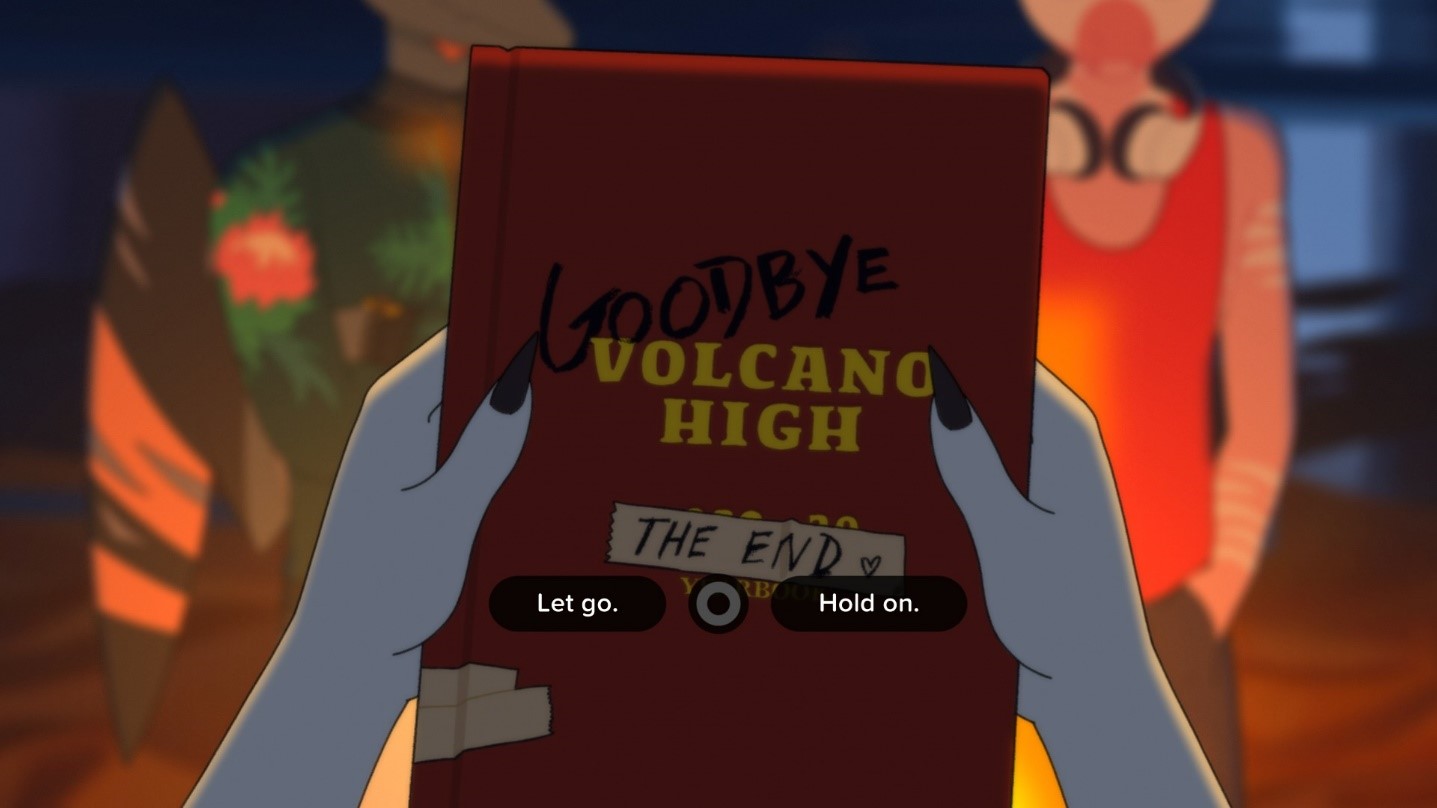
Figure 1. The player must decide whether to throw the yearbook into the flames. Screenshot by the author. Click image to enlarge.
The affective experience of Goodbye Volcano High can be understood in light of the concepts of slow violence and slow trauma. According to Rob Nixon (2011), slow violence is “a violence that occurs gradually and out of sight, a violence of delayed destruction that is dispersed across time and space, an attritional violence that is typically not viewed as violence at all” (p. 2). As Nixon explains, this concept challenges the idea that violence is necessarily a spectacular action with immediate repercussions; it highlights that violence can also exist daily, in the extremely small scale and go unnoticed (p. 2). Nixon originally used this term to refer to environmental concerns like climate change, long-term pollution and deforestation, but I believe it strongly captures the affective experience of the end of the world in Goodbye Volcano High. For Martin Premoli (2020), the concept of slow violence can be put in dialogue with that of slow trauma, a term he uses to refer to symptoms and feelings that are caused by traumatic events which take place over a long period of time, such as imprisonment or the COVID-19 pandemic. I would argue that in Goodbye Volcano High, apocalyptic trauma is a form of slow trauma. In this game, the slow trauma of the characters is caused by the knowledge that the world will probably end and the slow violence generated by this “wounding anticipation” (Saint-Amour, 2015, p. 30). The story spans over nine months, and the characters must continue to live while knowing that they might soon die. Journalists, scientists and government officials provide vague and contradictory information, leaving the population in doubt. When Fang first hears the news on television, the newscaster mentions that the asteroid has “a non-insignificant chance of collision with the planet,” but that “trajectory predictions are very likely to change.” Later on, the news announces that the asteroid is predicted to make “a close pass to the planet” and that “most projections [show] the space rock missing impact by a margin of 20 to 30 percent.” Still, the same news report notes that an amateur astronomer has published different trajectories which show a much higher chance of collision.
As the game progresses, the asteroid causes more and more electromagnetic disturbances, leading to blackouts, problems with the mobile network and the appearance of auroras, some of which are even visible during the day. This pushes the Caldera School Administration to suspend all classes indefinitely, and later leads talent scout LJ to close the Lava Java venue and cancel the CalderaFest music festival. In addition, all flights are eventually cancelled due to falling debris and to keep the skies clear. A growing sense of urgency becomes palpable, and the player, I would argue, can progressively feel part of the characters’ apocalyptic trauma by spending time with them and sharing some of their reflections. What should we do when we have the feeling that the end is near? Should we focus on our careers or spend time with our loved ones? Should we seek to leave a trace of our presence? And which emotions and affects should we seek to experience? The fact that the game opens with the scene around the bonfire and the characters accepting their fate makes the player suspect from the start that the world will really end. The player thus plays Goodbye Volcano High while always having this in mind, experiencing a form of slow violence.
The day following the worrying announcement, Fang is hardly affected by the idea that the end is near: the sole emergency for them is preparing for their audition for the Battle of the Bands, a music competition whose winners will play at CalderaFest. Trish, however, mentions having had a hard time sleeping. She wonders if this audition is still worth it and even questions the status quo: “Really? Should we even practice at a time like this? Or should we throw up the shackles of capitalism and bound into a life of freedom and hedonistic self-indulgence?!” Of all the members of the Dinogang, Reed appears to be most affected by the news. He feels alienated from the rest of society, which seems to ignore the worrying news at that point in the game:
Reed: It’s weird how everyone is acting like nothing is different. Like, to me everything feels different now. Fang: Even though it’s just a maybe? Reed: Yeah, I dunno. It’s like once something may or may not happen, you can’t stop thinking about it. And that’s, like, the rest of my life all of a sudden.
The disturbing news becomes Reed’s main preoccupation. Reed is paralyzed by fear and does not take any decision regarding his future, whether it is related to a potential career or his place in Worm Drama [3]. Throughout the game, the characters turn to the tabletop role-playing game Legends & Lore (L&L), the in-game equivalent to Dungeons & Dragons (Gygax & Arneson, 1974), to spend time together and escape their apocalyptic trauma. These segments mostly take the form of a visual novel, with text boxes, character sprites and static backgrounds. However, even in the fantasy world of L&L, Reed’s real-world fears become more and more noticeable as the campaign progresses. Reed plays as the Dungeon Master, and therefore, leads the game and serves as storyteller. The second L&L session ends with Fang’s character (Fey) having a nightmarish vision of the end of the world (see Figure 2). Reed’s distressing storytelling is worth quoting at length:
You all retire to your quarters and turn in. But Fey, you spend some time struggling to fall asleep. And when you finally do, you’re suddenly awoken by a light in your eyes./ You open them. Does someone have a torch? No, it’s coming from outside. You open the door to the deck and step out./ You hear it before you see it. A slow whine. A whisper, coming from this light in the sky… A single word:/ Cataclysm./ Something zips onto the deck beside you. It’s a small piece of hail, sizzling. Then, zip zip ziiip, more start coming down around you./ Then come the screams. The burning hail rains down, tearing through the ship. Everyone is panicking, running. It’s chaos. You see Sydd and Celeste turn and run full speed off the deck, holding hands as they fall./ The light winks out. For an eternity, everything is quiet…/ And on the horizon, you see the sunrise. Rays of crimson light crawl across the sky. The whole sky is a dazzling red. It’s so peaceful./ But your gut knows better. This isn’t sunlight. Sunlight doesn’t smell like ash. The sky is on fire. You hear the roar now, and your world explodes in pain. The sound is deafening. It’s so hot. So inescapably hot. Why won’t it just end?/ And you wake up.
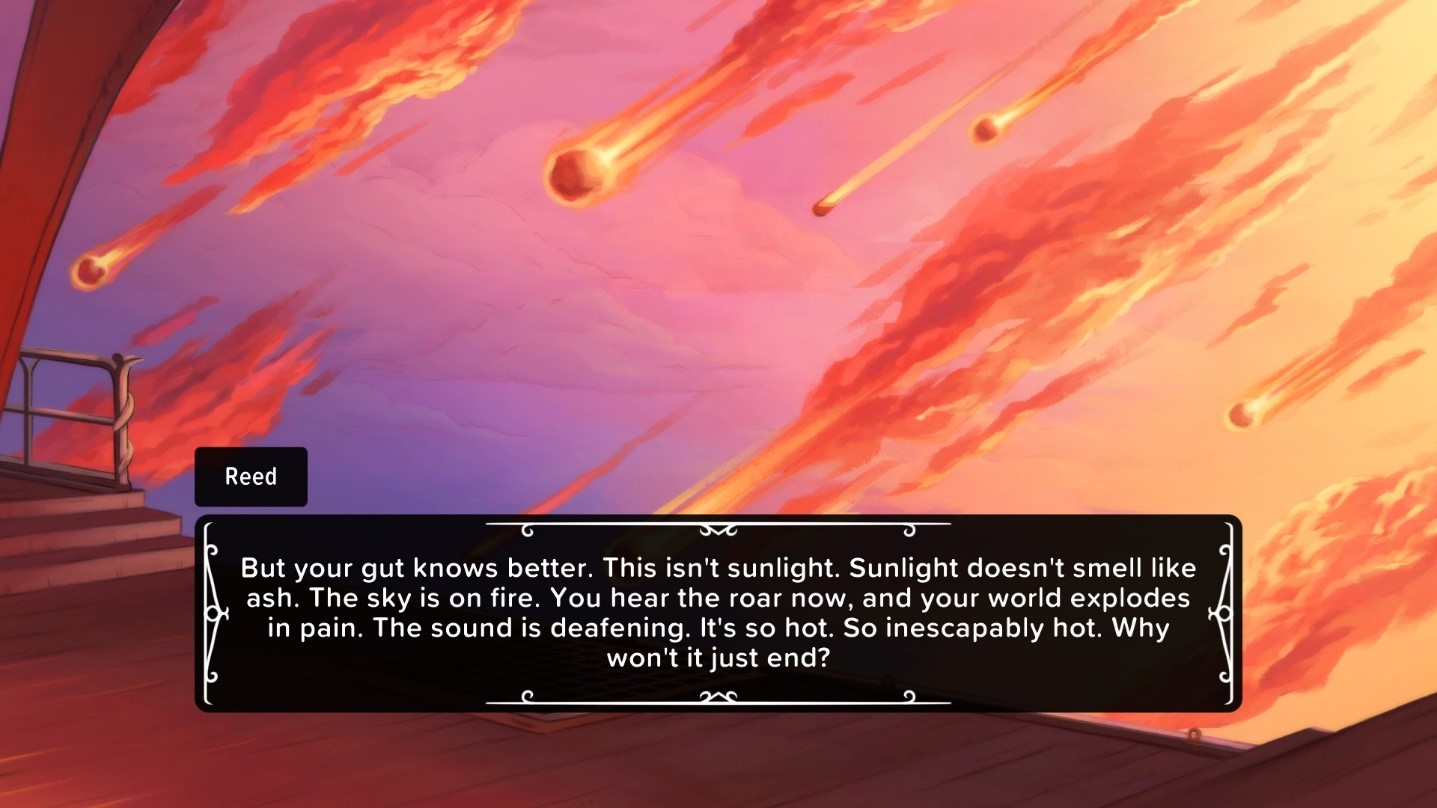
Figure 2. Fey has a nightmarish vision of the end of the world. Screenshot by the author. Click image to enlarge.
This description is unsettling due to its details and the range of traumatic events and sensations it evokes: a firestorm, people screaming and panicking, two friends seemingly jumping to their death, the smell of ash, overwhelming heat and endless pain. Reed’s voice is calm and ominous, and the pacing gives the player time to imagine each element he describes one by one. Interestingly, Stone (2024) observes that “visual novels, with their simple visuals and expansive writings, can describe and communicate affect and sensations of the environment without intending to virtually replace it” (p. 456). I would argue that segments like this one allow the player to partially access Reed’s apocalyptic trauma while giving the player enough space to co-create this trauma by using their own imagination. Reed concludes the game session by telling the group that things are coming to an end and that time is almost up, a reference not only to the end of the fictional L&L campaign but to the end of the world as well.
In the third and last session of L&L, the characters must defeat Braxus, a God-like creature who seeks to destroy the world and can be seen as Reed’s interpretation of the upcoming asteroid. The game session ends dramatically: after defeating Braxus, all the characters are absorbed into a portal and their fate is left unknown. Reed concludes, with a lump in the throat:
For a long time you drift through the void, dreaming. You see the glimpses of memories -- happy moments, loose ends you never got to resolve. Eventually though, you start to lose grip. It becomes too hard to hold onto yourselves in the tempest -- you have to let go. And so you do…
Playing L&L ultimately becomes a way for Reed to cope with his apocalyptic trauma, work through it and accept his future death -- it is something cathartic. This final scene is representative of what the characters have been going through in their real lives over the past few months: remembering past events [4], dreaming and wondering what their future may have hold and trying to accept their fate -- accepting to let go. These L&L sessions are also interesting because they highlight that the boundary between reality and fiction can be blurry at times; they acknowledge that our preoccupations in the real world can influence how we behave in the fictional worlds (and vice versa), a phenomenon commonly known as “bleed” in game design and game culture.
While Reed’s affective experience of the end of the world is mostly shaped by fear, paralysis and finally acceptance, Naomi’s experience is marked by denial and anger. Goodbye Volcano High is interesting on that level because it shows the plurality of affective responses people can have to the same traumatic event. Despite the impending disaster, Naomi keeps herself occupied by studying and getting involved in extracurricular activities with the hope of entering medical school. She tries to convince herself that the asteroid will miss the Earth or that the impact will be negligible, and even seems to think that she has some control over the situation. When Reed questions in class the relevance of preparing their university applications due to the asteroid, Naomi, slightly irritated, responds: “No, the future is what we make it! I’ve worked really hard to get the life I want, and I’m not gonna let a big jerk rock ruin that!” Naomi’s denial culminates toward the end of the game, when the Dinogang gathers around the bonfire. Everyone begins to accept their deaths and give up their dreams, even Fang who has just learned that CalderaFest has been cancelled. Naomi replies angrily to Fang, and then to the rest of the group:
Seriously? This was your big thing. How can you say it just doesn’t matter? How are we supposed to just... be FINE? … It’s easy for you guys to give up on everything. But I… I had so much planned... I have so many things I’ve worked on that I’ll never get to see.
As Kaplan (2012) notes, trauma future-tense -- or apocalyptic trauma -- is also about the trauma of having no future, and this is what Naomi suddenly experiences. Her reaction is close to an emotional breakdown or a panic attack, as her denial gives way to overwhelming anger. Naomi’s anger stems from the realization that the end is inevitable, but also her frustration at seeing her friends react so calmly, as if they were abandoning everything. Naomi even seems to believe that her future is more worthy than that of the rest of the Dinogang.
In terms of mechanics, Goodbye Volcano High plays with the player’s sense of agency by initially giving them the impression that they have some control over how the events of the game unfold; however, this control is mostly illusory. Janet Murray (1997/2017) famously defined agency as “the satisfying power to take meaningful action and see the results of our decisions and choices” (p. 123). Goodbye Volcano High gives the player a sense of agency by asking them to choose dialogue options throughout the game and by displaying an icon in the top left corner of the screen whenever they make a decision that might impact Fang’s relationship with another character. Yet, despite the player’s decisions, the overall trajectory of the narrative remains largely unaffected. No matter what the player does, they will always win the Battle of the Bands and Trish will want to leave Worm Drama. Naomi will always get upset during the bonfire, and the end of the world will happen. The player has no control over these events (and many others). In addition, some of the dialogue options that initially appear available are in the end inaccessible (on several occasions, one of the options blacks out when hovered over with the joystick, restricting the player from choosing it), while others are very similar and lead to the same result (choosing between “Yes” and “Please,” for example, when Naser offers the player to drive them home). Lastly, the short descriptions that summarize each dialogue option are sometimes misleading and do not really match what Fang ultimately says.
In his analysis of Beyond: Two Souls (Quantic Dream, 2013), Evan Kuznetsov (2017) highlights that the loss of in-game agency can be a strong way to procedurally represent the lack of control experienced by a game character during a traumatic event (pp. 59-64). With that in mind, I would argue that the player’s restricted agency in Goodbye Volcano High, along with the frustration it can lead them to experience, effectively convey the characters’ feeling of being trapped and condemned, as if nothing could be done to avoid their impending deaths. The player has no control over the fate of the characters, who themselves are equally powerless to change their fate. Moreover, the fact that the player needs to choose dialogue options while knowing that the world will probably end, combined with the limited impact of their decisions on the game’s events, can make them experience apathy, leaving them with the impression that nothing truly matters. In the next section, I continue my analysis of apocalyptic trauma by turning to temporality and how the impending end of the world influences each character’s relationships with one another.
Living in Prognosis and Making Farewells
The concept of prognostic time offers a strong framework for reflecting on the end of the world. The term “prognosis” originates in medicine, where it refers to the likely course of a disease or illness, including in certain cases the amount of time someone has left to live. An accurate prognosis can facilitate patient-centred care and end-of-life decisions-making, helping the patient to have a good death (Mori et al., 2022). In anthropology, Lochlann Jain (2007) has proposed the concept of “living in prognosis” to describe the experience of people living with and dying of a disease or illness, particularly cancer. As Jain explains, living in prognosis changes one’s relationship to time, reshaping how individuals perceive their “age, generation, and stage in the assumed lifespan” (2007, pp. 80-81). Death is central to life in prognosis, and the anticipation of the future is an ongoing and ever-present concern (Jain, 2007). In Goodbye Volcano High, the characters are living in prognosis, and even though they are in their late teens -- a pivotal moment when one makes important decisions about their future -- they already appear to be at the end of their lives. Journalists, scientists, and government officials are unable to provide a clear timeline for how much time remains, making it harder for people to prepare for their death. Fang and their friends can only infer the remaining time by observing the asteroid’s gradual impact on the world around them and interpreting the decisions made by various actors. Similarly, the player is left in the dark: they do not know any more than the characters when Caldera Bay will be destroyed, which makes it difficult to prepare for the upcoming disaster. It is precisely this condition of living in prognosis that is traumatic for the characters.
This sense of urgency changes the characters’ relationship to time. It notably shapes Fang and Naomi’s relationship, especially toward the end of the game. Early in the game, Fang receives text messages from Pretty Hero, a secret admirer who is later revealed to be Naomi. The two exchanges messages over several months until they meet in person after the Battle of the Bands and Pretty Hero reveals her identity. However, Fang, who just had an argument with Trish, mentions needing some time to process everything, and Naomi leaves, disappointed. The two keep their distance until the Dinogang reunites around the bonfire near the end of the game. After a tense argument, Fang and Naomi finally reconcile. At that point in the game, the player can decide to pursue a romantic relationship with Naomi. This sudden opportunity when the world (and the game) is about to end is a little questionable in terms of game design: the romantic story arc between Fang and Naomi is underdeveloped and lacks nuance, and the characters’ behaviour is somewhat inconsistent with their personality earlier in the game. Why would Fang and Naomi forgive each other so easily, to the point of being willing to start a romantic relationship? At the same time, this decision aligns with the apocalyptic context of the game, where the characters are grappling with limited time and heightened emotions; it reflects the characters’ awareness of their prognosis. Knowing that their lives are nearing an end, Fang and Naomi focus on healing and seek to experience something they might never have. To me, this story arc and the sense of urgency it evoked were reminiscent of Anna Anthropy’s Queer in Love at the End of the World (2013). In this hypertext game, the player only has ten seconds to interact with their lover -- kiss them, take their hand, tell them they love them -- before “everything is wiped away.” The player wants to make the most out of this fleeting moment, a feeling similar to the one I experienced in Goodbye Volcano High when choosing to start dating Naomi. As Fang tells her: “Whatever time we have left… I want to spend it with you. I want to be here with you.”
In parallel to the destruction of Caldera Bay, Goodbye Volcano High hints at another impending collapse: the dissolution of the Dinogang. The group of friends wants to reconcile before the world ends, and the player may feel the need to make this happen. After the Battle of the Bands, when the progressive dissolution of the Dinogang becomes even more apparent, Reed tells Fang: “I guess I knew things would get bad. But I thought we’d at least stick it out together…” Reed decides to organize a last L&L session, and Fang then invites everyone to reunite at the bonfire, where the group reconciles and symbolically burns the Volcano High yearbook. This moment of reunion reminds us that the characters are united by their trauma and that despite some disagreements, they can still share a collective affective experience -- the feeling of being together and in solidarity. As Anna Wlodarczyk et al. (2016) explain, collective traumatic situations can prompt individuals to rely on each other to confront adversity, a process called “communal coping.” In these kinds of situations, “the appraisal and actions to resolve a problem occur within the context of social relationships. People perceive the stressful event to be ‘our’ problem and responsibility” rather than something each individual should manage on their own and “act jointly to face the situation” (Wlodarczyk et al., 2016, p. 10). In Goodbye Volcano High, gathering around the bonfire allows the characters to resolve the tensions within the group and then mourn together for the future they will never have and the world they are about to lose, acknowledging that life is precarious.
In “Farewells by the Dying: A Sociological Study,” Allan Kellehear and Terry Lewin (1989) argue that farewells during times of death have three main sociological functions: (1) they act as a reciprocal exchange (people give and receive farewells) that reaffirms both past and present social bonds and communicate to the people involved that they are worthy of a final goodbye; (2) they help to make dying socially real, shared and less abstract by “announc[ing] and reproduc[ing] the reality of imminent departure before the moment of its actual physical occurrence” (p. 284); and (3) they help the dying person to let go more easily as death becomes imminent, providing both personal and social closure. In Goodbye Volcano High, farewells mainly take place when the Dinogang gathers around the bonfire and have these three functions: they are a meaningful moment that reaffirms each member’s significance within the group; they create a space of shared introspection within which members of the Dinogang reflect on their relationship with the past, present and future; and they help each member come to terms with their impending death. But while Kellehear and Lewin’s work focuses on farewells between a living person and a dying person, farewells in Goodbye Volcano High take on at least three forms: (1) the characters are all about to die and thus bid farewell to each other rather than to a specific dying individual -- the farewells are horizontal, circular; (2) the characters bid farewell to the world, to their environment; and (3) the player, in turn, bids farewell to the game characters and the gameworld, and to the unique experience they had with Goodbye Volcano High (the player may replay the game, but the experience will not be the same).
Interestingly, Worm Drama also makes its farewells through music, particularly Fang, the group’s songwriter. During the Battle of the Bands, a power outage interrupts the show, and Fang seizes the moment to perform a solo. The lyrics of the song they interpret reflect their preoccupation regarding the end of the world: “At 12 o’clock I’ll write a manifesto, it’s a way to go,” “All the things I didn’t do/ I guess it’s over,” and “I’m not afraid to die/ I’m not afraid to go away” [5]. This song is reminiscent of an elegy, a text expressing grief and sorrow, a lament over someone who has died or something that has been lost and which focuses on the writer’s emotions. Music becomes a way for Fang to express their experience of living in prognosis and the affects this new reality evokes. Later in the game, following the news that CalderaFest has been cancelled, Fang and the rest of the Dinogang decide to organize their own concert before the asteroid hits the Earth. Many students from Caldera Bay gather to see Worm Drama’s last performance. Fang and Naser’s parents, who are stuck in another country and cannot travel back home before the end of the world -- a traumatic event in itself -- attend the concert online [6]. Music becomes a form of communal coping, and the concert serves as a final farewell. During the band’s performance, auroras of various colours illuminate the sky, capturing the beauty of this final moment while also signalling to the characters and the player that the end is near. The scene alternates between flashbacks of cherished memories and images of the live concert showing the characters crying but also enjoying the show. The concert becomes a space for sharing collective affects, mostly sadness and joy, highlighting the power of music and capturing the contradictory feelings such moments can generate.
Worm Drama’s performance ends with the song “Reunion.” As Fang begins to play the guitar, they say with tears in their eyes: “Our next song is about going home.” Fang only has time to sing the first line -- “Was it worth it all?” -- and spread their wings like an angel before the background turns to a bright yellow, hinting that the asteroid has just hit the Earth (see Figure 3). The camera slowly moves toward the sky as the song continues to play, repeating “Was it worth it all?,” and the credits start to roll. I pause and reflect more deeply on the meaning of this sentence. Was it worth it for Fang and their friends to live and start building their future only to die before that future even began? And for the player, was it worth playing Goodbye Volcano High and getting to know these characters only to watch them die? The game offers no clear answers, leaving the player to contemplate these questions long after the game ends. In the next section, I turn to ecocriticism and explore how the apocalyptic trauma of the game characters as well as their feeling of living in prognosis can resonate with the player amid the current climate crisis.
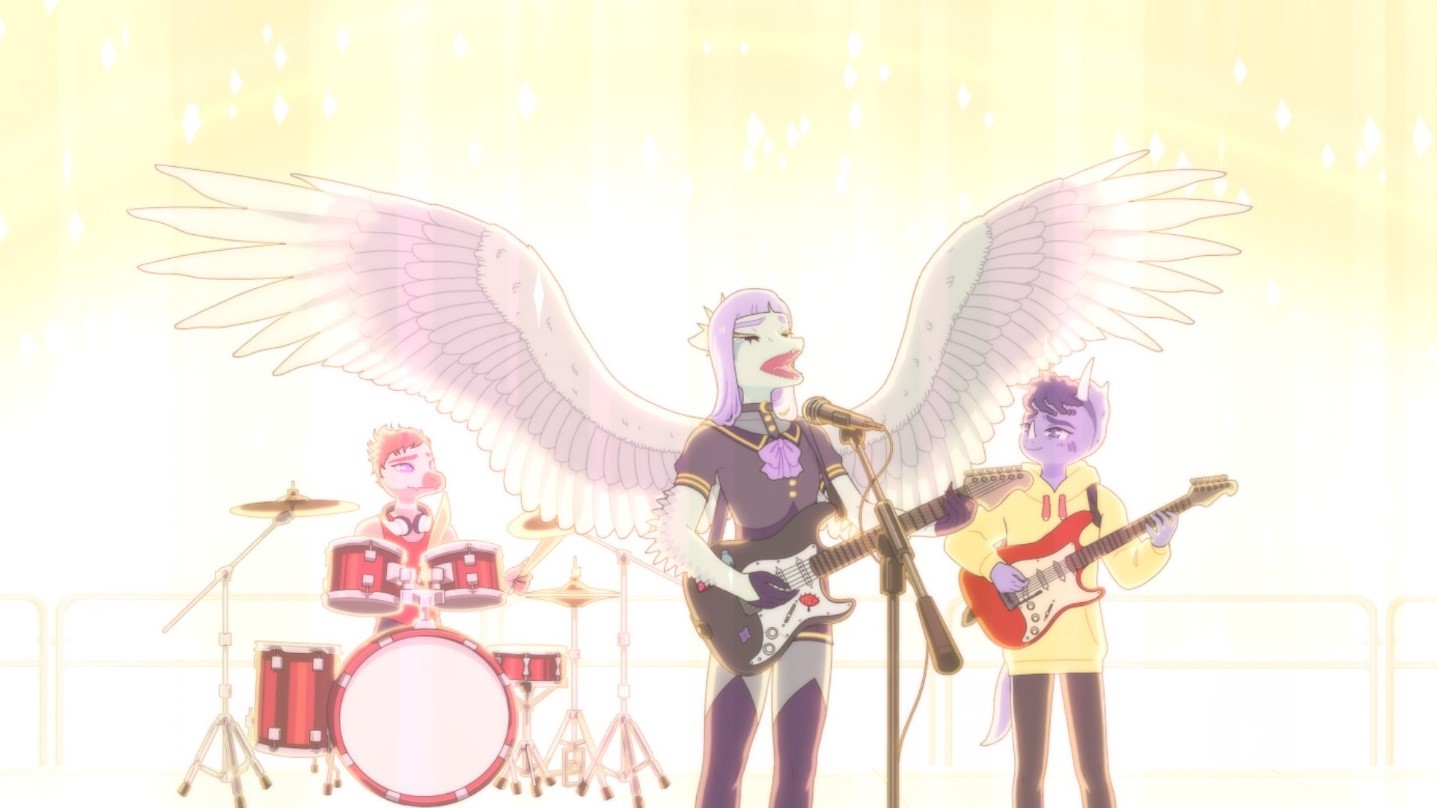
Figure 3. The asteroid hits Caldera Bay as Worm Drama performs its final song. Screenshot by the author. Click image to enlarge.
Reading for Climate Change
In Playing Nature: Ecology in Video Games, Alenda Chang (2019) argues that certain video games can be seen as “environmental texts” (pp. 32-33), a concept developed by Lawrence Buell (1995) in literature. Buell originally proposed four criteria to define these texts, and summarizing them, Chang writes: “the ideal environmental text produces involvement. It brings the nonhuman world into equal prominence with the human, exposes humanity’s moral responsibility to and participation in that world, and portrays the environment as fluid process, not static representation” (2019, p. 32). Chang gives the example of Flower (thatgamecompany, 2009), a lyrical, meditative game in which the player controls the wind and moves by blowing flower petals. As Chang explains, Flower invites the player “to inhabit an other-than-human consciousness” (2019, p. 33) and has the merit of making natural environments integral to the gameplay rather than merely supplementary (p. 34). More recently, Sarah Freye (2025) has analyzed I Was a Teenage Exocolonist (Northway Games, 2022), exploring how it encourages the player to reflect on humanity’s role in the climate crisis. According to her, the game achieves this through its choice-based mechanics, which give the player a strong sense of agency; its replayability, which allows the player to try different options and experience their consequences; and its narrative, which takes into account not only the individual’s impact on global ecologies, but also that of the entire colony and all of humanity.
Other scholars have reflected more specifically on the ecological rhetoric of games set in (post)apocalyptic worlds. For example, Gerald Farca (2018) has explored the player’s “journey to nature” (p. 384) in The Last of Us (Naughty Dog, 2013), arguing that the game criticizes consumer capitalism and the failures of science while presenting nature as “a safe haven from the intense gameplay of the city and suburban areas” (p. 31). Similarly, Melissa Bianchi (2024) has analyzed the thriving vegetation in Plants vs. Zombies (PopCap Games, 2009) and Cloud Gardens (Noio, 2021), two games that “ask the player to garden at the end of the world” (p. 6). For Bianchi, these games explore ecological recovery and “green” environments that are usually depicted through loss and destruction. Lawrence May (2024) has analyzed the natural environment in Death Stranding (Kojima Productions, 2019) through the figure of the zombie, describing it as an allegory for the game’s “undead ecosystem” and its harsh climate and geological conditions. Finally, May and Ben Hall (2024) have examined the apocalypse in that same game as a practice the player enacts in order to complete Sam’s work. The player thus becomes entangled in “patterns of destruction and cataclysm” (May & Hall, 2024, p. 316) and takes part in capitalist processes.
In the remainder of this article, I would like to propose that Goodbye Volcano High can also allow the player to reflect on the climate catastrophe. Even though this game does not meet Buell’s (1995) criteria to be considered an environmental text, I still believe that it can lead the player to draw parallels between the in-game events -- the idea of the end of the world in particular -- and the current situation regarding the climate crisis. I concur with Brian Gomes and Anik Sarkar (2024), who argue that games which do not explicitly engage with environmental issues can still unconsciously express ideas and cautionary undertones related to these topics. As the authors explain, games like those from the Resident Evil franchise (Capcom, 1996-present) explore themes of corporate greed, human-induced mass contamination and the uncanny quality of the natural world, and thus contain symbols of the Anthropocene. They can allow players to respond to some of their environmental fears and better articulate them (Ruffino, 2024). In this section, I am interested more specifically in Goodbye Volcano High in relation to solastalgia and ecoanxiety, two closely related concepts that can be experienced while playing the game and are symptomatic of climate trauma.
Solastalgia is a form of psychological distress produced by a negatively perceived environmental change. According to Glenn Albrecht (2010), solastalgia is
the pain or sickness caused by the ongoing loss of solace and the sense of desolation connected to the present state of one’s home and territory. It is the “lived experience” of negative environmental change manifest as an attack on one’s sense of place. (p. 227)
Solastalgia typically relates to the feeling that our environment is gradually eroding, along with the sense of no longer recognizing it; it implies a feeling of disconnection. As Albrecht states, “it is the homesickness you have when you are still located within your home environment” (2010, p. 227). I would further argue that solastalgia is often closely linked to slow violence and slow trauma, as it tends to unfold as a gradual, insidious pain that wears us down over time. It manifests as a persistent burden, a mental toll that subtly affects our well-being and weakens us, reminding us -- sometimes daily -- that something is not right in our environment.
In Goodbye Volcano High, solastalgia is mostly evident when the characters begin to see auroras and are then surprised to see them more often, including during broad daylight. After the Battle of the Bands, Naser offers to drive Fang home. As the two characters head to the car, a blackout occurs, followed by the apparition of auroras. The music, which starts as a soft guitar melody with subdued vocals, changes to a mysterious ambient noise. In parallel, the scene shifts from shots of the town and the auroras to shots of the characters looking at the sky with troubled expressions (see Figure 4). While the auroras, with their blue, yellow and green tones, are magnificent, they are also an ominous sign of the approaching asteroid. The characters are conscious that their environment is changing and are worried about this change. As Goodbye Volcano High highlights, solastalgia is not necessarily related to the climate crisis; it concerns environmental change in a broader sense, and the term has notably been used to describe the psychological impacts of resource extraction, land clearing and gentrification (Galway et al., 2019). However, I believe that a compelling parallel can be drawn between the game characters, who anxiously witness their home environment transform due to the asteroid, and the player, who also confronts distressing changes in their real-world surroundings because of the climate crisis: local weather patterns are more erratic; floods, heatwaves and wildfires are more numerous; and freeze-thaw cycles are more frequent, to give just a few examples. The auroras are an interesting symbol in this regard. Kaitlin Moore (2024) notes in their analysis of The Long Dark (Hinterland Studio, 2017) that auroras can be seen, alongside the sun and its radiations, as a heliotrope: they are “a stencil of the existential anxieties betokened by the Anthropocene” (p. 201) and a metaphorical representation of the ecological impacts of techno-industrial development.
_and_Fang_(right)_are_troubled_by_the_auroras._Screenshot_by_the_author..jpg)
Figure 4. Naser (left) and Fang (right) are troubled by the auroras. Screenshot by the author. Click image to enlarge.
Although Goodbye Volcano High does not directly engage with ecoanxiety, the game can still resonate with the player on that level as well. In contrast to solastalgia, ecoanxiety is future- rather than past- and present-oriented. It is usually understood as a fear of environmental doom and a form of pretraumatic stress. Anxiety Canada (n.d.) defines ecoanxiety as a form of “anxiety caused by a dread of environmental perils, especially climate change, and a feeling of helplessness over the potential consequences for those living now and even more so for those of later generations” (n.p.). The asteroid in Goodbye Volcano High can be interpreted as an allegory for climate change [7]. For example, Reed observes that the population seems largely unaffected by the asteroid’s impending threat (at least at the beginning of the game), mirroring the skepticism or apathy many people show toward the climate crisis and the lack of motivation to take meaningful actions to improve the situation -- whether it is reducing meat consumption, taking public transportation, or pressuring governments to adopt more stringent environmental regulations. In addition, as previously mentioned, a cacophony of conflicting information and opinions about the asteroid leave the characters of Goodbye Volcano High uncertain about the asteroid’s true danger. This is not too far from our reality, where mixed messages from politicians, scientists and media personalities create doubt about the severity and urgency of the climate crisis. While I certainly do not question the scientific consensus on climate change and its devastating impacts, we continuously receive new information about the limited time we have left to prevent irreversible damage. As Stone (2024) observes, “the future for life on this planet is not quite set in stone yet the earth is constantly being given shifting prognoses of seventy, thirty, fifteen more years until food runs out, drought is widespread, species go extinct” (p. 450). When we play Goodbye Volcano High, we are reminded that we, too, are living in prognosis. Although the specific disaster in Goodbye Volcano High is different from ours, the parallel between the two and the similar affects they evoke allow the player to identify with the game characters and to partly see them as “future selves” (Kaplan, 2015, p. 3). In that light, I would argue that the game can bring to mind images of our apocalyptic climate future and elicit ecoanxiety.
That being said, despite the negative affects it evokes, the end of the world in Goodbye Volcano High is presented as visually stunning, as Fang and Trish mention near the end of the game while observing the auroras:
Fang: Man… it sucks that the end of the world is so pretty. Trish: Right? It’s hard to feel like everything’s gonna be gone when it looks so beautiful right now.
Earlier in the game, Fang and Reed note that the rooftop of their high school would offer “an incredible view” of the asteroid hitting the Earth, and this is where Worm Drama decides to hold its last concert. During the concert, the auroras -- which have become at that point in the game the symbol of the impending apocalypse -- are particularly beautiful, adding a majestic and almost magical atmosphere to Worm Drama’s touching performance and complementing Fang’ s elegant violet outfit (see Figure 5). In her essay “The Imagination of Disaster,” Susan Sontag (1965/1990) writes that films which represent disasters are “concerned with the aesthetics of destruction, with the peculiar beauties to be found in wreaking havoc, making a mess” (p. 213). In the case of Goodbye Volcano High, I would argue that representing the end of the world as something aesthetically pleasing can be interpreted as a social commentary on the need to end the status quo. Like Benjamin Abraham (2018), I believe that games can convey ecocritical messages through their aesthetic vision rather than their mechanics and, in doing so, overcome the resistance that some players can manifest toward more explicit environmental messages and more didactic modes of engagement. I would argue that Goodbye Volcano High suggests through its aesthetic that ending the current system which promotes petro-culture, meat consumption and capitalism would be beautiful and is an idea we should contemplate. Experiencing solastalgia and ecoanxiety while playing Goodbye Volcano High is certainly not pleasant, but this affective experience remains powerful and potentially mobilizing: it can push us to take concrete actions to avoid our own extinction and that of many other living beings.
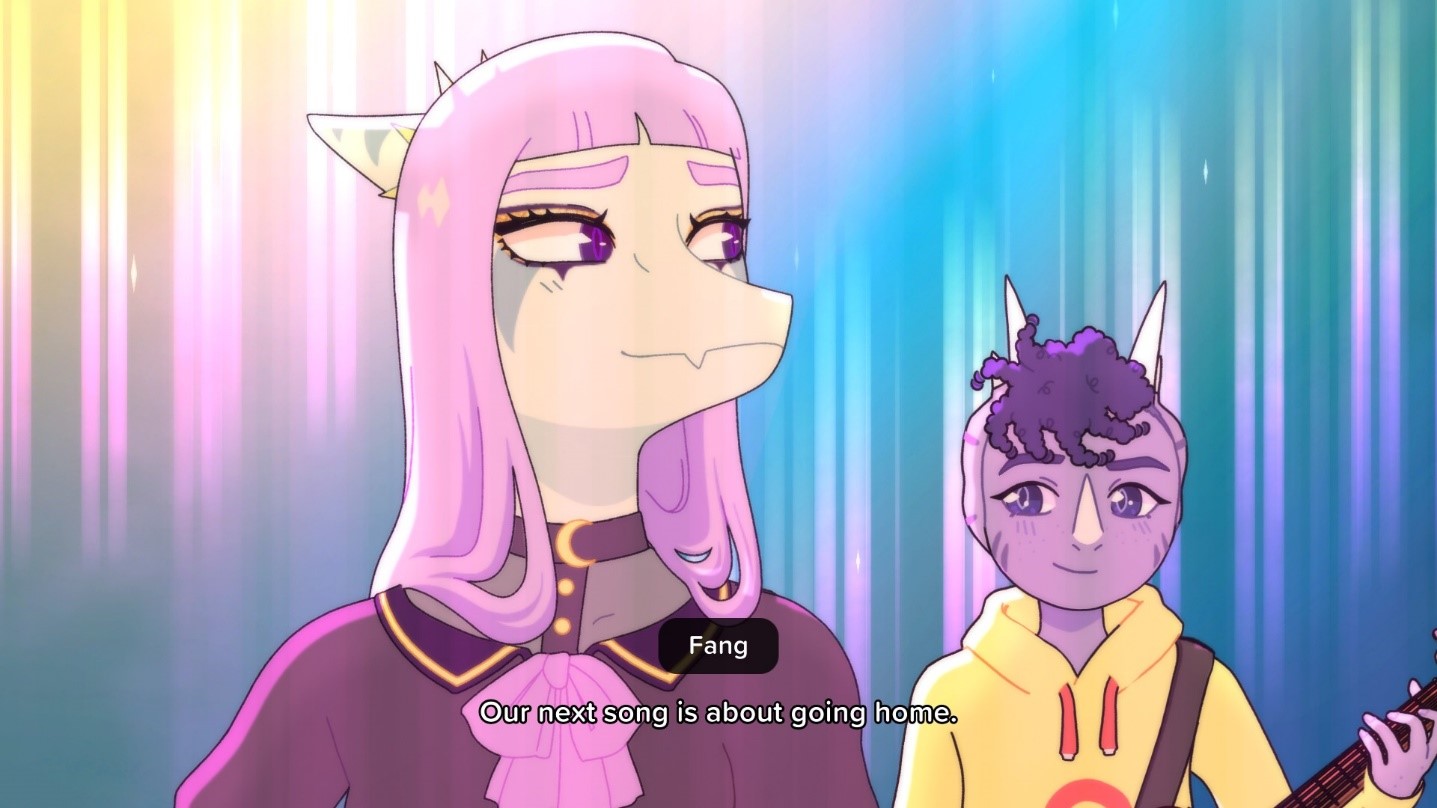
Figure 5. The end of the world is visually stunning. Screenshot by the author. Click image to enlarge.
Conclusion
This article has analyzed the theme of apocalyptic trauma in Goodbye Volcano High, examining how the game represents the end of the world, the affects it evokes and how these affects circulate within the game and resonate with the player. As a final note, I would like to acknowledge that my conceptualization of the apocalypse as an upcoming catastrophe is rooted in Western thought. Anishinaabe scholar Laurence Gross (2014) highlights that Native Americans, like many other Indigenous communities, have already experienced the apocalypse through colonization: they have seen their worlds, their cultures and their societies being destroyed (pp. 33-35). As he explains, Native Americans are currently living in a postapocalyptic environment, must face the consequences of this genocide and are now seeking to “buil[d] new worlds, worlds that are true to their past history, but cognizant of present realities” (Gross, 2014, p. 33). Gross’ work is a strong reminder that Goodbye Volcano High participates in a specifically Euro-American apocalyptic imaginary and exists alongside other realities in which the end of the world is not impending but has already happened.
Endnotes
[1] Visser (2020) makes this observation in relation to literary trauma theory, but the same could be said of film studies and game studies, and the way trauma is generally understood in psychology. For an overview of how trauma has been conceptualized in psychology and studied in video games, see Poirier-Poulin (2026).
[2] The game also includes three other minor characters: Rosa, Sage and Stella.
[3] Early in the game, Reed mentions in class that he might do deliveries after graduation and continue practicing the drums, but this becomes unclear as the game progresses.
[4] The player can even unlock some of Fang’s memories (called “Flashbacks”) by raising their affinity level with various characters.
[5] These lyrics come from the song “12 o’clock.”
[6] This event is reminiscent of the COVID-19 lockdown and the many people who were unable to see their loved ones before they died and say goodbye in person.
[7] In this regard, the game recalls the black comedy Don’t Look Up (McKay, 2021).
References
Abraham, B. (2018). Video game visions of climate futures: ARMA 3 and implications for games and persuasion. Games and Culture, 13(1), 71-91. https://doi.org/10.1177/1555412015603844
Albrecht, G. (2010). Solastalgia and the creation of new ways of living. In S. Pilgrim & J. N. Pretty (Eds.), Nature and culture (pp. 217-234). Routledge.
American Psychiatric Association (APA). (2013). Diagnostic and statistical manual of mental disorders (5th ed.). American Psychiatric Association.
American Psychiatric Association (APA). (2022). Diagnostic and statistical manual of mental disorders (5th ed. text rev.). American Psychiatric Association.
Anthropy, A. (2013). Queers in Love at the End of the World [Browser game]. Self-published.
Anxiety Canada. (n.d.). Eco-anxiety and how to cope. Retrieved September 28, 2024, from https://www.anxietycanada.com/articles/coping-with-eco-anxiety/
Berlant, L., & Greenwald, J. (2012). Affect in the end times: A conversation with Lauren Berlant. Qui Parle: Critical Humanities and Social Sciences, 20(2), 71-89. https://doi.org/10.5250/quiparle.20.2.0071
Berntsen, D., & Rubin, D. C. (2015). Pretraumatic stress reactions in soldiers deployed to Afghanistan. Clinical Psychological Science, 3(5), 663-674. https://doi.org/10.1177/2167702614551766
Bianchi, M. (2024). Beyond barren wastelands: The greening of the post-apocalypse in video games. Journal of Games Criticism, 6(Bonus Issue A). https://gamescriticism.org/2024/09/06/bianchi-6-a
Buell, L. (1995). The environmental imagination: Thoreau, nature writing, and the formation of American culture. Harvard University Press.
Chang, A. Y. (2019). Playing nature: Ecology in video games. University of Minnesota Press.
Farca, G. (2018). Playing dystopia: Nightmarish worlds in video games and the player’s aesthetic response. Transcript.
Freye, S. (2025). Ecocritical agency in I was a teenage exocolonist. Games and Culture, 20(5). https://doi.org/10.1177/15554120231209804
Galway, L. P., Beery, T., Jones-Casey, K., & Tasala, K. (2019). Mapping the solastalgia literature: A scoping review study. International Journal of Environmental Research and Public Health, 16(15), 2662. https://doi.org/10.3390/ijerph16152662
Gomes, B., & Sarkar, A. (2024). Video games, uncertainty and the Anthropocene unconscious. Journal of Gaming & Virtual Worlds, 16(1), 127-136. https://doi.org/10.1386/jgvw_00095_7
Goutaudier, N., Ayache, R., Aubé, H., & Chabrol, H. (2020). Traumatic anticipation of childbirth and disordered eating during pregnancy. Journal of Reproductive and Infant Psychology, 38(3), 243-258. https://doi.org/10.1080/02646838.2020.1741525
Gross, L. W. (2014). Anishinaabe ways of knowing and being. Routledge.
Gygax, G., & Arneson, D. (1974). Dungeons & Dragons [Tabletop role-playing game]. Tabletop game design by Gary Gygax and Dave Arneson, published by Tactical Studies Rules.
Jain, S. L. (2007). Living in prognosis: Toward an elegiac politics. Representations, 98(1), 77-92. https://doi.org/10.1525/rep.2007.98.1.77
Hinterland Studio. (2017). The Long Dark [Microsoft Windows]. Digital game directed by Raphael van Lierop, published by Hinterland Studio.
Kaplan, E. A. (2012). Trauma future-tense (with reference to Alfonso Cuarón’s Children of men). In J. Koehne (Ed.), Trauma und film: Inszenierungen eines Nicht-Repräsentierbaren [Trauma and film: Staging of something unrepresentable] (pp. 364-381). Kulturverlag Kadmos Publishing.
Kaplan, E. A. (2015). Climate trauma: Foreseeing the future in dystopian film and fiction. Rutgers University Press.
Kellehear, A., & Lewin, T. (1989). Farewells by the dying: A sociological study. OMEGA -- Journal of Death and Dying, 19(4), 275-292. https://doi.org/10.2190/HWJC-D0PD-5ADA-32U9
KO_OP. (2023). Goodbye Volcano High [Microsoft Windows]. Digital game directed by Kyle McKernan and Saleem Dabbous, published by KO_OP.
Kojima Productions. (2019). Death Stranding [Sony PlayStation 4]. Digital game directed by Hideo Kojima, published by Sony Interactive Entertainment.
Kuznetsov, E. (2017). Trauma in games: Narrativizing denied agency, ludonarrative dissonance and empathy play [Master’s thesis, University of Alberta]. Education & Research Archive. https://doi.org/10.7939/R30Z7196H
May, L. (2024). Undead ecosystems: Death stranding and the contemporary videogame zombie. In L. DiTommaso, J. Crossley, A. Lockhart & R. Wagner (Eds.), End-game: Apocalyptic video games, contemporary society, and digital media culture (pp. 271-284). De Gruyter.
May, L., & Hall, B. (2024). Apocalypse as practice: Labour, technology and environment in Death stranding. Journal of Gaming & Virtual Worlds, 16(3), 315-331. https://doi.org/10.1386/jgvw_00107_1
McKay, A. (Director). (2021). Don’t Look Up [Film]. Hyperobject Industries and Bluegrass Films.
Moore, K. (2024). Auroral heliotropes of the Anthropocene and wandering the “quiet apocalypse” of The long dark (2017). In K. I. Aliano & A. M. Crowley (Eds.), Video games and environmental humanities: Playing to save the world (pp. 197-211). Palgrave Macmillan.
Mori, M., Morita, T., Bruera, E., & Hui, D. (2022). Prognostication of the last days of life. Cancer Research and Treatment, 54(3), 631-643. https://doi.org/10.4143/crt.2021.1573
Murray, J. (2017). Hamlet on the holodeck: The future of narrative in cyberspace (Rev. ed.). MIT Press. (Original work published 1997)
Naughty Dog. (2013). The Last of Us [Sony PlayStation 3]. Digital game directed by Bruce Straley, published by Sony Interactive Entertainment.
Nichols, J. (Director). (2011). Take Shelter [Film]. Strange Matter Films.
Nixon, R. (2011). Slow violence and the environmentalism of the poor. Harvard University Press.
Noio. (2021). Cloud Gardens [Microsoft Windows]. Digital game directed by Thomas Van den Berg, published by Coatsink.
Northway Games. (2022). I Was a Teenage Exocolonist [Microsoft Windows]. Digital game directed by Sarah Northway, published by Finji.
Poirier-Poulin, S. (2026). Trauma games: Current research and future directions. In G. Voorhees, J. Call, M. Wysocki, & B. Brey (Eds.), Epistemic genres: New formations of play (pp. 64-83). Bloomsbury Academic.
PopCap Games. (2009). Plants vs. Zombies [Microsoft Windows]. Digital game directed by Sukhbir Sidhu, published by PopCap Games.
Premoli, M. (2020). “His sickness was only part of something larger”: Slow trauma and climate change in Leslie Marmon Silko’s Ceremony. American Imago, 77(1), 173-191. https://doi.org/10.1353/aim.2020.0009
Quantic Dream. (2013). Beyond: Two Souls [Sony PlayStation 3]. Digital game directed by David Cage, published by Sony Computer Entertainment.
Ruffino, P. (2024). Videogames, the Anthropocene, and other problems of scale: Methodological notes for the study of digital games in times of ecological crisis. Journal of Games Criticism, 6(Bonus Issue A). https://gamescriticism.org/2024/10/27/ruffino-6-a/
Saint-Amour, P. K. (2015). Tense future: Modernism, total war, encyclopedic form. Oxford University Press.
Sontag, S. (1990). The imagination of disaster. In Against interpretation and other essays (pp. 209-225). Farrar, Straus and Giroux. (Original work published 1965)
Stone, K. (2024). The Earth’s prognosis: Doom and transformation in game design. In L. op de Beke, J. Raessens, S. Werning, & G. Farca (Eds.), Ecogames: Playful perspectives on the climate crisis (pp. 447-462). Amsterdam University Press.
thatgamecompany. (2009). Flower [Sony PlayStation 3]. Digital game directed by Jenova Chen, published by Sony Computer Entertainment.
Visser, I. (2020). Apocalyptic trauma and the politics of mourning a world. In J. Hau (Ed.), Apocalypse in American literature and culture (pp. 304-316). Cambridge University Press. https://doi.org/10.1017/9781108663557.024
Wlodarczyk, A., Basabe, N., Páez, D., Amutio, A., García, F. E., Reyes, C., & Villagrán, L. (2016). Positive effects of communal coping in the aftermath of a collective trauma: The case of the 2010 Chilean earthquake. European Journal of Education and Psychology, 9(1), 9-19. https://doi.org/10.1016/j.ejeps.2015.08.001